
|
Getting your Trinity Audio player ready...
|
The Encounter That Shocked Gujarat
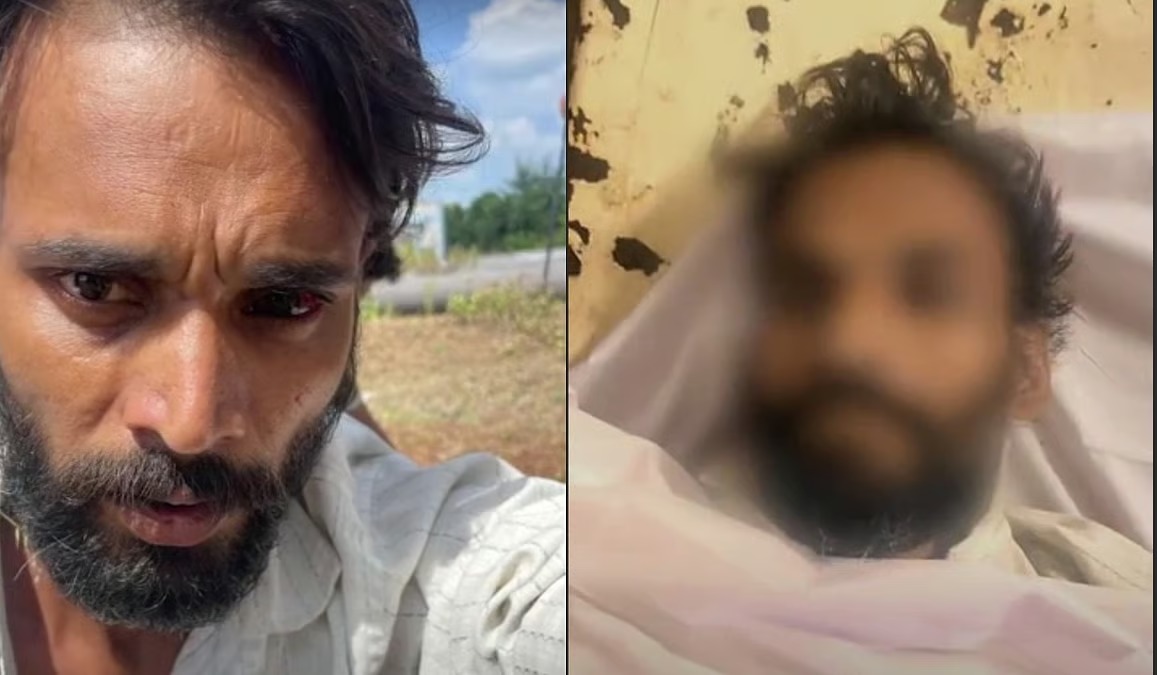
Ahmedabad police on Saturday confirmed the death of notorious criminal Harshad alias ‘Psycho Killer’ Parmar, who was shot dead during a late-night crime scene reconstruction. Parmar, long considered one of Gujarat’s most feared serial offenders, was under custody for a series of violent murders and assaults that had terrorized parts of Ahmedabad and surrounding districts for over a decade.
According to officials, Parmar attempted to attack police officers with a concealed weapon while being taken to reconstruct one of his crime scenes. The police retaliated in self-defense, resulting in his death on the spot.
Who Was Parmar?
Harshad Parmar earned the chilling moniker “Psycho Killer” for his gruesome pattern of crimes that combined cold-blooded planning with extreme violence. Investigations trace his criminal journey back to the late 2000s, when he first emerged as a petty offender involved in theft and assault. But by 2012, his activities escalated into more sinister territory.
He was accused of targeting vulnerable individuals, often attacking late-night commuters, sex workers, and isolated workers in industrial areas. His modus operandi, police said, was marked by brutality and unpredictability signs that earned him notoriety not just locally, but also across law enforcement circles in Gujarat.
A Trail of Murders and Fear
Parmar’s most infamous phase began in 2016 when at least half a dozen murders in and around Ahmedabad were linked to him. Victims were often found with severe head injuries or stab wounds, fueling fears of a psychopathic serial killer at large.
Public panic escalated after reports of his seemingly random attacks. Residents of several neighborhoods claimed they lived in constant fear, with some calling Parmar “Ahmedabad’s Nithari-like nightmare,” drawing parallels to other infamous cases in India’s criminal history.
Police Crackdown and Arrest
After years of investigation, Parmar was finally apprehended in 2024 during a late-night raid in Naroda. Authorities described his arrest as a significant breakthrough, ending years of manhunts that had drained resources and kept public anxiety high.
At the time of his arrest, Parmar reportedly confessed to multiple murders, though investigators suspected his crimes could be far more widespread than documented. His arrest brought a sense of relief to communities haunted by his violent spree, but also raised questions about how long it had taken to bring him to justice.
The Reconstruction and Fatal Turn
On Friday night, police escorted Parmar to one of the crime spots for a formal reconstruction of events a common practice in criminal investigations aimed at gathering courtroom evidence. However, officials state that Parmar suddenly attempted to grab a weapon concealed in his clothing, attacking officers in a bid to escape.
The police responded with fire, killing him instantly. While law enforcement defended the act as self-defense, human rights advocates have demanded a transparent inquiry, wary of India’s controversial history of police “encounters.”
Public and Political Reactions
News of Parmar’s death has sparked mixed reactions across Gujarat. Families of victims have welcomed the encounter, describing it as a form of closure after years of trauma. “Justice has finally been done. He cannot harm anyone anymore,” said the relative of one victim.
However, civil rights groups have raised concerns over the recurring pattern of encounter killings in India. They argue that while Parmar’s crimes were horrifying, due process and court trials remain essential to ensuring justice is lawful and transparent.
The Larger Debate: Encounters and Justice
Parmar’s death reopens the debate on India’s handling of violent offenders. On one side are those who view encounter killings as a swift form of justice that delivers relief to victims’ families and deters criminals. On the other side are critics who argue that such actions risk undermining the rule of law, potentially allowing impunity within police ranks.
For Ahmedabad, however, the immediate sentiment leans toward relief. After years of living under the shadow of Parmar’s crimes, residents are now attempting to move past the fear that once defined their daily lives.
Parting Thoughts:
The End of a Dark Chapter
With Parmar’s death, Gujarat closes the chapter on one of its most notorious criminals. His story is a grim reminder of how unchecked violence can spread fear across communities, and how the balance between justice, accountability, and human rights remains delicate in India’s criminal justice system. Whether remembered as a “psycho killer” or as a case study in law enforcement’s controversial methods, Parmar’s life and death underline the complexities of crime and justice in a society still grappling with questions of safety, ethics, and the rule of law.