
|
Getting your Trinity Audio player ready...
|
Delhi Air Quality News
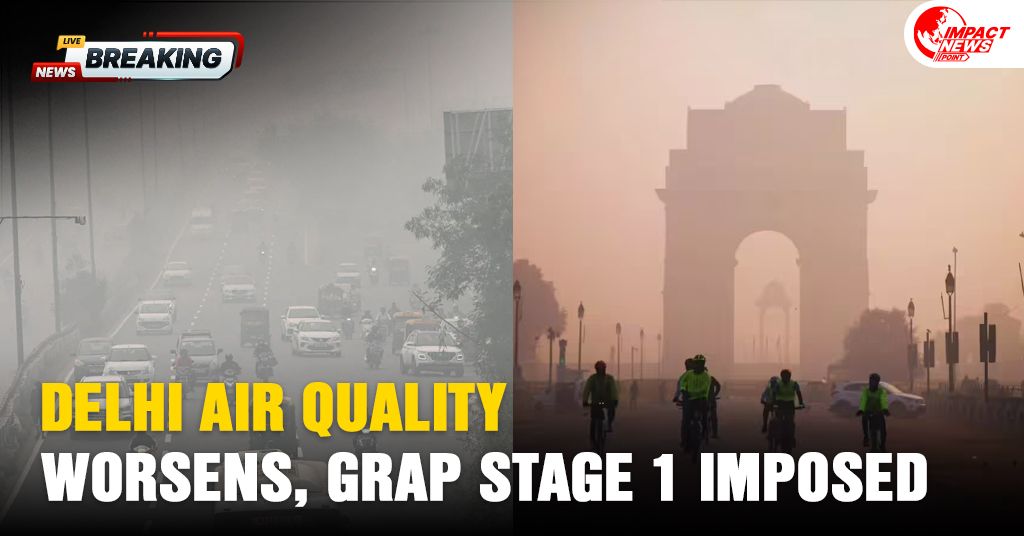
Delhi’s skies have once again turned hazy and toxic, forcing authorities to activate Stage 1 of the Graded Response Action Plan (GRAP) across Delhi and the National Capital Region (NCR). The move comes as the Air Quality Index (AQI) climbed to 211, officially entering the “poor” category, raising health concerns for lakhs of residents.
The Commission for Air Quality Management (CAQM) announced the decision after pollution levels spiked across several parts of Delhi. GRAP is a four-stage plan designed to control air pollution depending on its severity. Stage 1 the “poor” level is the first warning sign, and its activation means Delhi’s air has started to turn unsafe for sensitive groups like children, the elderly, and those with breathing problems.
Under GRAP Stage 1, authorities have rolled out a 27-point action plan to reduce pollution from multiple sources such as vehicles, construction activities, road dust, and industrial emissions. Among the key restrictions are bans on open burning of waste materials like leaves and garbage, strict dust control measures at construction sites, and mandatory use of anti-smog guns and water sprinklers. Mechanical sweeping of roads, checking vehicle emissions, and restricting the use of diesel generators (except in emergencies) have also been made compulsory.
The Delhi government has directed agencies to remain on high alert, especially in areas like Anand Vihar, Mundka, Jahangirpuri, and Rohini, where air quality has dropped fastest. Neighboring states Haryana, Uttar Pradesh, and Rajasthan have been asked to ensure that NCR regions under their jurisdiction also enforce GRAP rules strictly.
Officials from the pollution control boards have been deployed across key zones to monitor compliance. The focus now is on preventing dust from construction, controlling vehicular emissions, and checking industrial pollution, which are considered the biggest contributors to Delhi’s worsening air.
Meteorologists warn that weather conditions could make things worse. Weak wind speed and lower temperatures are trapping pollutants close to the ground, allowing toxic particles to accumulate in the air. Experts predict that if these trends continue, the city could soon slip into the “very poor” category, a level where breathing outdoor air can cause respiratory irritation and long-term health issues.
Health experts have urged residents to take preventive steps. People are advised to limit outdoor exercise, use N95 masks, and prefer public transport or carpooling to reduce emissions. The Delhi government has also appealed to citizens to avoid using private vehicles for short distances and to report any instances of garbage burning or illegal construction dust via the Green Delhi app and helplines.
This early spike in pollution marks the beginning of what has become an annual battle for the capital. Each year, as winter approaches, Delhi’s air quality deteriorates sharply due to a mix of local emissions, vehicle exhaust, construction dust, and stubble burning in neighboring states. While the GRAP system helps coordinate a response, experts believe that only long-term, joint efforts across states can make a lasting difference. As the city braces for worsening air, one thing is clear Delhi’s residents will need to once again navigate through weeks of smog, irritation, and health risks, hoping the government’s early actions prevent a repeat of the choking winter haze that has become an unwelcome tradition.