

|
Getting your Trinity Audio player ready...
|
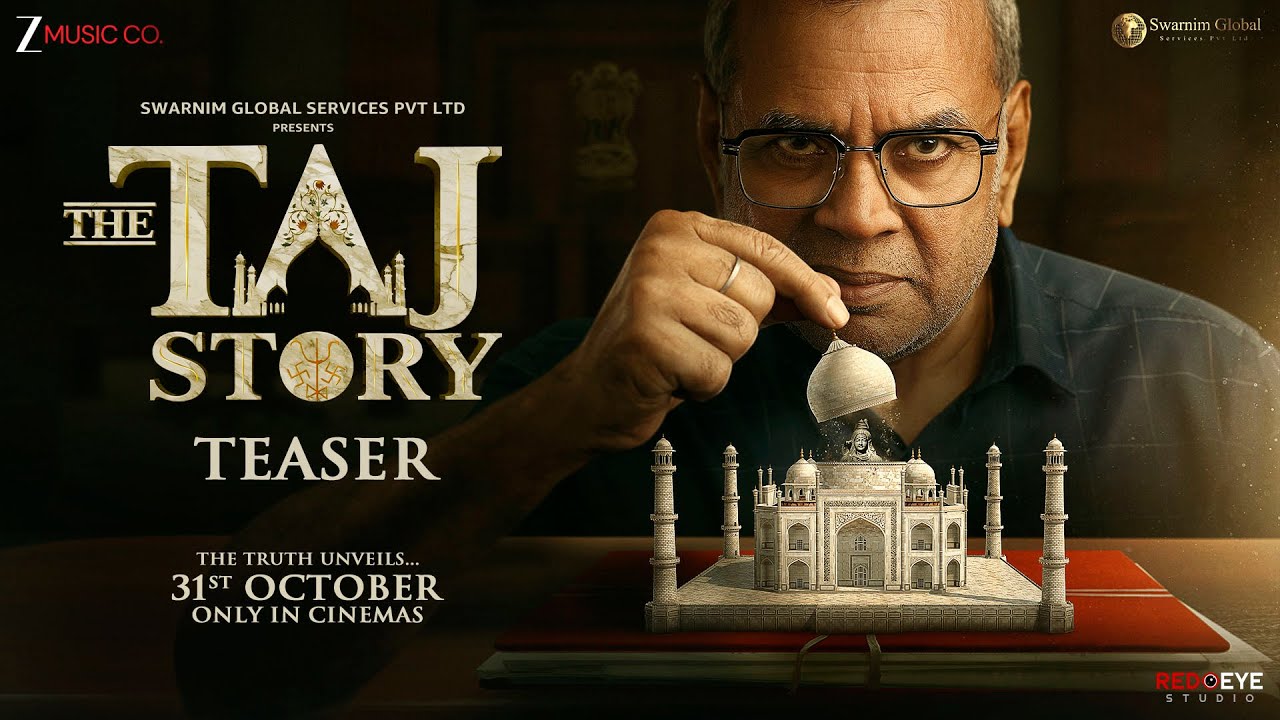
A new controversy is brewing as the trailer for The TAJ Story hits the public eye. In the preview, actor Paresh Rawal plays a tourist guide who claims there are hidden mysteries inside the Taj Mahal, including references to 22 locked rooms beneath the monument. The trailer has triggered discussion, criticism, and curiosity in equal measure.
Though the trailer suggests that these locked rooms may hold secrets, experts and officials quickly pushed back. The Archaeological Survey of India (ASI), along with retired archaeologists, say that the so-called 22 “rooms” are not secret chambers at all, but rather a long, arched corridor area with doors along it. This space lies beneath the Taj’s platform and has historically been kept locked for practical reasons chiefly security and to protect the structural integrity of the monument.
According to ASI sources, the corridor is regularly inspected, cleaned, and maintained. There is nothing in the walls or hidden inscriptions, they say, and no mysterious relics have ever been found there. The area is closed off to tourists simply to prevent risk and avoid unnecessary wear and tear in a protected zone that receives more than one lakh visitors daily.
Among voices of authority, retired ASI officials and notable archaeologists have emphasized that this kind of basement or substructure is common in Mughal-era monuments. It helps support the architecture, distribute weight, and provide ventilation not hold secrets. Walls are bare, devoid of religious motifs or hidden idols, and the corridor does not deviate from recognized Mughal architectural practice.
The trailer also revives long-standing claims floated by certain groups assertions that the Taj Mahal was originally a Hindu temple, or that deities are concealed somewhere inside. Historians, courts, and past studies have repeatedly rejected these claims, labeling them speculative and unsubstantiated. Even in 2022, the Allahabad High Court declined a petition asking to open the locked areas of the Taj and form a fact-finding committee, stating that such questions are better debated among scholars rather than entering courts.
Critics of the film say that using speculative theories to dramatize heritage sites can mislead public understanding and stir cultural tensions. Some argue that the makers should take care not to present conjecture as fact. Others defend the film’s right to creative freedom, saying movies often explore “what if” narratives to spark interest. As The TAJ Story prepares for release, the clash between cinematic storytelling and historical record is now in full view. Will the film lean heavily into speculation, or will it balance drama with respect to established history? The public and scholars alike will watch closely.