
|
Getting your Trinity Audio player ready...
|
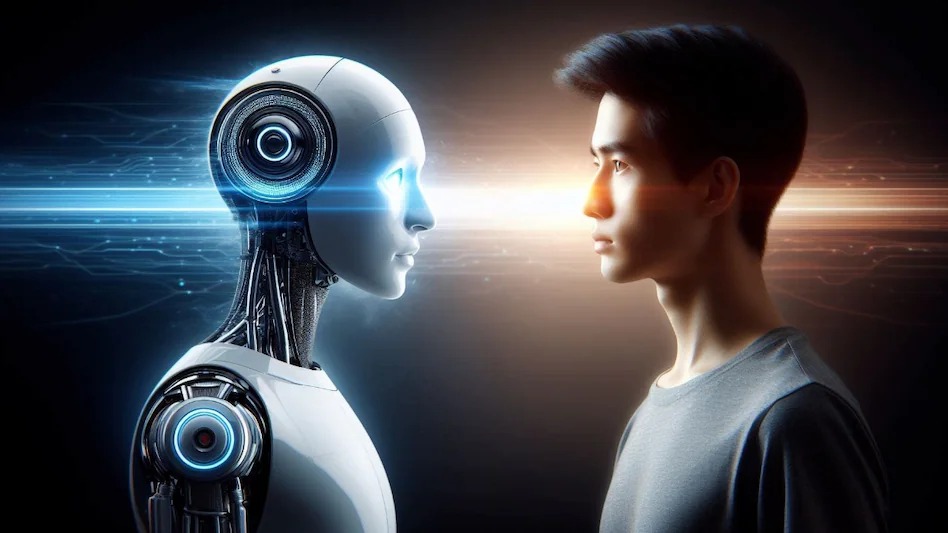
The biggest question in the world of technology today is no longer what artificial intelligence (AI) can do, it’s how far it can go. Can machines ever truly think like humans? Or is human intelligence something that technology will never fully capture?
At a recent global conference of AI pioneers, some of the brightest minds in the field including veteran researchers, scientists, and innovators shared drastically different views on the subject. While a few experts believe AI could reach or even surpass human-level intelligence in the next few decades, others argue that such comparisons are misleading and philosophically flawed.
Experts Divided: The Race Between Science and Consciousness
AI pioneer Geoffrey Hinton, often called the “Godfather of AI,” believes that machines capable of reasoning and arguing like humans may emerge within the next 20 years. He explained that with advances in neural networks, deep learning, and computational power, the boundaries between artificial and biological intelligence are beginning to blur.
However, Yoshua Bengio, another highly respected figure in the AI world, took a more cautious stance. He acknowledged that AI has made tremendous progress in recent years, but he warned that there is still a vast gap between how machines process data and how the human brain experiences thought, emotion, and context.
Meanwhile, Fei-Fei Li, one of the most influential women in technology, reframed the debate entirely. She said that machines might excel in narrow tasks like pattern recognition and data analysis, but the essence of human intelligence, empathy, creativity, and self-awareness cannot be easily replicated. In her words, “Machines may be smart, but they do not feel.”
The question of whether machines can match humans isn’t just a matter of science, it’s a social and ethical one too. The answer will determine how societies prepare for the next phase of technological change.
If human-level AI becomes a reality within a few decades, it could reshape industries, education, and even global politics. Jobs might change or disappear, and the meaning of “human skills” may evolve forever. But if true human-level intelligence remains out of reach, then humanity will continue to lead using AI as a tool, not a replacement.
This debate also raises concerns about responsibility and control. As machines become smarter and more autonomous, ensuring that they align with human values becomes critical. Who decides what AI should or shouldn’t do? And how do we define “intelligence” in a way that includes both ethics and reasoning?
Different Perspectives, Same Question
While the experts disagreed on timelines, they all agreed on one thing AI is advancing at a speed faster than most people can comprehend.
For Hinton, AI’s growth represents an inevitable evolution of human creativity. For Bengio, it’s a challenge that must be guided carefully, with clear regulations and human oversight. And for Fei-Fei Li, it’s a reminder that intelligence isn’t just about logic it’s also about life, love, and shared experience.
Each of these perspectives highlights a deeper truth: AI doesn’t exist in isolation. It reflects the people who build it, the data it learns from, and the goals we set for it.
For readers and everyday citizens, this debate may sound abstract but it has real-world consequences. Here’s why it matters:
- Jobs Will Change, Not Vanish: AI will automate repetitive tasks but increase demand for creative and human-centered work roles that require judgment, empathy, and originality.
- Education Must Evolve: The next generation must learn how to think with AI, not compete against it. Digital literacy, ethics, and emotional intelligence will be key skills.
- Ethics Must Catch Up: As AI systems make more decisions, from finance to healthcare, we need clear moral and legal boundaries to prevent bias or misuse.
- Humans Still Hold the Edge: Machines can learn patterns, but they cannot dream, imagine, or love at least not yet. That emotional depth remains humanity’s most powerful advantage.
Perhaps the real question isn’t when AI will reach human intelligence, but why we want it to. Are we trying to build machines that think like us or are we trying to understand ourselves better through them?
The experts at the summit may disagree on when that milestone will come, but their debate reminds us of something profound: the goal of AI is not to replace humans, but to reveal what makes being human so unique.
As one speaker said, “AI will learn to think faster than us. But it’s up to us to decide if it will ever learn to care.”
The Road Ahead
Artificial intelligence has already changed how we live, work, and communicate. Whether or not machines ever reach human-like consciousness, their influence is undeniable. The coming years will test not just our technology, but our wisdom to ensure that the intelligence we create truly serves us, and not the other way around.
The debate continues, but one thing is clear: the future of AI is not just about smarter machines, it’s about smarter humans guiding them.
AI vs human intelligence, artificial intelligence future, AI expert debate, will AI match human intelligence, human level AI, Geoffrey Hinton AI, Yoshua Bengio AI research, Fei-Fei Li AI views, AI and human consciousness, AI future India