
|
Getting your Trinity Audio player ready...
|
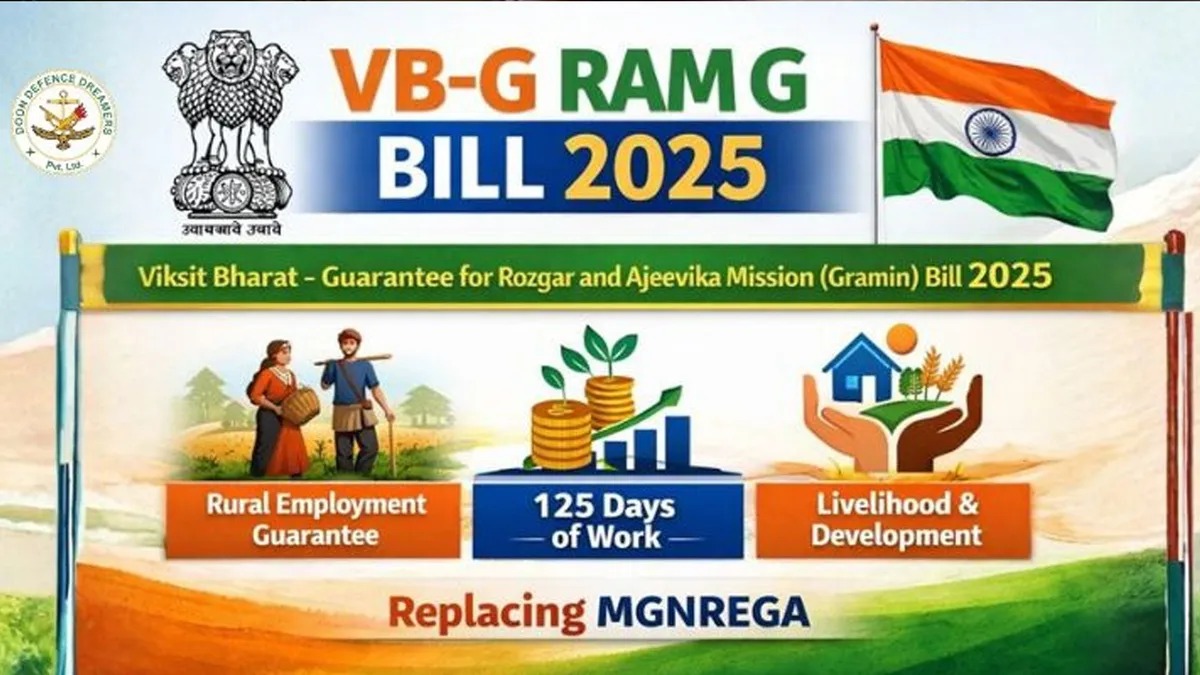
The Lok Sabha on Tuesday witnessed high drama as the government pushed through the VB-G RAM G Bill, a landmark piece of legislation that officially replaces the long-running MGNREGA scheme with a new rural employment framework guaranteeing 125 days of work per household annually. The Bill was passed amid loud protests, walkouts, and sloganeering by opposition parties, who accused the government of dismantling a crucial social safety net without adequate consultation.
The government, however, defended the move as a modern overhaul of rural employment policy, claiming the new scheme is designed to be more efficient, outcome-oriented, and aligned with current rural development needs. According to the Bill, the VB-G RAM G programme aims to link employment with productive asset creation, village-level infrastructure, and skill-based work, moving beyond what the government described as “outdated mechanisms” of the earlier system.
In a key assurance, the Centre highlighted that the new scheme increases the guaranteed employment period to 125 days, positioning it as a stronger income support measure for rural households. Officials stated that the programme will prioritise timely wage payments, digital monitoring, and convergence with other rural development initiatives to reduce leakages and delays that had plagued earlier models.
The opposition, however, remained unconvinced. Several MPs termed the Bill an “attack on rural rights”, arguing that MGNREGA was not just an employment scheme but a legal entitlement that empowered millions of rural families during economic distress. They alleged that replacing it with a new framework could weaken job security and place excessive control in the hands of the Centre. The protests grew so intense that parliamentary proceedings were disrupted multiple times before the House was briefly adjourned.
Rural activists and policy experts are sharply divided on the move. While some see the VB-G RAM G scheme as a necessary reform to make rural employment more productive and future-ready, others warn that the transition phase could create uncertainty for workers who have depended on MGNREGA for years. Concerns have also been raised about implementation clarity, state-centre coordination, and whether the promised 125 days of work will be uniformly delivered across regions.
With the Bill now passed in the Lok Sabha, the government is expected to roll out detailed guidelines and implementation timelines in the coming weeks. As the debate shifts from Parliament to the ground, the real test of the VB-G RAM G scheme will lie in whether it can match or surpass the reach, reliability, and impact of the programme it replaces.