
|
Getting your Trinity Audio player ready...
|
Relations between India and Bangladesh have entered a tense phase after New Delhi formally summoned the Bangladeshi High Commissioner following the brutal lynching of a Hindu man in Bangladesh’s Mymensingh district. The incident has triggered widespread outrage in India, spilling onto the streets of several major cities and escalating into a serious diplomatic issue.
According to official sources, the Indian government conveyed its strong concern over the killing, stressing that incidents targeting minorities across the border are being closely monitored. The summons is being seen as a clear signal that New Delhi expects accountability, swift investigation, and concrete action from Dhaka to prevent such incidents in the future.
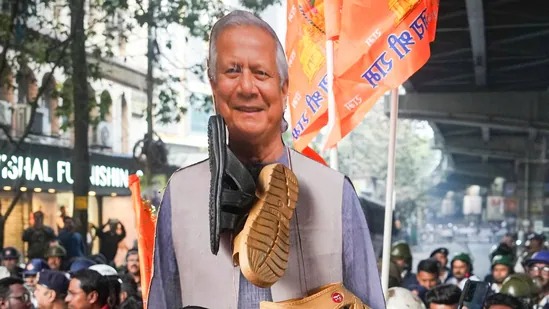
The anger on the ground was visible on Monday as protests erupted in multiple Indian cities. Demonstrators gathered outside the Bangladesh High Commission in New Delhi, raising slogans and demanding justice for the victim. What began as a peaceful protest soon turned tense, with reports of scuffles and clashes as security forces attempted to control the swelling crowd. Police presence was significantly increased in the area to prevent the situation from spiralling further.
Protesters accused Bangladeshi authorities of failing to protect minority communities and demanded stronger international pressure to ensure their safety. Several political and social groups also joined the demonstrations, turning the issue into a broader debate on minority rights, regional stability, and cross-border responsibility.
Within diplomatic circles, the development is being viewed as a sensitive moment for India–Bangladesh relations, which have largely remained stable and cooperative in recent years. Analysts say such incidents, if not handled carefully, risk undoing progress made on trade, security cooperation, and regional partnerships.
In Bangladesh, the lynching has reportedly drawn condemnation from civil society voices, with calls for a transparent investigation and strict punishment for those involved. The incident has once again highlighted the fragile communal fault lines in the region and the potential for local crimes to snowball into international flashpoints.
For India, the message appears clear: violence against minorities in neighbouring countries will not be treated as an internal matter alone when it sparks public outrage and security concerns at home. With protests continuing and diplomatic channels active, the coming days will be crucial in determining whether the situation cools down or escalates further.
As emotions remain high on both sides, observers say restraint, clear communication, and decisive action will be key to preventing long-term damage to bilateral ties.