

|
Getting your Trinity Audio player ready...
|
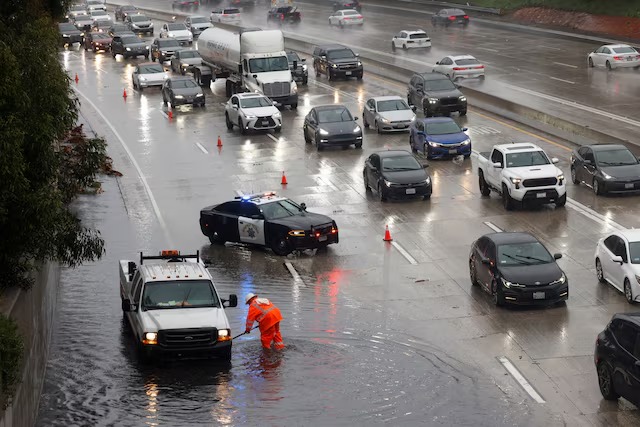
A powerful winter storm sweeping across the United States has brought Southern California to a standstill, unleashing torrential rains, flash floods, and dangerous mudslides that have forced thousands of residents to evacuate their homes. Authorities have described the situation as “life-threatening,” as relentless downpours overwhelmed drainage systems, flooded roads, and triggered landslides in fire-scarred and hillside areas.
From Los Angeles to San Diego, entire neighborhoods woke up to submerged streets and rushing water. Emergency crews worked around the clock to rescue stranded residents, clear debris, and secure vulnerable zones. Low-lying communities and areas near rivers and burn scars were placed under mandatory evacuation orders, with officials warning that conditions could worsen rapidly as rainfall continued.
The storm, driven by a strong atmospheric system, dumped months’ worth of rain in just a few days. Rivers and creeks rose dangerously fast, while urban flooding turned major roads into impassable waterways. Schools were closed in several districts, flights were delayed or canceled, and commuters were urged to stay off the roads unless absolutely necessary.
Fire officials raised particular concern for regions that had recently experienced wildfires. Without vegetation to hold the soil, heavy rain quickly turned slopes into fast-moving mudflows, destroying property and cutting off access to entire communities. Residents in these areas were urged to evacuate immediately, as emergency responders warned that rescue operations could become impossible if conditions deteriorated further.
Beyond California, the storm system is part of a broader wave of extreme winter weather affecting large parts of the country. While the West Coast battled flooding rains, other regions braced for heavy snow, ice, and freezing temperatures. Meteorologists cautioned that this sharp contrast highlights the growing unpredictability of winter weather patterns, with extreme conditions occurring simultaneously across different parts of the nation.
Local leaders emphasized that public safety remains the top priority. Emergency shelters were opened to accommodate displaced families, and disaster response teams were deployed to assist those impacted. Officials urged residents to monitor weather alerts closely, avoid floodwaters, and follow evacuation instructions without delay.
For many Californians, the storm has been a harsh reminder of how quickly nature can overwhelm even well-prepared cities. As cleanup efforts begin in areas where the rain has eased, authorities continue to warn that the danger is not yet over. With more rain expected in the coming days, communities remain on high alert, hoping the worst will pass without further loss of life.