
|
Getting your Trinity Audio player ready...
|
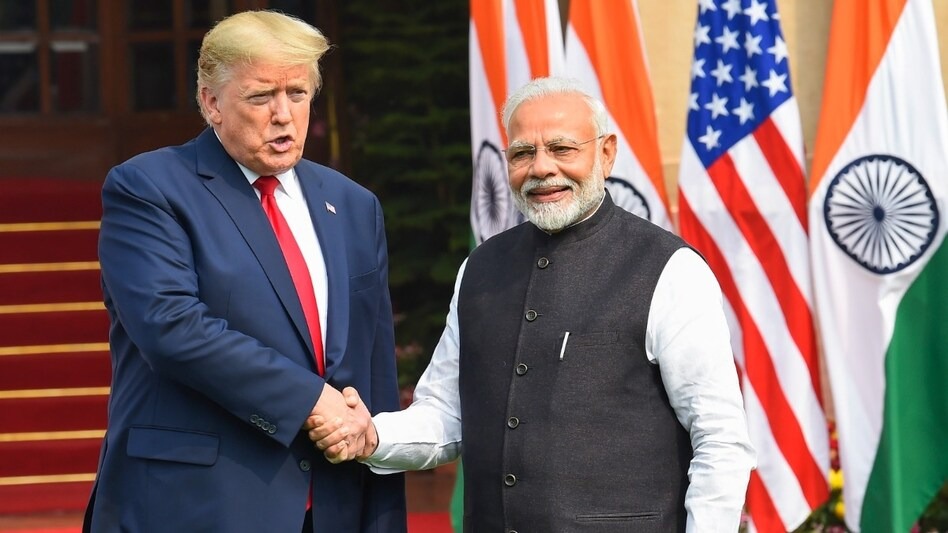
India is facing a fresh foreign policy balancing act as former US President Donald Trump’s reported “Gaza Board of Peace” proposal sparks debate across global diplomatic circles. With West Asia already on edge after months of conflict, the idea of an international framework to manage or “stabilize” Gaza is being viewed by many as both a potential breakthrough and a dangerous political gamble and New Delhi is now under pressure to respond carefully without upsetting its strategic interests on either side.
At the center of this dilemma lies India’s longstanding commitment to supporting Palestinian rights and a two-state solution, while also maintaining one of its closest security and defense partnerships in the region with Israel. Over the years, India has strengthened its ties with Tel Aviv in areas like military technology, counter-terror cooperation, and strategic intelligence. At the same time, it has avoided abandoning its historical position on Palestine, often calling for dialogue, humanitarian assistance, and a peaceful resolution through diplomatic means.
Trump’s “Gaza Board of Peace” concept, as discussed internationally, is being interpreted as an attempt to bring external authority into the governance and rebuilding process of Gaza after the destruction caused by war. Supporters of such models argue that Gaza may need a temporary international mechanism for administration, reconstruction, and security to prevent a return to instability. Critics, however, warn that any externally imposed structure especially one shaped by political interests rather than broad global consensus could deepen resentment on the ground and intensify regional tensions.
For India, the question is not only about what the plan includes but also about what it could symbolically represent. Any plan linked to Trump’s worldview carries major political messaging. Trump is widely seen as strongly aligned with Israel, particularly due to his previous policies that were celebrated in Tel Aviv but viewed as damaging to Palestinian aspirations. If this proposal appears to bypass Palestinian leadership or limit sovereignty, India risks being seen as endorsing a framework that undermines Palestinian self-rule, something that could impact its credibility among Arab and Muslim-majority nations and also trigger domestic debate.
India’s growing dependence on energy imports from the Gulf region adds another layer to its geopolitical calculation. Countries like Saudi Arabia, the UAE, Qatar, and others remain crucial not only for India’s oil and gas security but also for trade and investment ties. Millions of Indians also work across West Asia, making regional stability a direct national interest. Any shift that is perceived as “taking sides” in a volatile geopolitical environment can have both economic and strategic consequences for New Delhi.
There is also the reality that India has increasingly positioned itself as a practical, interest-driven global player. In recent years, New Delhi has demonstrated a preference for careful diplomacy rather than loud alignment. During the ongoing Gaza conflict, India has walked a cautious line condemning terrorism and supporting Israel’s right to defend itself, while also raising concerns about civilian casualties and advocating humanitarian aid. This balancing approach has allowed India to protect its defense partnership with Israel while keeping open channels with Arab countries and maintaining its position as a responsible international stakeholder.
However, any “peace board” proposal for Gaza could force a clearer response. If Washington pushes international partners to support a new governance framework, India will need to choose its words with precision. Supporting stability and reconstruction is one thing supporting a model that appears to replace Palestinian political authority is another. This is where India’s diplomacy becomes complicated, because refusing outright could strain relations with a major partner, while openly supporting could damage its image as a voice of fairness and non-interference in conflict zones.
Experts view India’s likely approach as measured: backing humanitarian initiatives, advocating ceasefire-linked relief efforts, and pushing for political dialogue without formally endorsing any externally imposed “board” structure. India may also quietly encourage solutions that include regional stakeholders and Palestinian representation rather than plans that appear to be driven by one power center. This would align with India’s preference for multilateralism and its consistent call for long-term peace through a two-state solution.
At the ground level, the future of Gaza remains uncertain. Any peace architecture will have to address security, reconstruction, political legitimacy, and the everyday survival of civilians. Without trust from local communities and recognition from key regional powers, even a strongly promoted international plan could fail. That is why many analysts believe that peace proposals are not just about ideas, but about legitimacy and legitimacy is often shaped by who gets included and who gets sidelined. As global attention remains fixed on Gaza, India’s response will be watched closely not because it is expected to lead the initiative, but because it represents a rising power that has strong relationships on both sides of one of the world’s most polarizing conflicts. For New Delhi, the Gaza question is no longer just about foreign policy statements, it is about protecting strategic interests, ensuring regional stability, safeguarding its diaspora, and maintaining its global credibility at the same time.