
|
Getting your Trinity Audio player ready...
|
Chandigarh | September 2025 –
The Ravi river, once celebrated in poetry, music, and shayari as a symbol of emptiness and heartbreak, has now returned in a form no one expected swollen, ferocious, and flooding vast stretches of Punjab. After years of being described as “dry” in literature and songs, Ravi has changed its metaphor overnight. Villagers now say with bitter irony, “Ravi is not empty anymore it has found its way back, just like love does.”
The floods have displaced thousands, devastated crops, and reshaped the cultural conversation around one of North India’s most historic rivers.
Flood Situation on the Ground
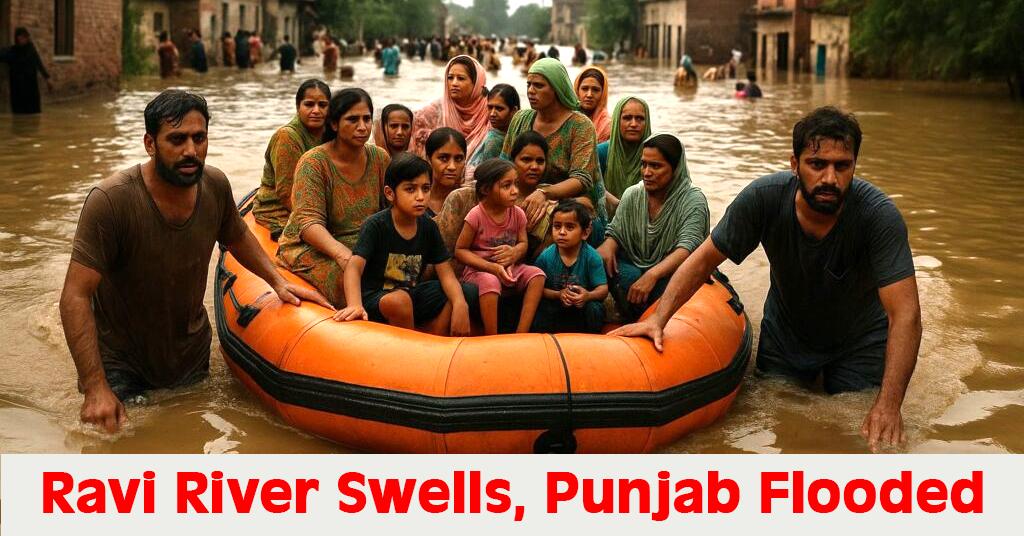
Heavy monsoon rains and continuous water release from upstream have pushed the Ravi beyond its capacity. Low-lying areas in Gurdaspur, Pathankot, and Amritsar districts are among the worst affected.
Officials from the Punjab State Disaster Management Authority (PSDMS) confirmed that over 40,000 residents have been evacuated to relief camps. Bridges are under water, villages cut off, and electricity supplies disrupted. Farmers report severe crop damage, particularly to paddy and maize, with early estimates suggesting losses of several hundred crores.
The River in Culture and Irony of the Moment
For decades, Ravi has held a place in cultural memory as a metaphor for longing and heartbreak. Popular songs and shayaris, especially the hauntingly beautiful “Ravi” by Sajjad Ali, painted the river as a symbol of emptiness – a dried-up stream mirroring broken love stories.
But as floodwaters now reclaim its banks, reels and short videos flood social media, ironically playing that very song. Youth on Instagram and TikTok are captioning their reels: “Ravi is full again, love finds its way back.”
This unexpected cultural twist has turned a tragedy into a moment of bittersweet reflection, blending human suffering with poetic irony.
Relief Measures
The state government has deployed the NDRF and SDRF teams for rescue and relief operations. Community kitchens are running in Amritsar and Pathankot to feed the displaced. Compensation announcements have been made, though residents complain of delays and inadequate arrangements.
Meanwhile, experts are warning of health risks such as waterborne diseases in relief camps if conditions persist.
The Larger Picture
The Ravi is part of the five rivers that give Punjab its name. Environmental experts argue that years of unchecked construction, sand mining, and shrinking floodplains have worsened the impact of natural flooding. Climate change, too, is making monsoons more erratic, increasing both drought and flood risks.
Parting Thoughts
The Ravi, once a symbol of emptiness in art, has returned with a vengeance, changing its metaphor in real life. As Punjab reels under devastating floods, people are left balancing two realities the poetic beauty of a river rediscovered and the harsh tragedy of lives washed away.
For now, Ravi is overflowing with water, history, and irony.