
|
Getting your Trinity Audio player ready...
|
September, 2025
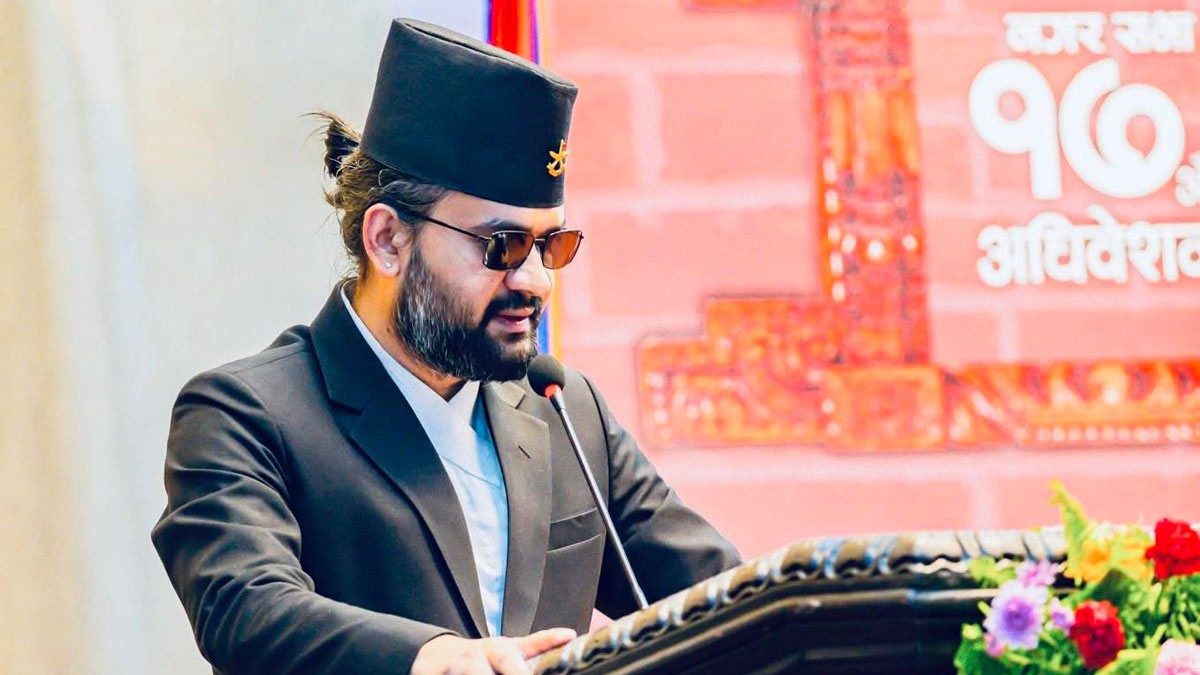
Nepal’s political landscape is undergoing a generational shift in the wake of Prime Minister K.P. Sharma Oli’s resignation. At the forefront of this transformation stands Balendra Shah, popularly known as Balen, a 35-year-old structural engineer, independent mayor of Kathmandu, and rapper whose unconventional career path has made him the voice of a new political generation. His growing influence is no longer confined to municipal politics; he is now widely discussed as a potential national leader, even a future prime minister, as Nepal’s youth turn to him for inspiration and reform.
From Artist to Outsider Politician
Unlike traditional party figures, Balen’s political career emerged from his cultural and civic engagement rather than partisan networks. Through socially charged rap, he critiqued corruption, inequality, and governance failures. In 2022, he stood as an independent candidate for Kathmandu’s mayoral election and secured a resounding victory, a landmark moment in Nepalese politics where party-affiliated candidates had long dominated the scene. His win signaled both a rejection of established elites and an appetite for fresh leadership.
The Gen Z Connection
Balen’s prominence has grown in parallel with Nepal’s unrest. His extensive social media following over 800,000 across platforms made him a key figure during recent mass protests triggered by a controversial social media ban and grievances over unemployment, inflation, and systemic corruption. Instead of stoking unrest, he urged young protesters toward restraint, while openly criticizing Oli’s leadership. His ability to both empathize with public anger and channel it constructively has resonated deeply with Gen Z, many of whom view him as a generational representative.
A Symbol of Integrity and Civic Change
As mayor, Balen built credibility by focusing on urban reform, transparency, and anti-corruption measures. His public persona combines a reform-driven professional outlook with a straightforward authenticity that contrasts sharply with entrenched partisan discourse. Critically, he remains unaffiliated with any existing political party, a factor that strengthens his appeal among disenchanted citizens. His blunt statement labeling Oli a “terrorist for ignoring the suffering of the youth” only reinforced his outspoken stance.
International recognition has amplified his image. In 2023, TIME magazine listed him among the “Top 100 Most Influential People”, underscoring his rising global relevance as a political innovator from South Asia.
Interim Leadership and Reform Discourse
Within the broader political dialogue on Nepal’s uncertain future, Balen has increasingly been mentioned as a possible candidate for leadership in an interim authority council tasked with navigating the country toward fresh elections within the next 18 months. Youth organizations that spearheaded the protests have begun formally presenting him as a drafting face of systemic reform and governance renewal.
Why His Rise Is Significant
The rise of Balendra Shah signals a break from political inertia, corruption scandals, and decades of elite-centered governance in Nepal. His ascent embodies three significant trends:
- Authenticity over Affiliation: His political capital is rooted in civic trust rather than party loyalty.
- Generational Voice: He bridges the concerns of Gen Z with authority, making him a natural rallying figure for youth dissatisfaction.
- Reform-Oriented Governance: His mayoral record highlights transparency, infrastructure modernization, and citizen-first approaches unheard of in recent administrations.
Parting Thoughts
As Nepal confronts political and social upheaval, Balendra Shah stands as both a symbol of generational hope and a potential architect of reform. Whether he transitions into national leadership or remains a municipal reformer with broader influence, one reality is undeniable: Nepal’s youth are no longer looking to established elites for answers. They are looking to Balen. His rise marks the beginning of a possible paradigm shift in how leadership is imagined and who it is meant to represent.