
|
Getting your Trinity Audio player ready...
|
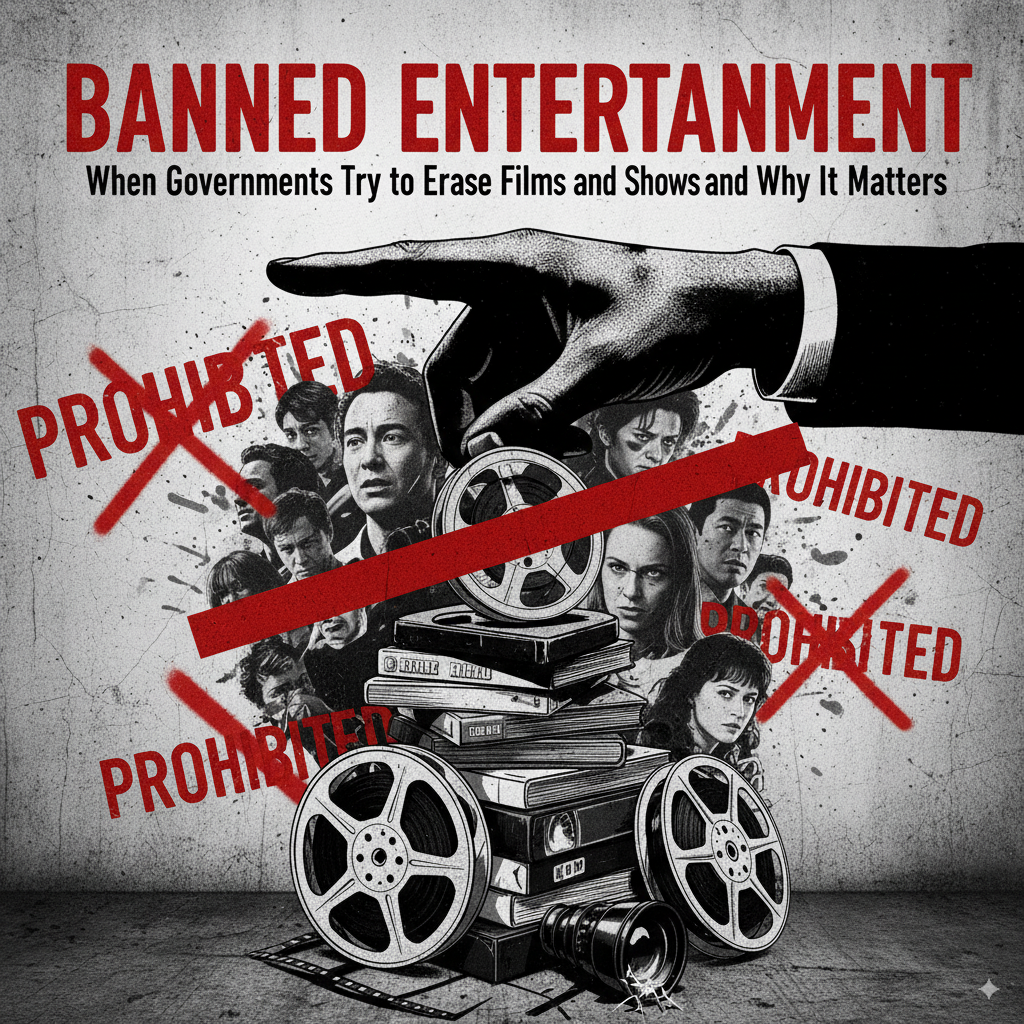
Entertainment is often seen as a reflection of society, a mirror that reveals its triumphs, struggles, and contradictions. Yet, sometimes this mirror is deliberately cracked or covered over. Across the globe, numerous films and television shows have faced bans or censorship, often due to political, religious, or social pressures. These actions raise critical questions about freedom of expression, cultural control, and the power of storytelling.
Firstly, Understand Why Do Governments Ban Films and Shows?
Governments intervene in entertainment for a variety of reasons, often citing the need to protect public order, morality, or national security. However, beneath these official reasons lie deeper concerns:
- Political Control: Films or shows that criticize governments, highlight sensitive historical issues, or question official narratives may be suppressed to prevent dissent.
- Religious or Cultural Sensitivity: Content deemed blasphemous, offensive, or disrespectful to dominant religious or cultural values can face bans, aiming to maintain social harmony or status quo.
- Moral Policing: Scenes depicting violence, sexuality, or controversial lifestyles may be censored or removed in societies with conservative values.
- Ethnic or Nationalist Tensions: Content perceived as promoting separatism or challenging dominant ethnic narratives can trigger bans to preserve national unity.
Notorious Examples of Banned Entertainment Worldwide
- “The Interview” (2014): This satirical film about an assassination plot against North Korea’s leader sparked international uproar, leading to threats and limited release due to North Korean government protests.
- “Persepolis” (2007): An animated film depicting the Iranian Revolution, it was banned in Iran for portraying the regime negatively and challenging official history.
- “Game of Thrones” (TV series): Certain episodes were banned or censored in countries like China and India due to violence, nudity, and political sensitivities.
- “The Birth of a Nation” (1915): Controversial for its racist portrayal of African Americans and glorification of the Ku Klux Klan, this film faced bans and protests throughout U.S. history.
Banned Entertainment in India: A Complex Story
India’s diverse and vibrant entertainment industry often walks a tightrope between creativity and censorship. The Central Board of Film Certification (CBFC) regulates movies and shows, and its decisions sometimes spark controversy.
- Political Sensitivities: Films like Padmaavat (2018) faced violent protests and bans in some states due to perceived historical inaccuracies and offending cultural sentiments.
- Religious and Social Concerns: Movies like Udta Punjab (2016), which tackled drug abuse, encountered extensive censorship demands and temporary bans for portraying Punjab negatively.
- Regional and Linguistic Politics: Occasionally, films in certain languages or dealing with regional issues face bans due to political tensions, such as the controversies surrounding Pariyerum Perumal (Tamil, 2018) and Kaala (Tamil, 2018).
How Bans Impact Society and Art
Banning films or TV shows often backfires. It can increase curiosity, boost underground viewership, and ignite debates about artistic freedom. For creators, censorship stifles innovation and limits storytelling’s role in society’s self-exploration and growth.
Moreover, bans can create cultural “blind spots” stories and perspectives that never reach the audience, narrowing the diversity of ideas in public discourse.
The Fight for Freedom of Expression
Activists, filmmakers, and audiences continue to push back against censorship worldwide. Calls for transparent, fair, and updated certification processes grow louder in India and beyond. Digital platforms complicate the landscape, as streaming services often bypass traditional censorship, bringing banned or controversial content to wider audiences.
Why Engaging With Banned Entertainment Matters
Understanding banned films and shows offers more than entertainment trivia—it illuminates the ongoing tensions between power and creativity, control and freedom. For Indian audiences, it connects to broader struggles around democracy, identity, and open dialogue in one of the world’s most plural societies. As consumers and creators of culture, embracing diverse and provocative voices even when uncomfortable is necessary for a vibrant, evolving society. The stories governments try to erase often hold clues to societal truths and healing.
Parting Thoughts
Banned entertainment is a window into the complex interplay of art, politics, and society. Exploring these controversies encourages critical engagement, reminding us that the fight to tell and hear stories freely is far from over.