
|
Getting your Trinity Audio player ready...
|
The recent violence in Ladakh, demanding statehood and constitutional safeguards, resulted in four deaths and dozens of injuries, marking one of the darkest days in the Union Territory’s recent history. Government sources have now claimed the unrest was not spontaneous but deliberately orchestrated, framing it as a politically motivated conspiracy that misled Ladakh’s youth and endangered public peace.
The Violence and Its Impact
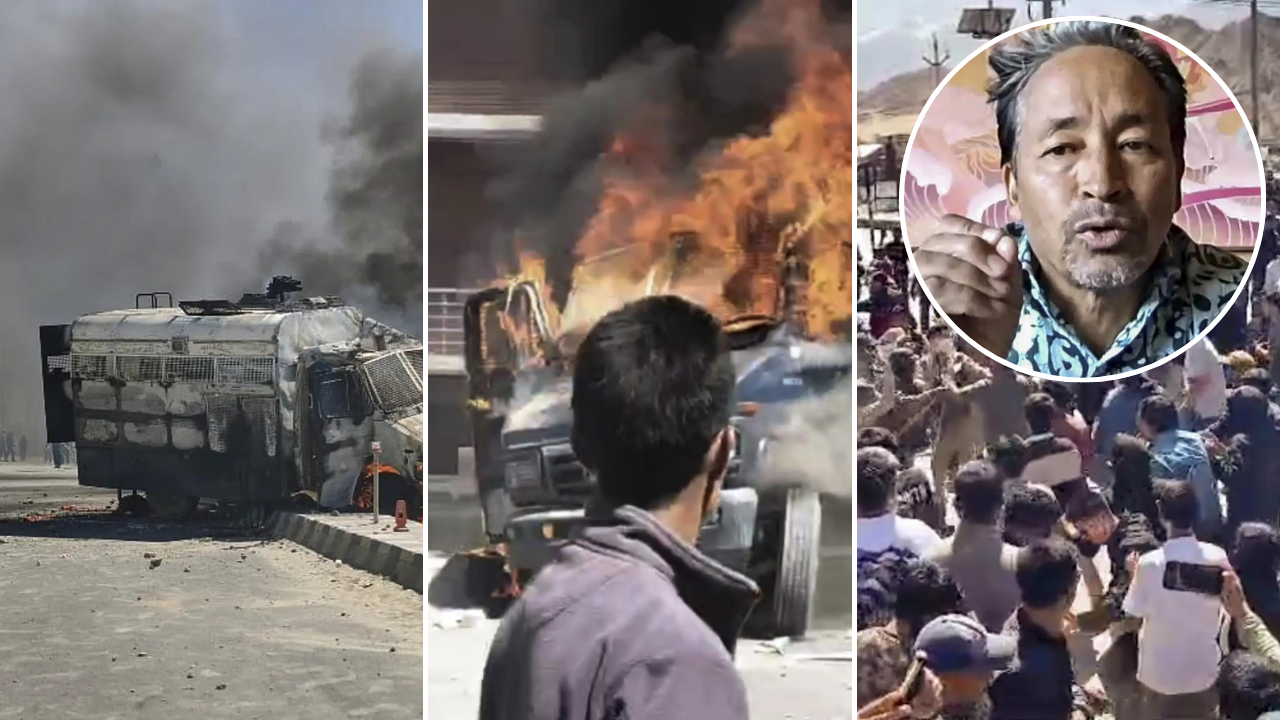
On September 24, protests escalated into violent clashes between demonstrators and security forces in Leh. A mob torched the Ladakh Hill Council Assembly hall and set fire to a police vehicle as well as a local political party office. At least 45 civilians and 50 security personnel sustained injuries amid the chaos, with four people losing their lives amidst the turmoil. The administration imposed restrictions to stem further violence, but the scars of the day remain deep in the region’s collective memory
Government’s Allegations Against Activist Sonam Wangchuk
Central government officials singled out activist Sonam Wangchuk, who had been on a hunger strike demanding statehood and extension of the Sixth Schedule protections, accusing him of provoking the unrest through inflammatory rhetoric. Despite repeated calls from leaders to end the strike peacefully, Wangchuk allegedly continued his agitation, drawing parallels to the Arab Spring and recent Gen Z protests in Nepal, which authorities say misled and incited the youth.
A Conspiracy Motivated by Political and Personal Gains
Government sources described the situation as deliberately engineered by certain political and personal interests aiming to sabotage the dialogue process between the Centre and Ladakh’s representative bodies—the Apex Body Leh (ABL) and the Kargil Democratic Alliance (KDA). Officials accused opposition figures, especially certain Congress leaders, of encouraging disruptive actions including stone-pelting and arson, intensifying the unrest for their own agendas.
Dialogue and Talks: Government’s Stance
The Centre has emphasized its commitment to resolving Ladakh’s issues through peaceful dialogue. A high-powered committee (HPC) has been engaged with the ABL and KDA, achieving significant progress such as increased reservations for Scheduled Tribes and official recognition for local languages Bhoti and Purgi. The government had already scheduled a meeting on October 6, with considerations to advance talks to late September, demonstrating its openness to negotiations.
Wangchuk’s Response and Call for Peace
Following the violent events, Sonam Wangchuk ended his hunger strike, urging Ladakhi youth to halt violence and focus on constructive dialogue. He expressed sorrow over the derailment of a peaceful movement that had spanned five years and condemned the turn to violence. Wangchuk appealed to all parties to prioritize peace and avoid actions that harm Ladakh’s cause.
Broader Context and Future Outlook
Ladakh’s demand for statehood and special constitutional status under the Sixth Schedule reflects deeper aspirations for autonomy and protection of local identity. However, the recent violence highlights delicate political undercurrents challenging this pursuit. Moving forward, success hinges on sustained dialogue and avoidance of provocations that risk destabilizing the region’s fragile peace.