

|
Getting your Trinity Audio player ready...
|
Delhi has once again slipped into a severe air pollution crisis, forcing authorities to roll out some of the toughest anti-smog measures seen this season. With air quality remaining in the hazardous category for consecutive days, the government has activated the highest level of emergency response, aiming to immediately cut down pollution sources and protect public health across the National Capital Region.
Starting Thursday, both government and private offices have been directed to shift to a work-from-home model, allowing only essential staff to attend offices physically. Officials believe this move will significantly reduce daily traffic volume, which remains one of the biggest contributors to vehicular emissions in the city. Strict monitoring will be carried out, and non-compliance may invite penalties.
In a major crackdown on polluting vehicles, fuel stations across Delhi have been instructed to deny petrol and diesel to vehicles that do not possess a valid Pollution Under Control (PUC) certificate. Authorities say this step is aimed at ensuring only emission-compliant vehicles operate on city roads, discouraging owners from ignoring mandatory pollution checks.
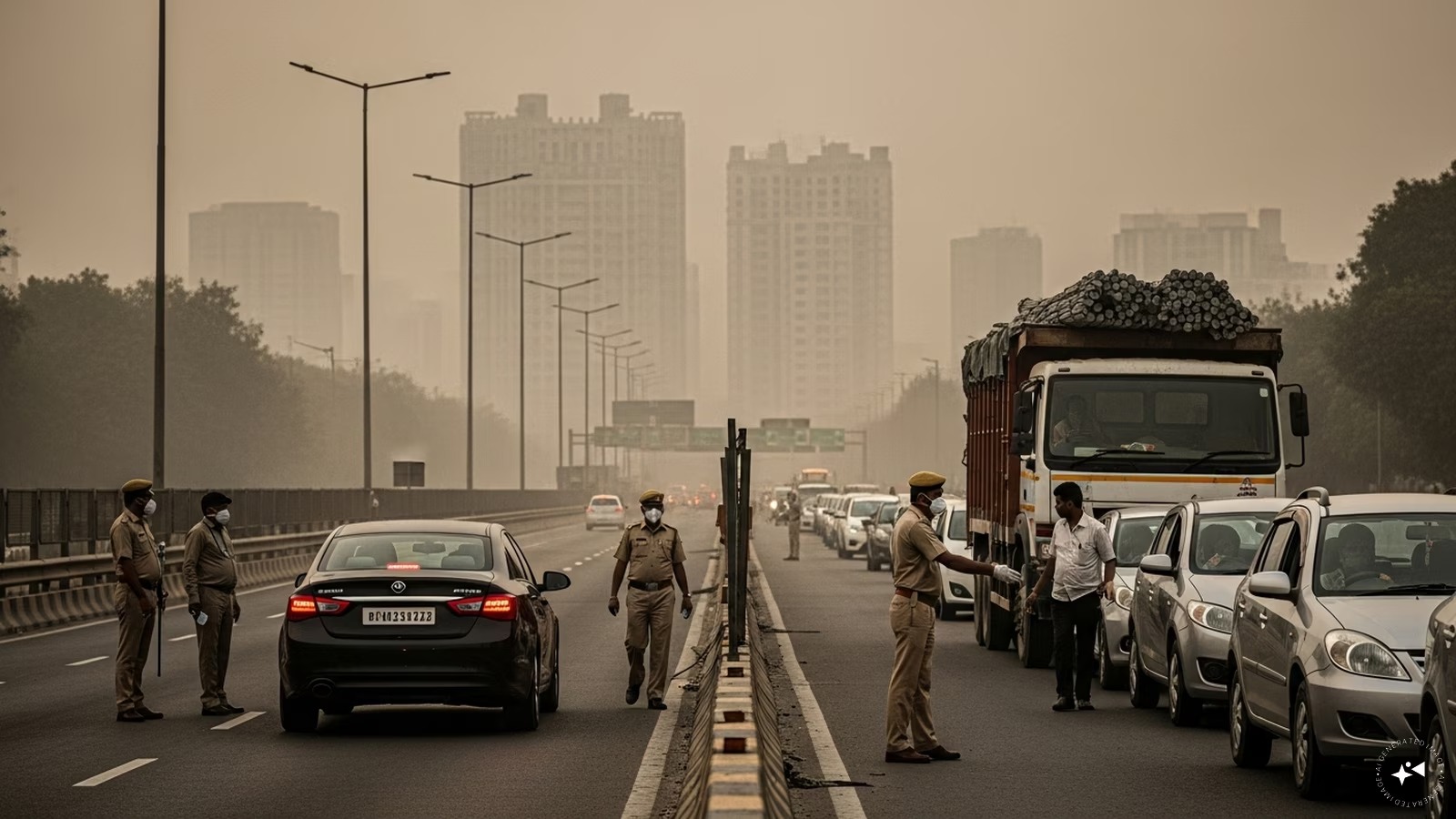
Further tightening the rules, older BS-III petrol and BS-IV diesel vehicles have been completely barred from entering or operating within Delhi. Only vehicles meeting the latest BS-VI emission norms are allowed during this phase of restrictions. Traffic police and enforcement teams have been deployed at city borders and major junctions to strictly implement the ban and issue fines to violators.
The government has also halted non-essential construction activities, restricted the movement of trucks carrying construction materials, and imposed controls on dust-generating activities. These steps are meant to reduce particulate matter, which has been identified as a major contributor to the thick smog engulfing the city.
Residents across Delhi have reported poor visibility, breathing discomfort, eye irritation, and persistent throat problems as pollution levels remain dangerously high. Health experts have warned that prolonged exposure to such air conditions can worsen respiratory and heart-related illnesses, especially among children, elderly citizens, and people with existing health conditions.
Officials have attributed the worsening situation to a combination of vehicular emissions, construction dust, stagnant weather conditions, and low wind speeds that trap pollutants close to the ground. Citizens have been advised to limit outdoor activities, wear protective masks, and use public transport wherever possible. The latest restrictions underline the seriousness of Delhi’s recurring winter pollution problem. Authorities say the measures will remain in force until air quality shows sustained improvement. Residents are being urged to cooperate fully, as even small behavioral changes can collectively help ease the capital’s ongoing air crisis.