

|
Getting your Trinity Audio player ready...
|
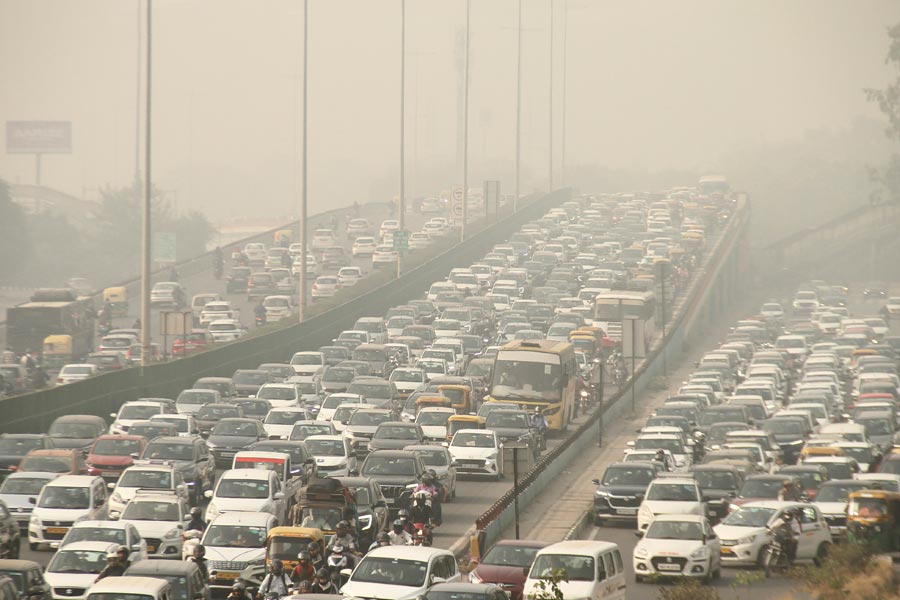
Delhi’s air quality has once again slipped into alarming territory, prompting the government to introduce strict measures to protect public health. With pollution levels rising steadily and the Air Quality Index (AQI) hovering around the “very poor” and “severe” categories in many parts of the capital, authorities have ordered both government and private offices to operate with only 50 percent staff physically present, while the remaining employees must work from home.
This directive has been issued under Stage III of the Graded Response Action Plan (GRAP), which comes into force when pollution crosses critical levels and demands immediate intervention. The decision aims to reduce the number of vehicles on Delhi’s congested roads, one of the biggest contributors to the current pollution spike.
Air quality monitors across the city recorded hazardous values, with several stations crossing the 400 mark. Calm winds, lower temperatures and dense particulate matter are trapping pollutants closer to the ground, worsening visibility and increasing respiratory risks for residents. Health experts warn that children, the elderly, and people with asthma or heart conditions should take extra precautions during this period.
The government’s order allows only essential services to operate without attendance restrictions. These include hospitals, fire and emergency departments, utilities, public transport, sanitation, disaster-response units and pollution-control teams. All other offices have been asked to enforce staggered working hours, remote work arrangements and reduced employee mobility.
Officials believe that controlling vehicular movement is crucial right now, especially when emissions from cars and two-wheelers have become a major contributor to the pollution load. Recent environmental assessments indicate that weather conditions combined with everyday emissions have created a thick toxic layer over the capital.
While the immediate restrictions may bring short-term relief, experts emphasize that Delhi needs stronger long-term solutions, including cleaner transportation, reduced industrial emissions, better waste-management systems and regional cooperation to improve air quality permanently. For now, the government urges citizens to stay indoors as much as possible, avoid strenuous outdoor activities and use masks or air purifiers if available. With the pollution challenge intensifying every winter, these emergency steps are seen as necessary to safeguard public health.