

|
Getting your Trinity Audio player ready...
|
A Rising Urban Menace
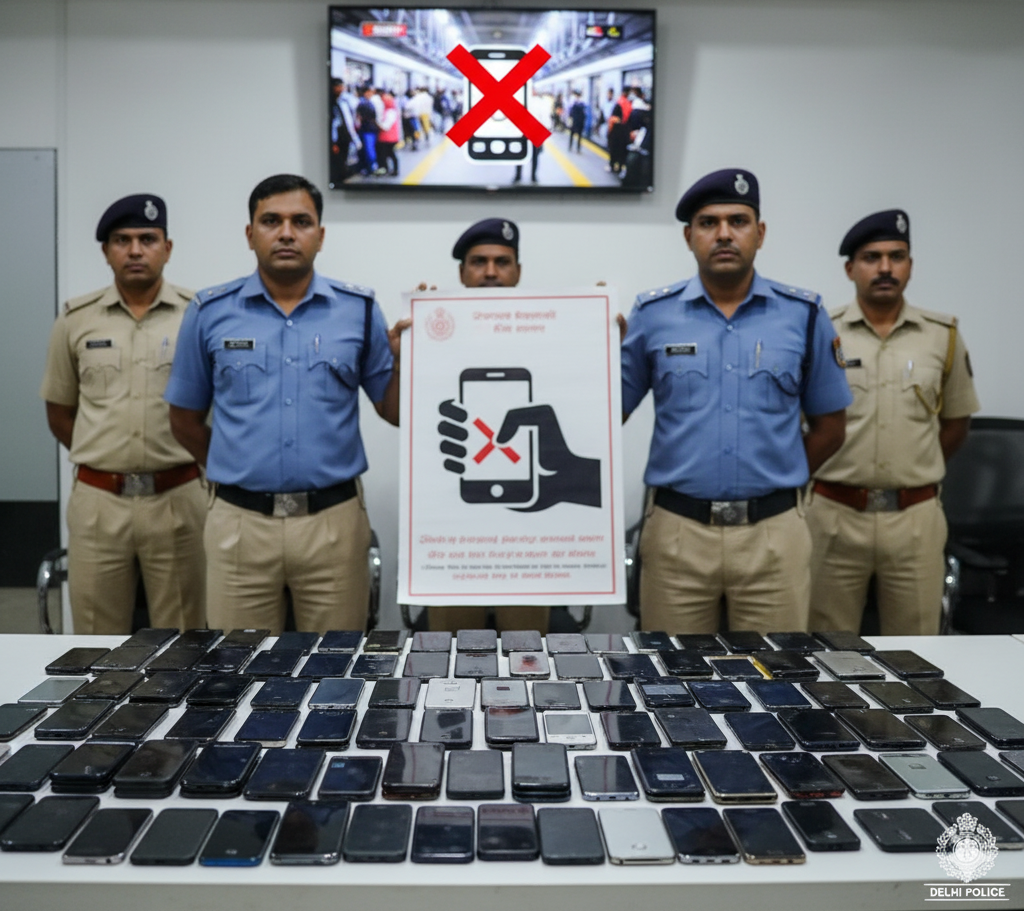
The Delhi Metro, India’s busiest urban transit system that ferries millions daily, is battling a troubling surge in mobile phone thefts. Recent police data reveals that mobile theft has become the most reported crime on the network, with hundreds of cases registered in 2025 alone. In a recent crackdown, authorities successfully recovered more than 350 stolen phones, shedding light on how deeply entrenched this crime has become in the capital’s daily commute.
The Scope of the Problem
According to Delhi Police, mobile snatching and thefts have overtaken other categories of metro-related crimes, such as pickpocketing or harassment. Passengers in crowded stations and peak-hour trains are the primary targets, with thieves employing swift, coordinated tactics to disappear into the throng before victims realize their loss.
Investigators noted that most incidents are concentrated in densely used corridors, including the Yellow Line (connecting Samaypur Badli to HUDA City Centre) and the Blue Line (Dwarka to Noida/Vaishali), which see the heaviest rush-hour traffic.
The Crackdown and Recoveries
Delhi Police’s Metro Unit, in coordination with specialized anti-theft squads, launched multiple operations over the past two months. Acting on intelligence and surveillance, they busted several organized gangs involved in systematic mobile theft.
During the crackdown, over 350 stolen mobile phones were recovered, with many already returned to their rightful owners. Authorities revealed that stolen devices are often resold in Delhi’s grey markets or smuggled out of the city to avoid detection. The arrests and seizures mark one of the largest anti-theft recoveries in the Metro’s recent history.
Victims Speak Out
For commuters, the experience of losing a phone is more than financial. “I lost my phone on the Rajiv Chowk platform during peak hours it was gone in seconds,” said Ramesh Singh, a daily commuter. “It’s not just about money; my contacts, work emails, and personal photos were all at risk.”
Another victim described how losing her phone on the Yellow Line disrupted her work for days. These accounts highlight the emotional and practical disruption caused by theft, especially in a city where phones serve as lifelines for communication, banking, and navigation.
Police Measures and Challenges
Officials have assured commuters that security is being tightened, with increased deployment of plainclothes personnel and enhanced CCTV monitoring in high-risk areas. Announcements urging passengers to stay alert are being made regularly, and awareness drives are underway to educate commuters about safeguarding belongings.
Despite these efforts, the sheer volume of daily footfall averaging nearly 70 lakh passengers poses a challenge. Policing every corner of the metro system, spread across 12 lines and more than 290 stations, remains a daunting task.
Organized Crime Networks
Investigators suspect that many thefts are not isolated acts but part of organized crime syndicates. Stolen devices are often quickly dismantled, reprogrammed, or shipped to black markets. Some gangs reportedly use minors to carry out the thefts, exploiting their ability to blend into crowded environments without drawing suspicion.
Parting Thoughts
While Delhi Police’s crackdown and the recovery of over 350 phones provide relief, the problem of mobile theft on the Metro remains a significant urban challenge. For commuters, vigilance is essential: staying alert in crowded spaces, securing valuables, and reporting incidents promptly can make a difference.
For authorities, the battle against theft is ongoing, demanding smarter surveillance, stricter policing, and a stronger crackdown on grey markets that fuel the crime. Until then, the daily ride on the Delhi Metro will remain shadowed by the risk of theft, an irony for a system otherwise celebrated as the capital’s lifeline.