

|
Getting your Trinity Audio player ready...
|
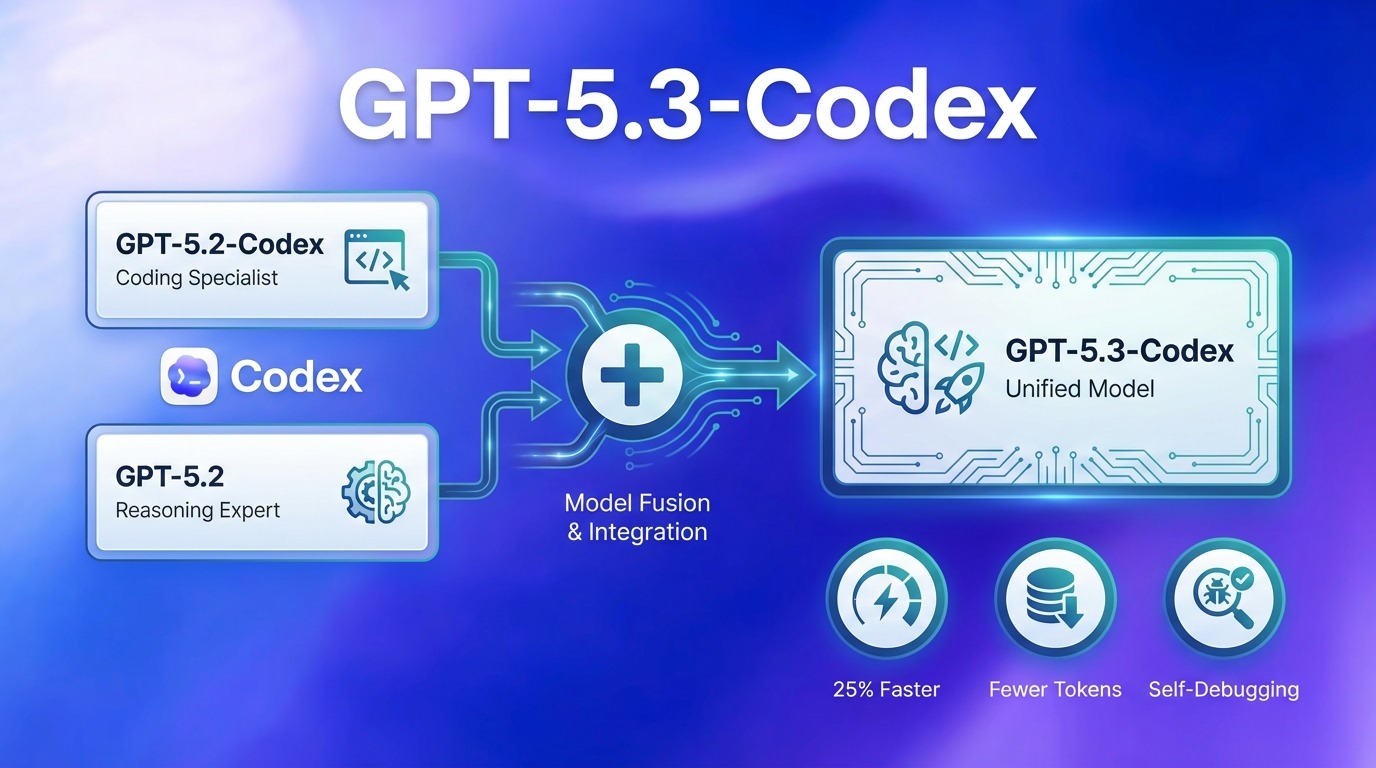
The battle for dominance in artificial intelligence has entered a new and far more technical phase. Just days after Anthropic raised eyebrows across the tech world with the launch of Claude Opus 4.6, OpenAI responded with a bold counter move. The company has unveiled GPT-5.3 Codex, calling it its most advanced coding agent to date and a major leap forward in how machines understand, write, and debug software.
The announcement has sent a clear message across Silicon Valley and beyond. The race to build the smartest AI coder is no longer theoretical. It is active, aggressive, and accelerating at full speed.
A Direct Response in an Escalating AI Rivalry
The timing of GPT-5.3 Codex is no coincidence. The AI industry has been closely watching the growing rivalry between OpenAI and Anthropic, two companies that share philosophical roots but are now fierce competitors.
Anthropic’s Claude Opus 4.6 positioned itself as a powerful reasoning and coding model, particularly praised for handling long and complex programming tasks. Within days, OpenAI’s response arrived, signaling that the company was not willing to cede ground in what many now call the most important AI battleground: software development.
Industry insiders describe this moment as the beginning of an AI arms race focused squarely on developers.
What Exactly Is GPT-5.3 Codex
GPT-5.3 Codex is not just another language model update. According to OpenAI, it is a specialized coding agent designed to work like a highly skilled software engineer rather than a simple code generator.
Unlike earlier AI tools that focused on completing code snippets or answering programming questions, Codex is built to understand entire codebases, follow multi step instructions, identify bugs, refactor large projects, and even explain why certain design decisions make sense.
In simpler terms, OpenAI is aiming to turn AI from a coding assistant into a coding partner.
From Writing Code to Owning the Workflow
One of the biggest shifts with GPT-5.3 Codex is its ability to operate across the full development lifecycle. Developers familiar with earlier AI tools often had to carefully guide the model line by line. Codex, however, is designed to take broader goals and break them down into executable actions.
For example, instead of asking an AI to write a single function, developers can ask Codex to build a feature, fix a performance issue, or migrate a project to a new framework. The system then plans the steps, modifies files, and tests changes logically.
This shift moves AI closer to autonomous development, a concept that was once considered years away.
Why Coding Has Become the AI Industry’s Main Battlefield
Coding is no longer just a technical skill. It is the backbone of every modern business, from banking and healthcare to entertainment and government systems. Whoever controls the best AI coding tools stands to reshape how software is built worldwide.
Both OpenAI and Anthropic understand this. AI that can code reliably is not just useful for developers. It can reduce costs, accelerate innovation, and change how companies hire and train engineers.
That is why GPT-5.3 Codex is being positioned not as a chatbot but as infrastructure.
How GPT-5.3 Codex Stands Apart
According to early technical descriptions, Codex focuses heavily on precision, consistency, and long term context. Traditional language models often struggle when projects span thousands of lines of code or involve multiple files and dependencies.
Codex is trained to track context over extended sessions, remember earlier decisions, and avoid introducing conflicting logic. This is especially important for enterprise level software, where small errors can lead to massive failures.
Developers testing early versions say the model feels less like a guessing machine and more like a thoughtful collaborator.
The Claude Opus Comparison Everyone Is Making
While Anthropic’s Claude Opus 4.6 impressed many with its reasoning and safety focused design, OpenAI appears to be betting heavily on execution speed and practical developer productivity.
Claude Opus is often described as careful and deliberate. GPT-5.3 Codex, on the other hand, is being marketed as decisive and action oriented. The difference highlights a philosophical split in the AI world: should models prioritize cautious reasoning or rapid problem solving.
The market will ultimately decide which approach developers trust more.
Implications for Software Developers Worldwide
For millions of developers, this rivalry could dramatically change daily work. Routine tasks like debugging, documentation, testing, and refactoring may soon be handled largely by AI.
This does not mean developers will become obsolete. Instead, their role may shift toward architecture, creativity, and oversight. AI will handle execution. Humans will define intent.
Some engineers welcome this shift. Others worry about overreliance on systems they do not fully control.
Enterprise Adoption and Business Impact
Large companies are watching closely. AI coding agents like GPT-5.3 Codex could significantly reduce development time for internal tools and customer facing products.
For startups, access to such tools could level the playing field, allowing small teams to build products that once required large engineering departments.
However, questions remain around security, accountability, and intellectual property. Businesses will need strong safeguards to ensure AI generated code meets compliance standards.
Safety, Control, and Responsibility
OpenAI has emphasized that Codex includes guardrails designed to prevent misuse, insecure coding practices, or unauthorized access. Still, experts caution that no AI system is perfect.
As AI gains more autonomy in coding, the risk of subtle bugs or vulnerabilities increases. This makes human review and testing more important than ever.
The challenge for the industry will be balancing speed with safety.
A Signal of Where AI Is Headed
The launch of GPT-5.3 Codex is about more than beating a competitor. It signals where AI development is heading next. The focus is shifting from conversation to action, from answers to outcomes.
Coding agents are a natural step toward AI systems that can operate independently across complex domains.
Many believe this is just the beginning.
The Bigger Picture in the AI Race
This showdown between OpenAI and Anthropic reflects a larger trend. AI companies are no longer competing solely on who has the smartest chatbot. They are competing on who can build tools that reshape entire industries.
Coding happens to be the first major proving ground.
As models become more capable, similar battles are expected in fields like design, research, law, and scientific discovery.
What Happens Next
For now, developers will experiment, compare, and choose the tools that best fit their workflow. Some will prefer Claude’s careful reasoning. Others will gravitate toward Codex’s assertive execution.
What is certain is that the pace of innovation will only accelerate.
In the world of artificial intelligence, standing still is no longer an option.