

|
Getting your Trinity Audio player ready...
|
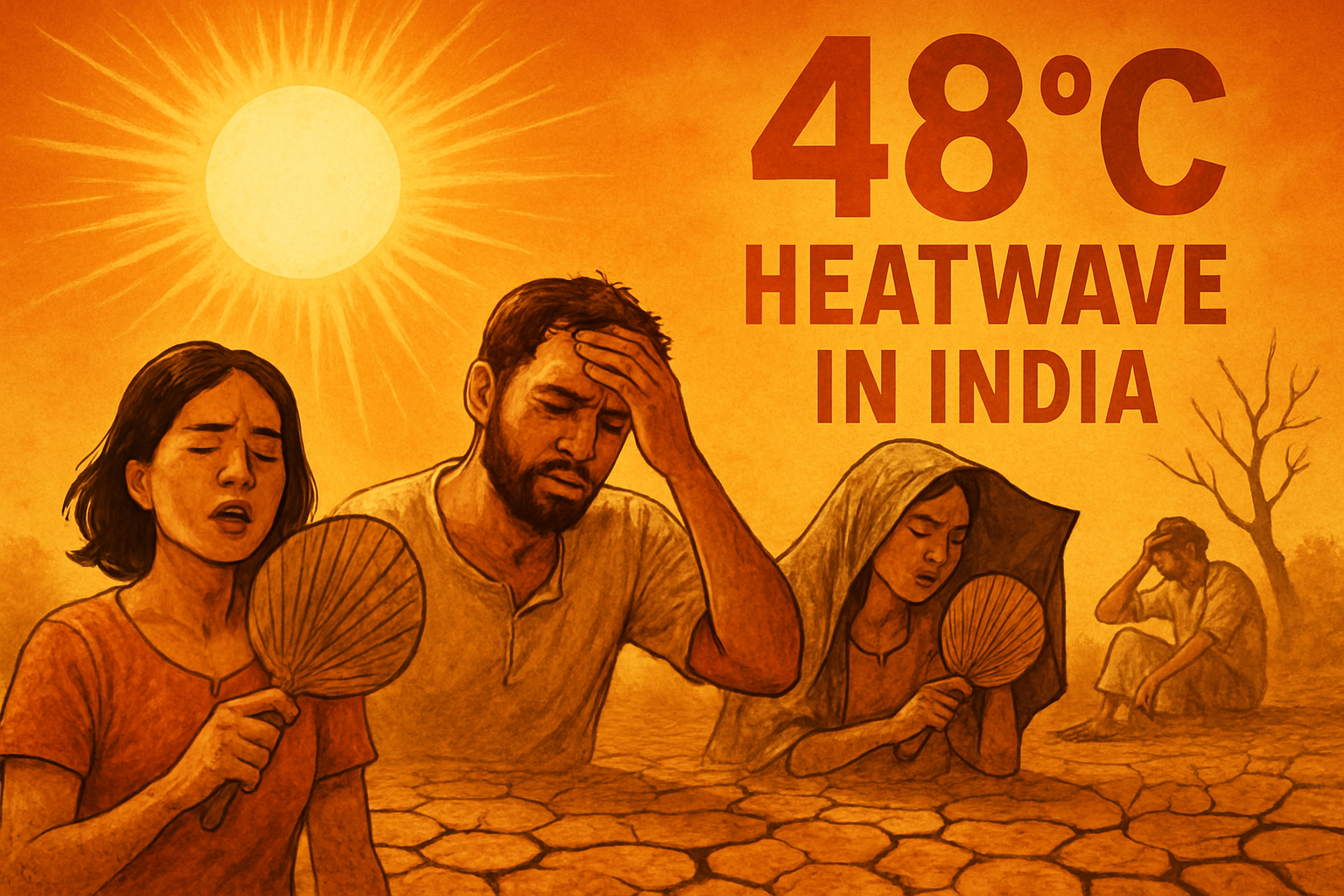
India is grappling with a historic and deadly heatwave that has pushed temperatures to a searing 48 °C in Sri Ganganagar, Rajasthan—the highest recorded this season—while claiming hundreds of lives and sparking urgent calls for action. Amid mounting public anguish, experts stress that phenomenal heat disasters demand more than caution—they scream for systemic preparedness.
The Heatwave Takes Its Toll
- The 2025 India–Pakistan heatwave, which began in early April and lasted until July 10, has recorded at least 195 fatalities in April and 260 deaths in May, with many more suffering heatstroke and related illnesses.([turn0search59])
- Cities across the north and west, including New Delhi and Jaipur, battled extreme temperatures—often 5–6 °C above normal—with some areas seeing prolonged 40 °C+ heat days as early as April.([turn0search59], [turn0search15])
- By 2024, Tamil Nadu weathered 13 heatwave days—the most in a decade—while future projections forecast a doubling of heatwave days in major metros such as Chennai, Delhi, and Mumbai by 2030.([turn0news44], [turn0search24])
Why It Matters Now
- Public health crisis: There’s an alarming rise in heat-related illnesses, particularly impacting children, outdoor workers, and the elderly. ([turn0search15])
- Systemic unpreparedness: Experts warn that mental and physical health risks from heat and humidity are intensifying—without sufficient infrastructure, this can overwhelm healthcare systems.([turn0academia53])
- Agricultural and economic disruption: Prolonged heat damages crops and impedes livelihoods, driving up food prices and pushing climate change into consumer pockets.([turn0news4])
Voices amid the Crisis
Dr. Krishna Achuta Rao, head of IIT Delhi’s Centre for Atmospheric Sciences, cautioned that heatwaves in Western India are becoming longer and more widespread, even during monsoon—underscoring the permanence of this new reality.([turn0search31])
Meanwhile, DownToEarth highlights the urgent need to protect India’s geriatric population—often left behind during climate crises. Adaptation isn’t optional anymore—it’s survival.([turn0news13])
What’s at Stake
| Issue | Impact |
| Public Health | Acute threats to vulnerable communities; anxiety, dehydration, and mortality on rise. |
| Infrastructure | Cooling centers, weather alerts, and healthcare capacity must scale fast. |
| Policy & Governance | Need for national heatwave strategy—from urban planning to agriculture. |
| Economic Stability | Rising food prices and productivity loss hit the economy hard. |
Parting Thoughts
India’s scorched landscape right now is more than a weather crisis—it’s a clarion call for strategic climate resilience. With temperatures reaching lethal thresholds, inaction is the real risk. As communities stagger under relentless heat, it’s time for policymakers to cool India’s burning future—before it becomes too late.