

|
Getting your Trinity Audio player ready...
|
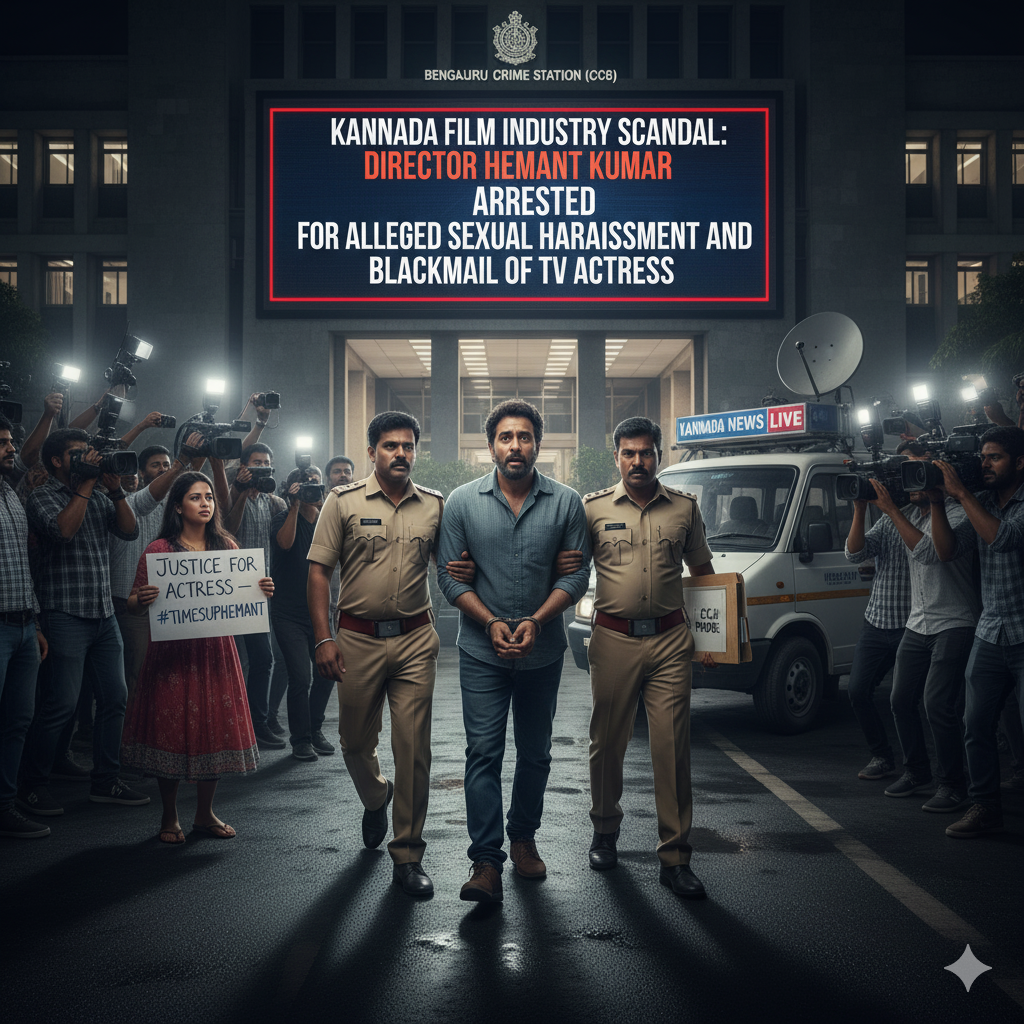
In a shocking incident that has rocked Karnataka’s entertainment industry, Bengaluru police have arrested Kannada filmmaker B. I. Hemant Kumar after a popular television actress accused him of sexual harassment, blackmail, and intimidation.
The complaint, filed at the Rajajinagar Police Station, details a troubling chain of events that began in 2022. The actress alleges that Hemant initially approached her with a movie offer, assuring her of a lead role and an agreed payment of ₹2 lakh. She was given ₹60,000 as an advance. However, soon after the project was delayed, his behavior allegedly turned coercive.
A Promised Role That Turned Into Fear
According to the complaint, Hemant began demanding that the actress perform in bold and explicit scenes, which she refused. Things reportedly worsened during a film event in Mumbai in 2023, where the actress claims Hemant spiked her drink and secretly recorded inappropriate videos of her.
Later, she alleges, those recordings were used to blackmail her into silence and compliance. The actress further stated that Hemant threatened her family, sent unknown men to follow her and her mother, and harassed her through social media by posting edited or revealing footage without consent.
Legal Action and Arrest
After enduring months of intimidation, the actress finally approached the police. Following her complaint, authorities registered a case against Hemant Kumar under multiple sections of the Indian Penal Code, including those related to sexual harassment, criminal intimidation, and blackmail.
The filmmaker was arrested on October 5 and has since been remanded to judicial custody. Police officials have confirmed that the investigation is ongoing and that digital evidence, including videos and messages, is being thoroughly examined.
A Dark Reality of the Industry
The arrest has sent ripples through the Kannada film and television industry, reigniting discussions around exploitation and abuse of power within entertainment circles. Many actors and activists have called for stricter safeguards to protect women in cinema and television.
Industry observers note that such cases highlight the pressing need for accountability, transparency, and institutional mechanisms that allow victims to speak up without fear of retaliation.
As the investigation unfolds, this case is being seen as a test of justice, one that could set a precedent for how harassment cases in regional entertainment industries are handled going forward.