

|
Getting your Trinity Audio player ready...
|
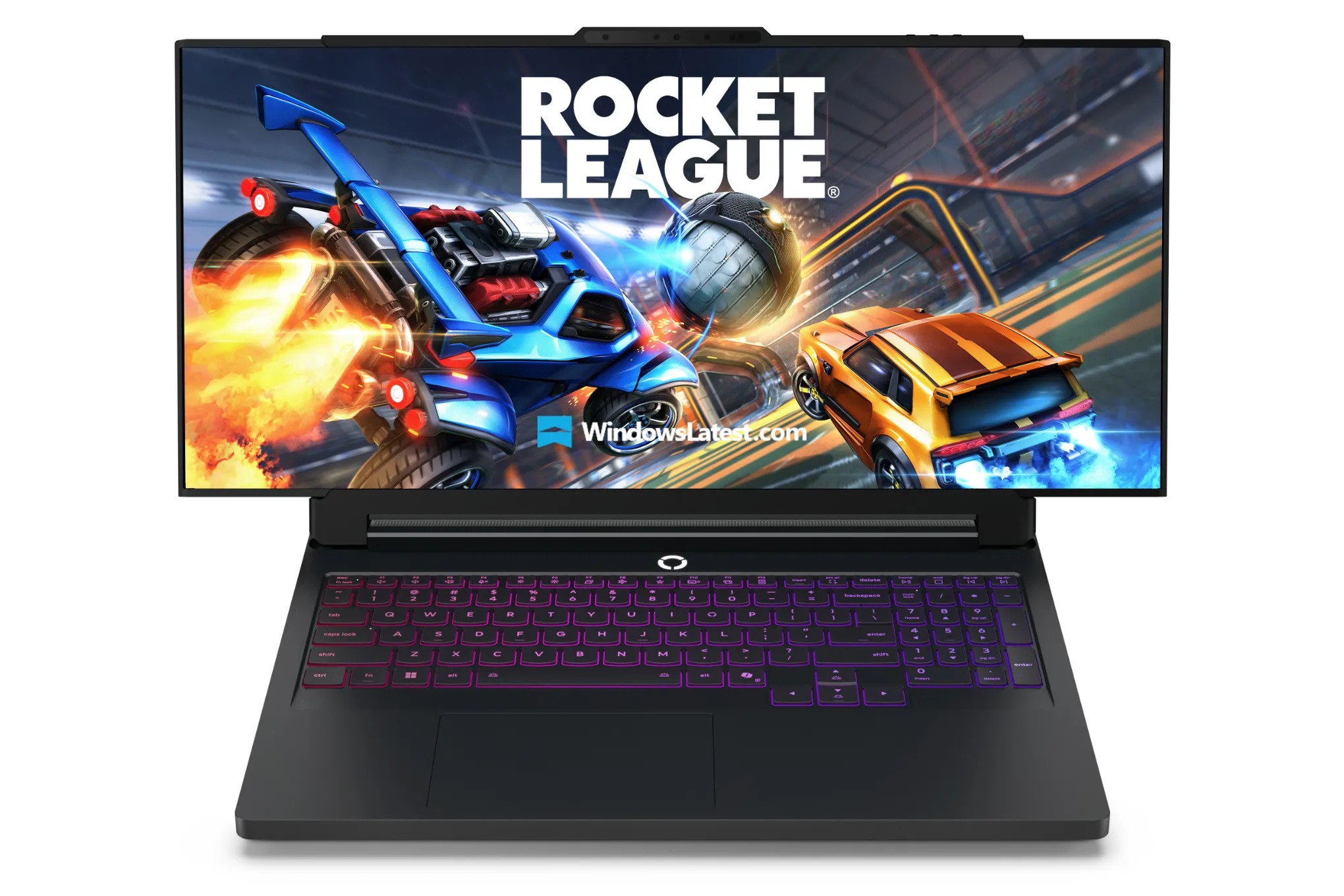
Lenovo appears to be preparing one of the most ambitious gaming laptops the industry has seen in years. Early reports suggest that the company is working on a new Legion-series device equipped with a rollable OLED display that expands horizontally into an ultrawide panel. If launched as expected in 2026, this could become one of the first gaming laptops to offer a built-in 21:9 rollable screen.
The concept builds on Lenovo’s earlier rollable prototype, which extended vertically. That model was designed mainly for productivity and office use. The new version, however, seems tailor-made for gamers and entertainment lovers who crave the immersion of an ultrawide monitor without the bulk of carrying one. When extended, the display is expected to stretch outward from both sides, delivering a cinematic, panoramic experience that traditional laptops cannot match.
Initial renders circulating online suggest that the laptop will retain the look and structure of a typical 15 or 16-inch gaming machine, complete with a sturdy chassis, a full keyboard layout, and a dedicated number pad. What makes it stand out is the ability to switch from a standard display to an ultrawide gaming panel within seconds. This could dramatically improve gaming visibility, productivity workflows, and multi-window usage for content creators and streamers.
Under the hood, Lenovo is reportedly sticking to proven hardware rather than experimenting with newcomer chipsets. The device is expected to feature an Intel Core Ultra processor paired with high-refresh-rate OLED technology. While final display specifications are not confirmed, projections point toward at least a 120 Hz refresh rate to maintain smooth gameplay. Key details such as GPU choices, screen resolution, thermal performance, and battery capacity remain undisclosed but will likely target the premium category.
The biggest question mark is pricing. Rollable displays are significantly more complex and expensive to manufacture than regular OLED panels. The earlier rollable concept was already priced at the higher end of the market, and this gaming variant could push the price tag even further. Still, if Lenovo manages to balance innovation with durability and performance, this device could become one of the defining laptops of the next generation.
Beyond the hardware, the concept itself marks an important shift in laptop design. For years, consumers have been limited to fixed-size displays. A rollable ultrawide panel introduces a new level of adaptability that caters to different types of users, from gamers and coders to designers and multitaskers. It signals a future where laptop screens reshape themselves to suit the task, rather than forcing the user to adapt to the device. If Lenovo successfully brings this rollable Legion model to market, it could set a new benchmark for what portable gaming systems can be. Gamers who long for immersive ultrawide visuals without compromising on mobility may finally have a true hybrid solution. All eyes now turn to 2026, when the company is expected to unveil what could be one of the most revolutionary laptops in recent memory.