

|
Getting your Trinity Audio player ready...
|
New Delhi:
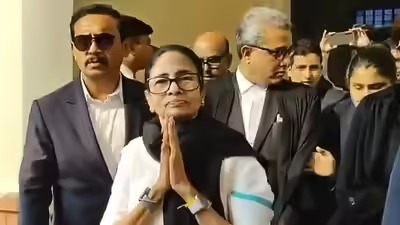
West Bengal Chief Minister Mamata Banerjee has taken her political battle beyond state borders, arriving in the national capital with a clear message. She will not remain silent over what she describes as a humanitarian crisis linked to the Election Commission of India’s Special Intensive Revision process in West Bengal. Calling it a matter of life, dignity, and democratic rights, Banerjee has accused the Election Commission of conducting the exercise in a manner that has allegedly led to severe mental stress, harassment, and even deaths.
Her Delhi visit has turned into a high-voltage political moment, drawing national attention to a process that was meant to clean up electoral rolls but has now become one of the most contentious issues in Indian politics ahead of upcoming elections.
Why the SIR Process Sparked a Political Storm
The Special Intensive Revision, commonly referred to as SIR, is an exercise undertaken by the Election Commission to update voter lists. In theory, the process aims to remove duplicate, fake, or ineligible names while ensuring that genuine voters remain registered. In practice, according to the West Bengal government, the process has caused widespread confusion, panic, and fear among ordinary citizens.
Mamata Banerjee has alleged that thousands of voters received notices questioning their citizenship or residency status. Many, she claimed, were elderly, poor, or illiterate, with little understanding of legal procedures. The Chief Minister has repeatedly stated that people were asked to prove their existence or identity under strict timelines, creating emotional distress and administrative chaos.
What intensified the controversy was Banerjee’s assertion that several individuals, including booth-level officers and citizens, died due to stress linked to the SIR process. While official figures remain contested, the allegation of deaths transformed the issue from an administrative dispute into a moral and political confrontation.
From Kolkata to Delhi: Taking the Fight National
Banerjee’s decision to bring the issue to Delhi marked a strategic shift. Instead of confining the protest to West Bengal, she chose to raise the matter at the national level, directly challenging the Election Commission and appealing to the conscience of the country.
Accompanied by party leaders and families who claim to have suffered due to the SIR process, the West Bengal Chief Minister staged protests and sought meetings with top constitutional authorities. She accused the Election Commission of acting selectively and unfairly, claiming that West Bengal was being targeted while similar processes in other states were conducted with greater sensitivity.
The presence of affected families in Delhi added an emotional layer to the protest. Banerjee described them as living proof that the issue was not political drama but a question of human suffering and democratic rights.
Clashes, Security Tensions, and Political Symbolism
The Delhi visit was not without friction. Reports of confrontations involving police personnel and heightened security arrangements around the Bengal Bhavan fueled political debate. Banerjee strongly objected to what she called intimidation tactics, asserting that families seeking justice should not be treated like security threats.
The situation also highlighted the deeper tension between state governments and central institutions. Banerjee framed the issue as part of a broader struggle where elected state governments are allegedly being undermined by unelected authorities.
Her remarks in Delhi made it clear that she views the SIR controversy as more than an electoral issue. According to her, it represents an erosion of federal principles and an assault on the rights of marginalized communities.
Legal Battle Reaches the Supreme Court
Parallel to political protests, the matter has moved into the legal arena. Mamata Banerjee personally approached the Supreme Court, challenging the conduct and implementation of the SIR process in West Bengal.
In her arguments, she emphasized that wrongful deletion of names from voter lists could effectively silence citizens in a democracy. She warned that even a small percentage of errors could impact electoral outcomes and undermine public trust in democratic institutions.
The legal challenge has placed the Election Commission under intense scrutiny, with questions being raised about transparency, accountability, and safeguards for vulnerable populations.
Election Commission Pushes Back
The Election Commission has rejected allegations of wrongdoing, maintaining that the SIR process follows established guidelines and is necessary to ensure free and fair elections. Officials have argued that political parties are attempting to politicize a routine administrative exercise for electoral gain.
According to the Commission, safeguards exist for voters whose names are flagged, and there are clear mechanisms for appeal and correction. However, critics argue that the ground-level implementation has been far from smooth, especially in rural and economically weaker areas.
The clash between the constitutional authority and an elected Chief Minister has turned into a rare public confrontation, raising concerns about institutional trust and democratic accountability.
Political Reactions Across the Spectrum
The controversy has sharply divided political opinion. Opposition leaders from Banerjee’s party and allied groups have praised her for standing up against what they call institutional overreach. Supporters see her as a leader willing to fight alone for citizens who lack a voice.
On the other hand, leaders from rival parties have accused her of exaggeration and fear-mongering. They argue that the SIR process is being misrepresented to create political sympathy ahead of elections.
Despite the criticism, Banerjee appears determined to keep the issue alive. Her repeated statements suggest that she views this fight as central to her political identity and her broader narrative of resistance.
Human Impact at the Center of the Debate
Beyond politics and legality, the issue has drawn attention to the human cost of administrative exercises. Stories of elderly citizens running from office to office, families confused by official notices, and local officials working under intense pressure have emerged from the debate.
Banerjee has repeatedly emphasized that democracy is not just about procedures but about people. Her insistence on highlighting alleged deaths linked to the SIR process reflects an attempt to shift the conversation from paperwork to human consequences.
Whether these claims withstand legal and factual scrutiny remains to be seen, but the emotional weight of the narrative has already influenced public discourse.
What This Means for Indian Democracy
The standoff between Mamata Banerjee and the Election Commission has broader implications. It raises fundamental questions about how electoral reforms are implemented, how institutions communicate with citizens, and how political accountability is enforced.
As elections approach, voter confidence becomes crucial. Any perception of bias or insensitivity can have long-term consequences for democratic participation.
The coming weeks are likely to determine whether the issue leads to procedural changes, legal clarifications, or deeper political polarization.
A Battle Far From Over
Mamata Banerjee has made it clear that her Delhi visit is not the end of the fight. She has promised to continue raising the issue until what she calls justice is delivered to affected citizens. As the political, legal, and institutional battles continue, one thing is certain. The SIR controversy has moved beyond West Bengal and become a national conversation about power, democracy, and the human cost of governance.