

|
Getting your Trinity Audio player ready...
|
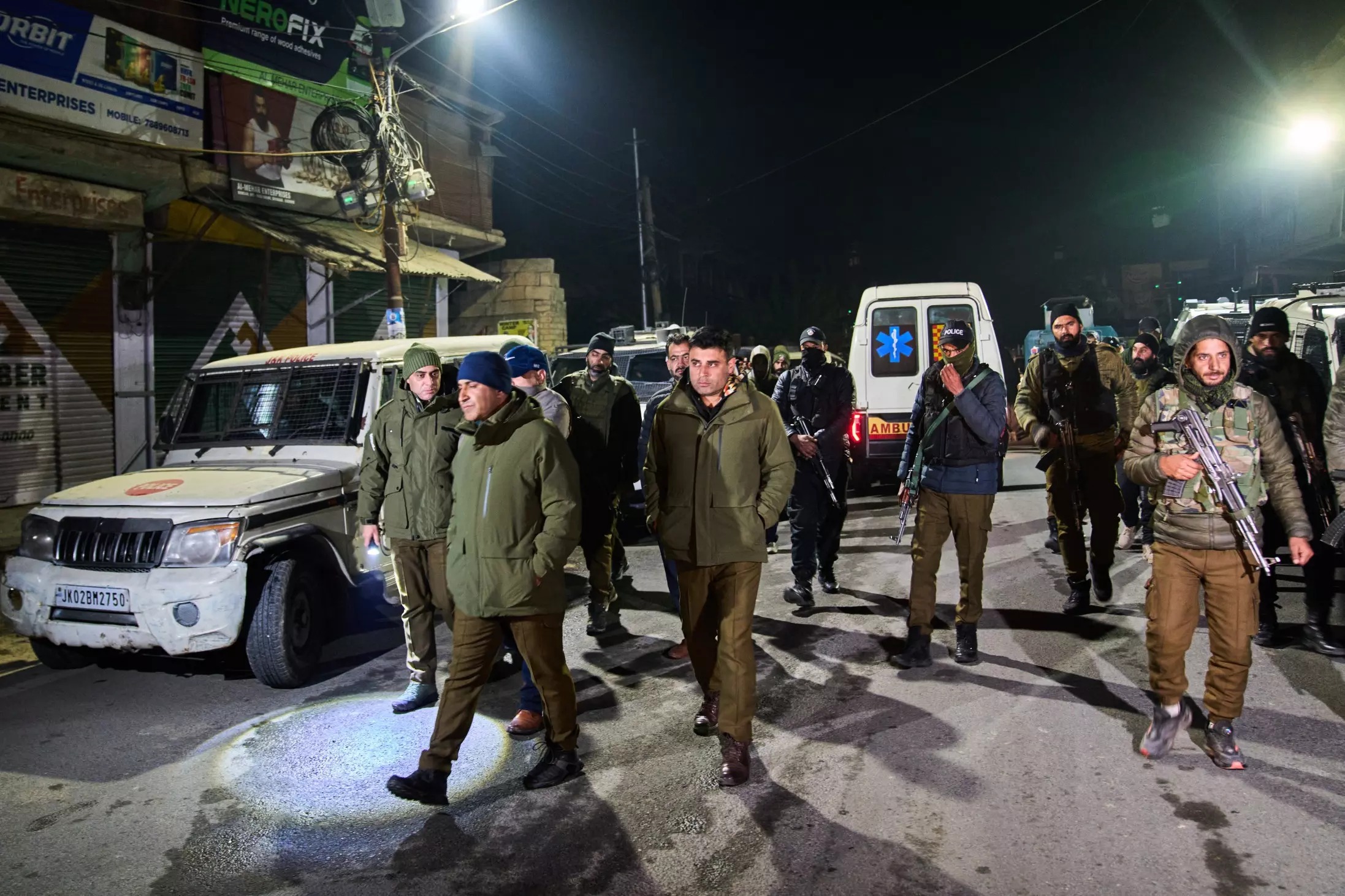
India has been hit by a deeply alarming security incident that has raised questions far beyond a single accident. A powerful explosion tore through the Nowgam Police Station in Srinagar, late on Thursday night, killing at least nine people and injuring more than thirty. The blast was accidental but what caused it, and where the explosives came from, has shaken the country’s security establishment.
The material that exploded inside the police station was part of a massive cache recovered days earlier from Faridabad, Haryana, during a crackdown on an emerging terror module. The seized explosives were being examined and sampled by forensic and police teams when suddenly, a violent detonation ripped through the building. The incident has turned into one of the most disturbing internal security lapses India has seen in years.
A Timeline of the Tragedy
Around 11:20 pm, officers and forensic specialists at the Nowgam Police Station were handling packets of explosive substances materials that included volatile chemical compounds such as ammonium nitrate, potassium nitrate, sulphur, and other components used for assembling large improvised devices. The explosives had been transported from Faridabad to Srinagar for detailed forensic testing as part of a larger terror investigation.
While samples were being extracted, a sudden and massive blast erupted, followed by smaller secondary explosions. The impact shattered windows across neighbouring houses, destroyed portions of the police station, and threw debris across the compound. Many of the victims were officers and experts who were inside the examination room at the time.
Though the explosion happened inside a high-security police facility, officials quickly confirmed that it was not a terror attack but an accidental detonation caused by the instability of the seized material.
The Faridabad Connection
The explosives that triggered the Srinagar blast were part of a much bigger cache uncovered in Faridabad just days earlier. Investigators had seized nearly three tonnes of explosive substances from residential properties tied to a covert terror module. What stunned officials was not just the quantity, but where and how the explosives were stored inside regular homes in urban neighbourhoods, hidden in plain sight.
This module is believed to involve educated individuals, including professionals and clerics, signalling a shift in how radicalization networks operate. The group had allegedly planned large-scale attacks and was building capabilities using scientific knowledge and decentralized storage.
The Faridabad discovery had already ignited national concern. The accidental Srinagar blast has now amplified those fears dramatically.
How Did Explosives from Haryana End Up in a J&K Police Station?
The transfer was procedural. Explosives seized in major terror investigations are often moved to specialist labs or high-capacity examination facilities. In this case, authorities needed advanced forensic testing to determine the exact chemical composition, origin, and potential signatures of the seized materials.
However, the sheer instability of the mixture combined with the volume stored in the police station created a deadly situation. Even routine sampling turned catastrophic.
This has sparked discomforting questions:
- Were safe-handling protocols strictly followed?
- Should such volatile material have been stored inside an active police station?
- Are current forensic facilities adequately equipped for high-risk explosive examinations?
- Should transportation and handling guidelines be urgently overhauled?
These questions are now at the centre of the nationwide probe.
A Warning India Cannot Ignore
The explosion has created a wave of concern because it reveals vulnerabilities on multiple levels:
1. Fragile Security Chains
If seized explosives can detonate inside a police station, it signals dangerous gaps in protocol, storage standards, and risk assessment.
2. Terror in Urban Pockets
The fact that such huge quantities were hidden in Faridabad, an everyday city confirms a terrifying trend: terror modules are embedding themselves within ordinary neighbourhoods, not isolated hideouts.
3. Highly Educated Operatives
This is not a traditional insurgency. These modules were run by educated individuals capable of managing complex chemical mixtures and secure communication channels.
4. Cross-State Complexity
The Faridabad–Srinagar link shows how seamlessly modern terror networks operate across states, using urban mobility and anonymity as shields.
Government Response and Current Action
The Ministry of Home Affairs has ruled out any terror attack in the Srinagar incident but has ordered a full investigation into the cause and handling of the explosive material. Detailed forensic reconstruction is underway to determine what triggered the blast.
Security has been tightened across Jammu & Kashmir. Additional checks, quick-reaction teams, and patrols have been deployed across sensitive zones. The Faridabad module investigation has also intensified, with more searches, interrogations, and scrutiny of possible accomplices.
Compensation and medical support are being provided to the families of those killed and injured.
Why This Story Is Dominating Searches and National Attention
This incident is trending nationwide because it brings together multiple high-impact factors:
- A deadly explosion inside a police station
- A discovery of massive explosive stockpiles in densely populated areas
- A terror module involving educated handlers
- State-to-state links between major investigations
- A tragedy that exposes systemic vulnerabilities
- The possibility that India narrowly avoided a much bigger disaster
Search interest in keywords such as “Nowgam blast,” “Faridabad explosives,” “Srinagar police station explosion,” and “terror module India” has surged sharply. This story hits public emotion and national concern making it one of the most widely followed news developments of the month.
What India Must Prepare For
The Nowgam blast sends a harsh message: terror threats today do not always come through attacks – they can emerge during storage, transport, or examination of explosive material. India needs:
- Modern, specialized explosive-handling facilities
- Upgraded forensic labs with international safety standards
- Tighter coordination between states during high-risk investigations
- More awareness among citizens about suspicious activities in urban zones
- Large-scale counter-radicalization programs
This incident is a reminder that the battle against terror is not only in the field, but also in the labs, storerooms, and evidence chambers where dangerous materials pass through.
Parting Thoughts –
The accidental blast at Nowgam Police Station is more than a tragic mishap. It is a critical warning sign. It exposes how quickly seized terror material can turn deadly, how deeply networks can infiltrate cities, and how urgently India needs stronger, safer, and more advanced systems for handling explosive threats. As investigations continue, one thing is clear: the fight to protect India is evolving, and every part of the system must evolve with it.