
|
Getting your Trinity Audio player ready...
|
September 2025
Elon Musk has made a bold announcement: within two years, regular smartphones will be able to connect straight to Starlink satellites without relying on cell towers or traditional networks. If this vision comes true, it could change how people everywhere, especially in rural and remote areas, access the internet and make calls.
The Big Idea
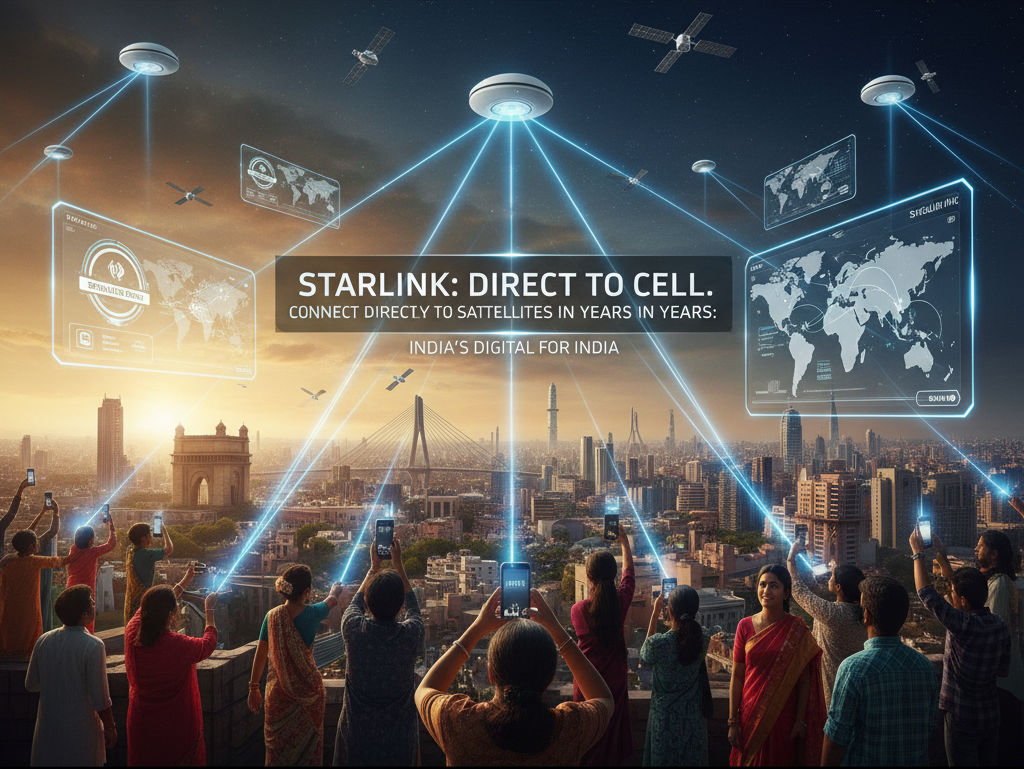
Today, mobile phones need towers on the ground to get signals. But in places like mountains, deserts, or disaster hit zones, these towers don’t always exist, causing poor or no coverage. Starlink’s plan is different. Phones will connect directly to satellites orbiting Earth, making coverage truly global from busy cities to the most isolated villages.
Musk said most existing 4G and 5G phones will need only small changes to work with Starlink satellites, no special new hardware.
How It Works
- Starlink satellites float in space like giant cell towers.
- When a user calls or texts, the signal goes straight to the satellite above.
- The satellite sends the message down to ground stations that connect to regular telecom networks.
This means users won’t depend on spotty tower signals anymore the sky itself becomes the network.
Why It’s Important for India
India’s large rural population and tough geography mean many places still have weak or no signal. States like Uttarakhand, Arunachal Pradesh, and Ladakh have hundreds of villages without reliable coverage. Satellite-to-phone tech could finally bridge this significant digital gap, offering unprecedented connectivity. This innovation promises to empower communities previously underserved, fostering greater inclusion and opportunities.
For farmers, rural workers, and students, being able to call or attend online classes without worrying about poor signals could fundamentally change lives, revolutionizing communication and access to essential services across remote areas. This could truly transform rural India.
Competition and Partnerships
Starlink is not alone; companies like AST SpaceMobile and Lynk Global are actively working on similar satellite-to-phone connections. While Apple has introduced limited satellite SOS features in its newer iPhones for emergencies, Elon Musk’s vision is far more ambitious and transformative. His plan extends beyond basic emergency services, aiming to provide comprehensive connectivity – enabling normal calls, texts, and even basic internet access directly to everyday smartphones, entirely bypassing the need for traditional cellular towers and expanding reach globally.
Experts say working with local telecom giants like Reliance Jio and Bharti Airtel will be key for Starlink’s success in India, helping it expand coverage and navigate regulations smoothly.
Challenges Ahead
The exciting idea comes with challenges:
- Governments need to figure out how to allocate satellite spectrum fairly.
- Pricing must be affordable for regular users, not just high-end customers.
- Speed and capacity of satellite links may not match fiber or 5G towers yet.
- Indian regulatory approvals could delay wide rollout.
The Future Vision
If Starlink’s plan works, it could fundamentally change telecom worldwide. Imagine hiking in the Himalayas, sailing on the Indian Ocean, or living deep in a desert and still having fast internet and calls, seamlessly connected to the world no matter your location, opening up vast possibilities for communication and safety.
For India, this could boost government plans like Digital Bharat, aiming to connect every citizen, no matter where they live.
Parting Thoughts
Elon Musk’s promise to let phones connect directly to satellites in two years isn’t just a tech update, it’s a profound connectivity revolution. If India strategically adopts the right policies and fosters crucial partnerships, this groundbreaking technology could truly start a new era where digital gaps finally close, and everyone, everywhere across the nation, can stay connected easily and affordably, transforming lives and unlocking immense potential for growth and inclusion. It represents a significant leap forward.