
|
Getting your Trinity Audio player ready...
|
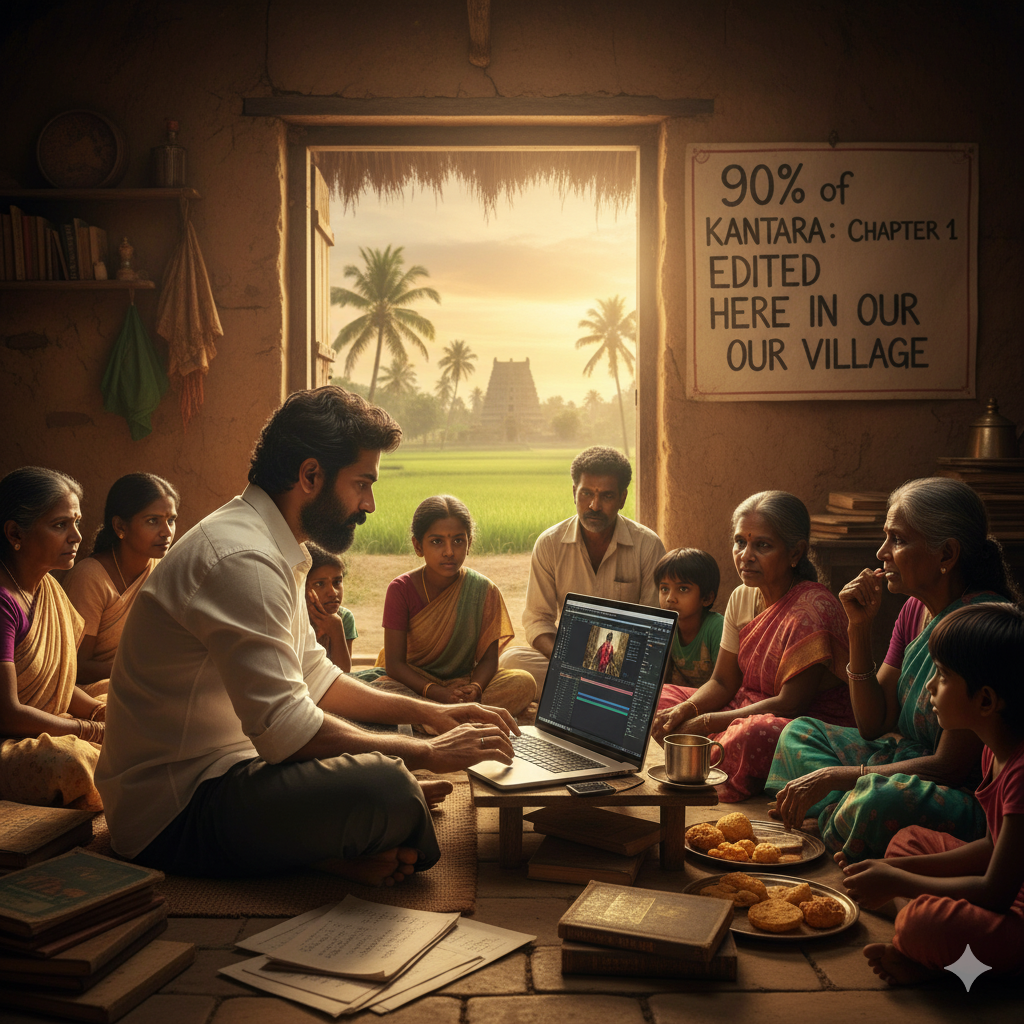
In a surprise revelation that’s turning heads in cinema circles, actor-filmmaker Rishab Shetty has shared that nearly 90 percent of the editing for his latest project, Kantara: Chapter 1, was done in his native village not in glitzy post-production studios in big cities.
During a candid interview, Shetty explained that after shooting, the team brought the entire editing setup, including the music director, back to his hometown. Much of the post-production editing, sound work, and fine tuning unfolded amidst the rhythms of village life. Only the final polish and last checks were done in urban hubs like Bengaluru or Kochi.
For Shetty, this was never just a cost or convenience play. It was a statement. By rooting much of the work in his village, he sought to keep the creative flow close to his sensibilities, stay connected to local culture, and push against the notion that art must always pass through big city filters to be legitimate.
This decision seems to mirror the larger spirit of Kantara, a film deeply tied to Karnataka’s folklore, nature, and tradition. To Shetty, creating “in the village” maintained a continuity between story and process, making the film not just about roots, but actually grown from them.
The revelation offers a fresh lens on how Kantara: Chapter 1 was made a blockbuster not just in box office terms, but in vision.