
|
Getting your Trinity Audio player ready...
|
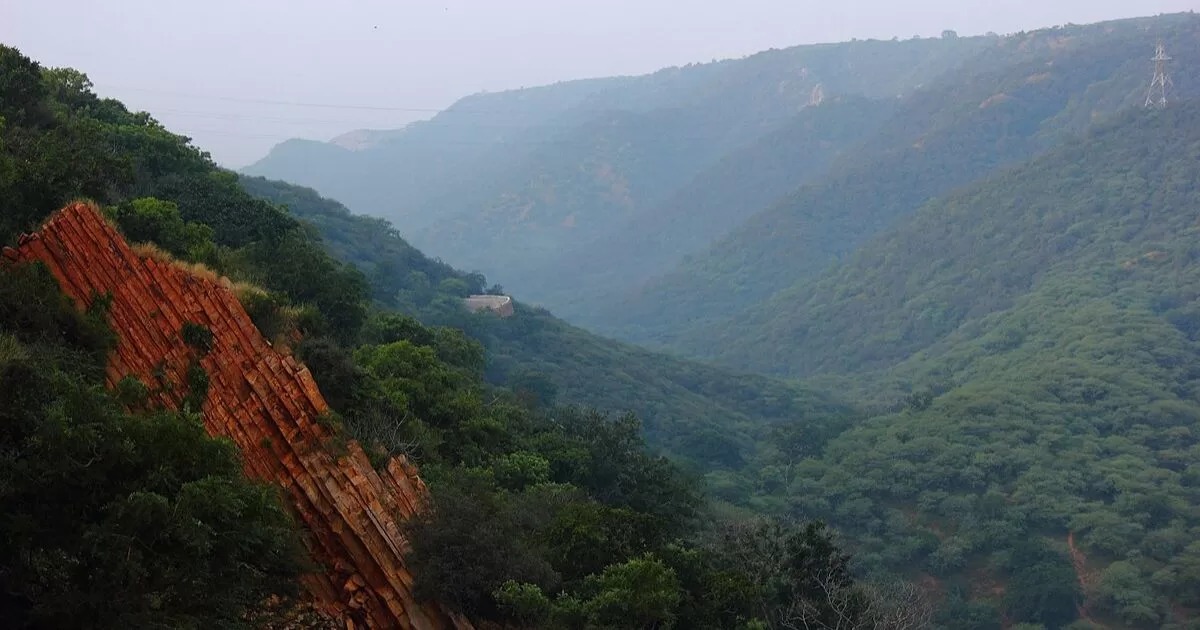
The Aravalli Range, one of the oldest mountain systems on Earth, is facing a slow, almost invisible collapse. Stretching across Rajasthan, Haryana, Delhi-NCR and Gujarat, the hills have long acted as a natural shield against desertification, a lifeline for groundwater, and a critical ecological barrier for north India. Today, that shield is cracking quietly, legally, and alarmingly fast.
While citizens protest on the streets and environmental experts raise red flags, the government’s response remains fragmented, delayed, or conspicuously silent, raising urgent questions about environmental governance in India.
How Much of the Aravalli Has Already Been Lost?
There is no single consolidated government figure but that itself is part of the problem.
Independent environmental assessments, court-appointed committees, and long-term satellite data analyses indicate that:
- Nearly 25–35 percent of the Aravalli ecosystem has already been destroyed over the past two decades due to mining, deforestation, and encroachment
- Illegal mining alone has devastated vast stretches, particularly in Rajasthan and Haryana
- Entire hillocks have disappeared, flattened for stone, construction material, and real-estate expansion
Experts warn that what remains is no longer a continuous mountain range, but a fragmented ecological skeleton struggling to survive.
The absence of updated, publicly released government data on tree loss and hill degradation has only intensified suspicions: Is the damage being underestimated—or deliberately underreported?
The Legal Shift That Triggered Nationwide Alarm
The current wave of protests was ignited after a judicially accepted redefinition of what qualifies as ‘Aravalli hills’.
Under the revised interpretation:
- Only landforms rising more than 100 metres above surrounding terrain are recognised as Aravalli
- This effectively strips nearly 80–90 percent of the range which consists of lower, ancient ridges of legal protection
Environmentalists describe this not as a technical clarification, but as a legal erasure of geography.
The critical question being asked:
How can one of the world’s oldest mountain systems be judged by modern elevation standards alone?
What This Means on the Ground
Once legal protection is removed, consequences follow quickly:
- Mining leases become easier to justify
- Environmental clearances face fewer hurdles
- Forest and wildlife protections weaken
- Local authorities gain discretion often without oversight
Activists argue this opens the door to unchecked commercial exploitation, while officially maintaining that “no new permissions have been granted yet.”
Yet history shows that legal ambiguity is often the first step toward irreversible environmental loss.
Protests: From Silent Marches to Grassroots Resistance
Across Jaipur, Gurugram, Alwar, Faridabad, Delhi and tribal belts of southern Rajasthan, protests have intensified:
- Human chains around threatened hill zones
- Silent marches by students, lawyers, and senior citizens
- Villagers blocking access roads to mining-prone areas
- Tribal communities pledging to protect the hills as sacred land
For locals, this is not an abstract environmental debate. Farmers report:
- Falling groundwater levels
- Wells running dry earlier each year
- Declining soil fertility and crop yield
Urban residents, meanwhile, link the degradation of Aravallis to:
- Severe air pollution in Delhi-NCR
- Rising temperatures and heatwaves
- Increased dust storms
The protests cut across class and geography yet remain largely ignored in official discourse.
Government Response: Clarifications Without Commitments
So far, the government’s stance has been marked by statements without structural action.
Officials insist:
- No blanket permission for mining has been granted
- Environmental safeguards still exist
- Concerns are being “misinterpreted”
But activists counter:
- No moratorium on mining has been announced
- No comprehensive Aravalli conservation law has been introduced
- No independent environmental audit has been ordered
- No timeline has been shared for policy review
The silence on ground-level enforcement remains the loudest response.
The Larger Question: Who Is the Aravalli Being Sacrificed For?
Environmentalists are now asking uncomfortable but necessary questions:
- If the Aravalli collapses, who will bear the cost- miners or millions of citizens?
- Why are economic interests consistently prioritised over ecological survival?
- Why is there no unified national policy for protecting one of India’s most critical ecosystems?
- If courts, scientists, and citizens raise alarms, who is accountable for inaction?
At stake is not just a mountain range, but the environmental future of north India.
What Experts Warn Will Happen If Nothing Changes
If degradation continues unchecked, experts predict:
- Accelerated desertification moving eastward
- Permanent groundwater collapse in several regions
- Intensification of heatwaves and air pollution
- Irreversible biodiversity loss
Once lost, the Aravalli cannot be restored. These hills took billions of years to form they will not regenerate in policy timelines.
Parting Thoughts : A Crisis Demanding Answers
The Aravalli crisis exposes a deeper issue: India’s environmental protections often weaken not through open repeal, but through quiet redefinition and administrative drift. As protests grow louder, the central question remains unanswered:
Will the government act to protect the Aravalli—or will silence become its final verdict?