
|
Getting your Trinity Audio player ready...
|
Bangladesh has witnessed another disturbing incident of mob violence as a Hindu man was beaten to death in the Rajbari district, intensifying concerns over the safety of minority communities during a period of growing national unrest. The incident has triggered widespread shock and anxiety, coming close on the heels of similar violent episodes that have shaken public confidence in law and order.
According to local accounts, the victim was attacked late at night in a village under the Pangsha area after a group of people accused him of being involved in criminal activity. What began as verbal confrontation quickly escalated into a violent mob assault. Despite efforts to rush the injured man to a nearby hospital, he succumbed to his injuries shortly after arrival.
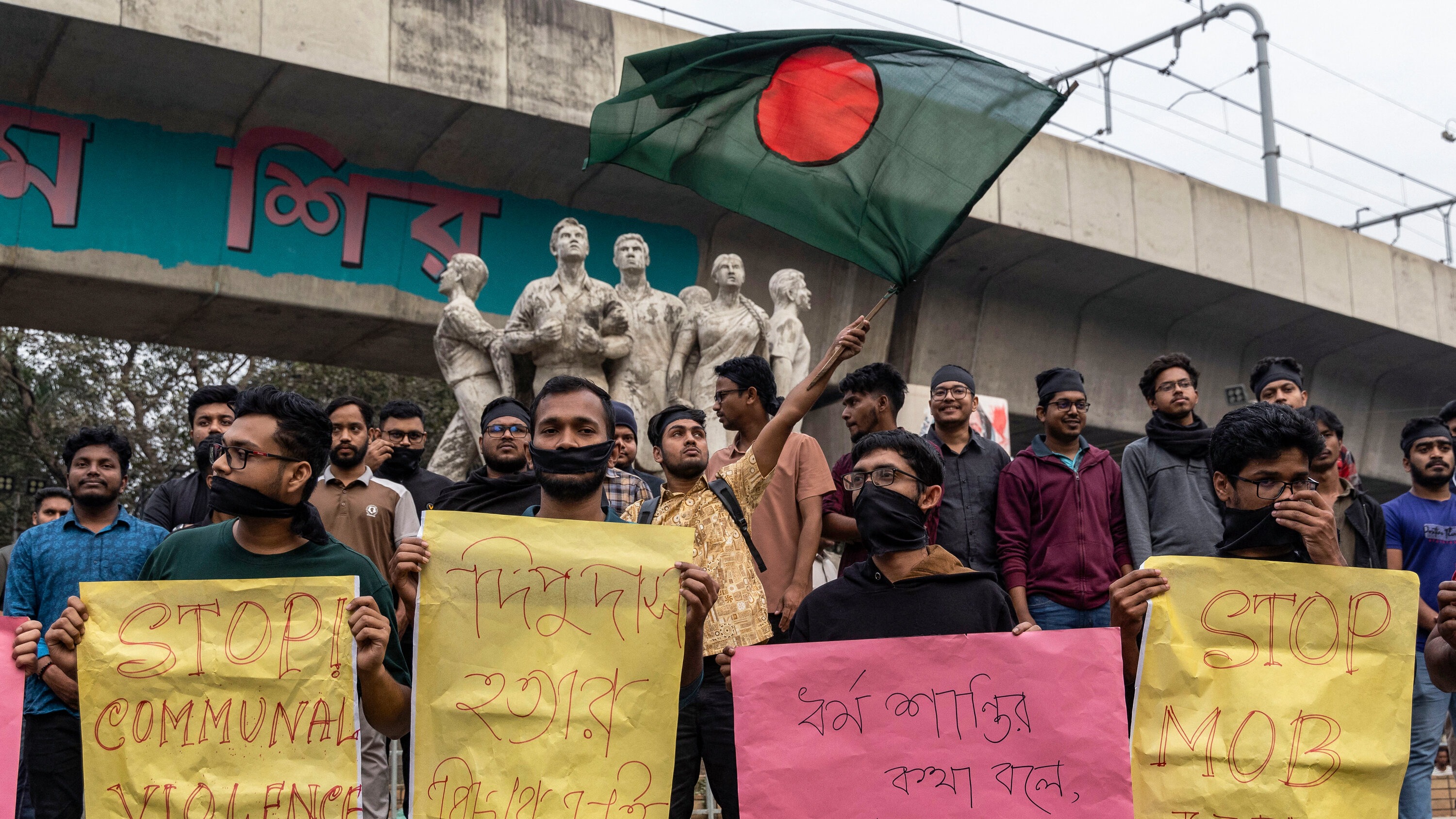
This killing follows another recent lynching of a Hindu man in a different part of the country, where the victim was brutally assaulted and his body later set on fire. The back-to-back incidents have amplified fears among minority communities and raised serious questions about the rise of mob justice and the failure to prevent such violence.
Police officials have stated that preliminary investigations suggest the latest attack stemmed from allegations of extortion rather than communal intent. One suspect has been taken into custody, and security forces have reportedly recovered weapons from the area. However, social activists and rights groups argue that repeated incidents involving minority victims cannot be viewed in isolation, especially during times of political and social instability.
The violence is unfolding amid heightened tensions across Bangladesh following recent political unrest and protests. The fragile situation has strained public order in several regions, making minority communities feel increasingly vulnerable. Community leaders warn that fear is spreading rapidly, with families unsure about their safety as rumors and anger continue to fuel mob behavior.
Human rights advocates have strongly condemned the killing, calling it a symptom of deeper structural issues, including weak law enforcement, delayed justice, and lack of accountability. They have urged authorities to act decisively against mob violence and ensure that perpetrators are punished swiftly to restore public trust.
Government officials have issued statements condemning the attack and assuring citizens that strict action will be taken. Investigations are ongoing, and authorities have promised to strengthen security measures in sensitive areas. However, critics argue that condemnations alone are no longer enough and that concrete action is needed to prevent further loss of life.
As Bangladesh navigates through a volatile political phase, the tragic death of another citizen has become a grim reminder of the urgent need to uphold rule of law and protect vulnerable communities. Whether the government’s response will be enough to stem the tide of violence remains to be seen, but for many families, fear and uncertainty continue to dominate daily life.