
|
Getting your Trinity Audio player ready...
|
Ranchi, March 12, 2026
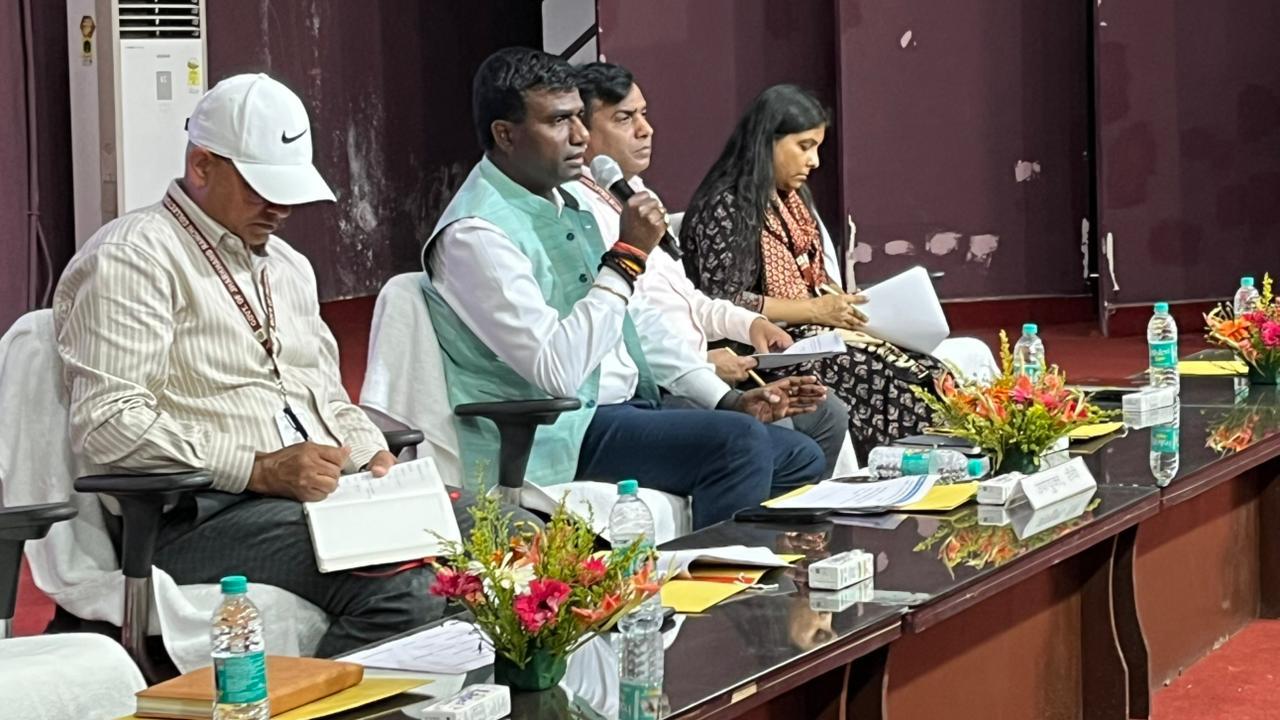
During the budget session of the Jharkhand Legislative Assembly on March 12, 2026, Khijri MLA Rajesh Kachhap used the debate on Water Resources Department grant demands to raise what he called a slowly building emergency. Ranchi’s dams and natural water sources are drying up. The reasons, he told the House, are specific, documented, and entirely preventable if the state government chooses to act.
Kachhap named two primary causes. The first is ongoing encroachment on the Swarnarekha river and the disappearance of ponds across the region. The second, and in many ways the more striking of the two, is the faulty design of the Ring Road. The MLA told the House that incorrect engineering in the Ring Road’s construction has blocked the natural flow of water in multiple locations. When water cannot move along its natural course, it does not simply stop. It fails to reach the reservoirs and dams that depend on that flow for replenishment. The result, Kachhap said, is visible in the declining water levels of dams and water sources that communities around Ranchi have relied on for generations.
The Swarnarekha river concern is not new to those who follow Jharkhand’s environmental debates, but raising it formally in the Assembly during budget discussions gives it an administrative dimension that civil society arguments rarely achieve. The river originates near Ranchi and flows through Jharkhand, Odisha, and West Bengal before meeting the Bay of Bengal. Its upper stretches, which pass through and around Ranchi, have been subject to encroachment pressure as the city has expanded. When floodplains and riverbanks are built upon, the river loses its natural capacity to spread during rainfall, reducing the recharge it provides to surrounding water bodies.
Kachhap proposed a practical solution rooted in the specific geography of Jharkhand. The state’s terrace farming landscape, where fields are cut into hillsides in steps, offers a natural structure for water harvesting that is not being used to its potential. He suggested that the government develop systems to capture and store rainwater flowing down from the hills, directing it through these terraced fields in a way that enables natural irrigation for large numbers of farms. This approach, he noted, would not require massive infrastructure. It would require policy intent and engineering that works with the landscape rather than against it.
On law and order, Kachhap made a point that connects land governance to public safety in a way that is often discussed outside the Assembly but rarely stated plainly inside it. He told the House that a significant share of the crimes being committed in Jharkhand have their roots in illegal land occupation and land disputes. His demand was direct: the government should conduct a comprehensive land survey without delay, so that disputed land can be formally identified and illegal encroachments can be stopped before they escalate into violence.
At the same time, he acknowledged a positive step on policing. The state government’s decision to provide 628 new vehicles to the police force was specifically praised by Kachhap as a meaningful step toward improving police mobility and morale, an acknowledgment that the critique was not blanket opposition but a demand for further action.
The MLA also raised the condition of displaced communities. People displaced by development projects in Jharkhand have faced rehabilitation delays for decades. Kachhap called on the government to create a permanent and structured resettlement policy so that displaced families are not simply moved once and then forgotten. He described the current approach as insufficient and urged the government to treat resettlement as a standing obligation rather than a one-time administrative exercise.
On the Jal Jeevan Mission, the Central government’s flagship scheme for piped drinking water to all rural households, Kachhap called for pending works under the scheme in Jharkhand to be completed on priority. He also demanded that contractors responsible for delays or substandard work be identified and held accountable. The scheme has faced documented implementation challenges across the state, with several projects running behind schedule.
Kachhap closed his address on a broader note. He told the Assembly that future conflicts across the world are increasingly likely to be fought over water rather than territory or ideology. For Jharkhand, a state already facing a documented groundwater crisis, declining dam levels, and temperatures breaking century-old records, that observation is not distant philosophy. It is a forecast about conditions that are already developing. He acknowledged that the government is approaching these issues with sensitivity and expressed hope that his suggestions would translate into concrete action.
Whether they do will be visible in the next budget allocation for the Water Resources Department and in whether the Ring Road design flaw he named is acknowledged and corrected.
SOURCE LOG
All facts: Rajesh Kachhap MLA Khijri, budget session debate on Water Resources Department grants, Swarnarekha encroachment, pond disappearance, Ring Road faulty design blocking water flow, dams and water sources drying, terrace farm water harvesting suggestion, land disputes as crime root cause, land survey demand, 628 police vehicles praised, displaced communities rehabilitation policy demand, Jal Jeevan Mission pending works, contractor accountability, future water wars reference: Lagatar News, “सदन में बोले राजेश कच्छप – स्वर्णरेखा नदी पर अतिक्रमण व रिंग रोड के दोषपूर्ण डिजाइन से सूख रहे डैम,” March 12, 2026, lagatar.in