

|
Getting your Trinity Audio player ready...
|
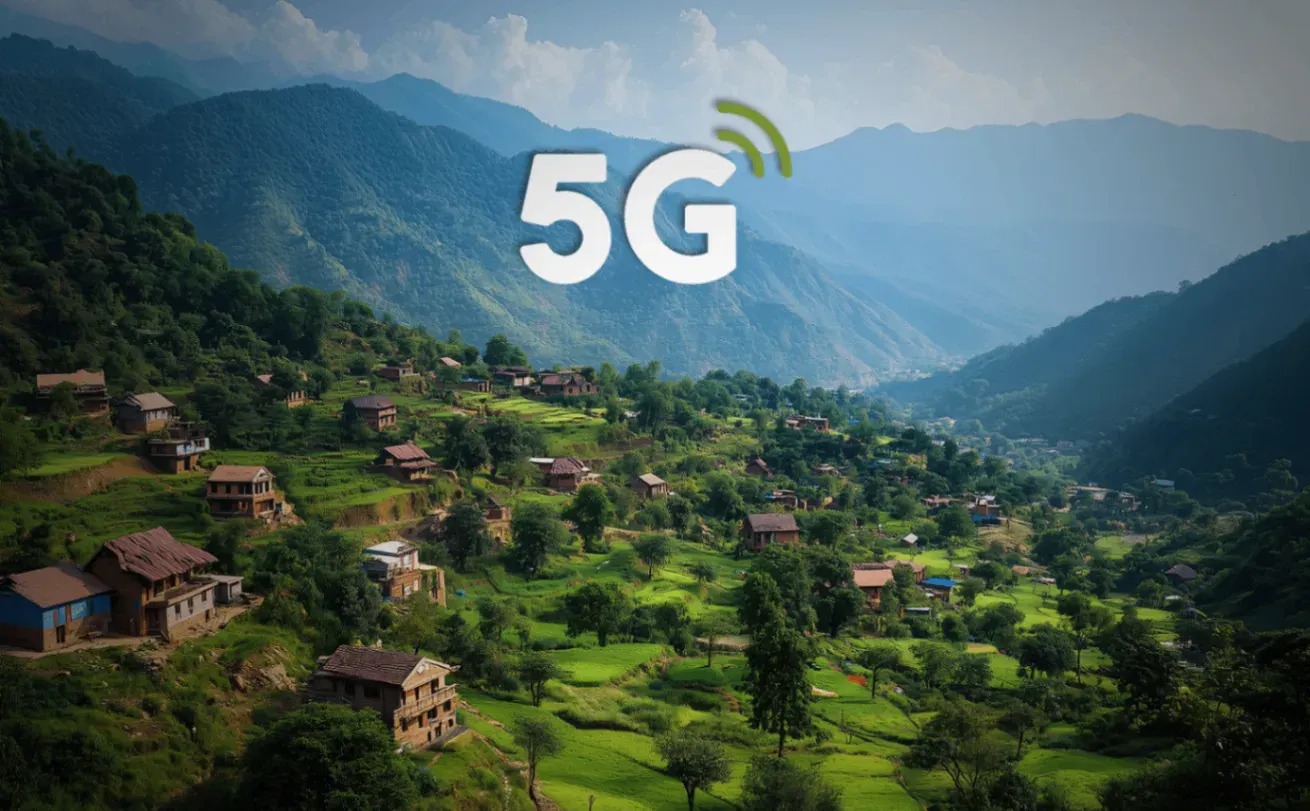
India’s ambitious technological leap is finally touching places often considered off the grid. With nearly 470,000 5G base stations established since October 2022, spanning 99.6% of India’s districts, mobile broadband is no longer just an urban privilege—it’s becoming a rural necessity.
From Metros to the Middle of Nowhere: Expansion Unfolds
Telecom operators are rapidly pushing 5G beyond the urban stronghold:
- Vodafone Idea (Vi) has deployed services in 23 additional cities—like Ahmedabad, Pune, Jaipur, Kolkata, and more—using AI-powered Self‑Organizing Networks (SON) to scale efficiently.
- A commanding vision unveiled by the Department of Telecommunications (DoT) in its 2025 Telecom Policy sets a milestone: 4G access for 100% of the population and 5G coverage reaching 90% by 2030. The plan includes fiber upgrades and infrastructure expansion to support this digital sweep.
- Network capacity has expanded dramatically across rural regions, with Airtel alone covering over 89,000 villages, while Vi and Jio continue pursuing ecosystem expansion.
Fixing the Rural Digital Divide, Brick by Brick
India’s commitment to rural telecom infrastructure is supported by strategic programs:
- The National Broadband Mission (NBM) 2.0 (2025–2030) targets fiber connectivity for 270,000 villages, reaching 90% of schools, PHCs, and Panchayats.
- Through the BharatNet initiative, over 218,000 Panchayats are already service-ready with broadband. And an extensive 692,676 km of optical fiber has been laid, along with more than 12 million FTTH connections and 104,574 public Wi-Fi hotspots.
- A USD 18 billion investment plan was announced to provide broadband access in 40,000 additional Gram Panchayats, reaching 15 million rural households.
Technology That Makes It Work
India isn’t just building networks; it’s innovating:
- 5Gi—India’s Indigenous 5G specification—extends network reach in difficult terrains, improving rural penetration by adapting to local environments.
- Telecoms are exploring multi-connectivity solutions combining 5G and satellite links, delivering high-speed and reliable connectivity for rural IoT (agriculture, livestock, forest monitoring) with impressive performance benchmarks.
- The launch of India’s first 5G captive network (CNPN) at the industrial site NRL in Assam, in collaboration with BSNL, demonstrates how private 5G can offer ultra-secure, high-performance networks for industry use.
Numbers That Matter
- From 290 million 5G users in 2024 to an expected 770 million by 2028, India’s mobile internet revolution shows no signs of slowing.
- By March 2025, 25 crore (250 million) mobile users were already connected to 5G, underscoring rapid consumer adoption.
- This surge is projected to boost mobile services revenue from $30.2 billion in 2023 to $39.3 billion by 2029, led by rural growth and 5G’s commercial utility.
Why It Matters: Beyond Faster Internet
This isn’t just about faster downloads. 5G in rural India unlocks a future-ready society:
- Farmers get access to precision agriculture IoT tools and real-time data.
- Villagers gain telemedicine, virtual education, and e-governance portals like never before.
- Digital inclusion converges with economic empowerment and social resilience.
- Optional public broadband, government schemes, and tech-driven growth converge—all to reshape the rural landscape.
Parting Thoughts India’s push to bring 5G connectivity to villages is not just infrastructure—it’s equity in motion. With synchronous efforts from telecom providers, government vision, and ground-level tech, the country is laying the foundation for a digitally inclusive tomorrow.