
|
Getting your Trinity Audio player ready...
|
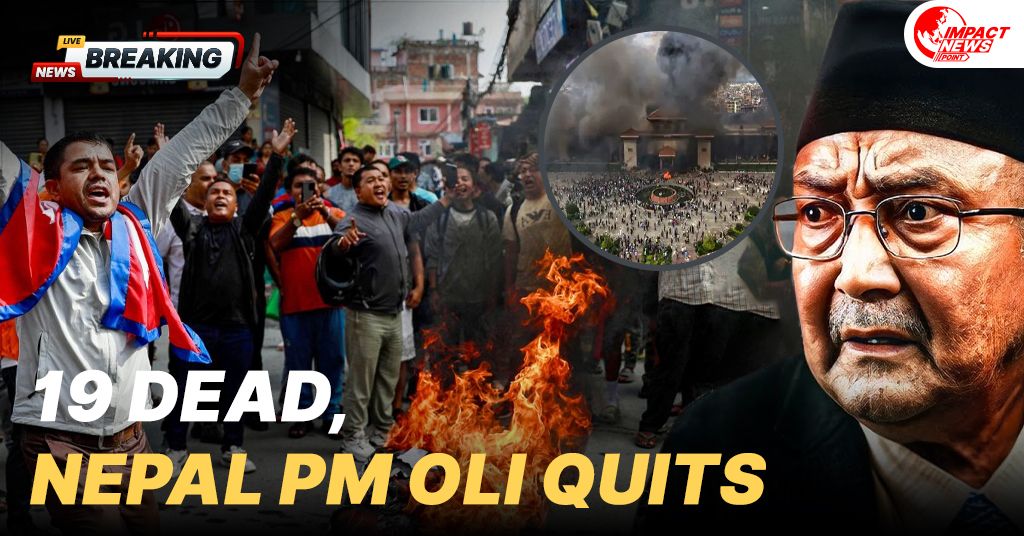
Kathmandu, September 10, 2025 Nepal has been thrown into one of its darkest hours in recent memory as violent street protests turned deadly, forcing Prime Minister K.P. Sharma Oli to resign late Tuesday night. The nation is now under curfew, with soldiers deployed across the capital after furious demonstrators set parts of Parliament ablaze, leaving at least 19 people dead and hundreds wounded.
How It All Unfolded
The chaos erupted after the government suddenly banned social media platforms like Facebook and Instagram, branding them “threats to national security.” The move struck a nerve among young people and civil society activists already reeling from inflation, job losses, and growing corruption scandals. Within hours, Kathmandu’s streets were flooded with angry citizens demanding change, and the protests soon spread to cities like Pokhara and Biratnagar.
Clashes Turn Bloody
What began as demonstrations spiraled into violence as security forces tried to suppress crowds near Singha Durbar, the heart of Nepal’s government. Tear gas, rubber bullets, and even live ammunition were used to disperse protesters. Enraged crowds fought back, torching vehicles, throwing stones, and setting fire to sections of the Parliament building. Hospitals across Kathmandu have been overwhelmed, treating dozens of critically injured citizens. Human rights groups have condemned the crackdown, calling it “excessive and alarming.”
The Prime Minister Steps Down
Under immense pressure, K.P. Sharma Oli gave in to public outrage and stepped down, admitting in a brief speech that he had lost the people’s trust. “The people’s voice cannot be ignored,” he said, signaling the end of his tenure amid one of the most turbulent episodes in Nepal’s political history. His resignation, however, has left a power vacuum, with opposition leaders rushing to figure out who will lead a caretaker government.
Soldiers on the Streets
To restore order, the Nepalese army has now taken control of the situation. Armed soldiers patrol major junctions in Kathmandu, guarding government buildings that only days ago were set ablaze. A strict curfew has been declared in Kathmandu and Lalitpur, effectively shutting down the capital. Internet services, though partly restored, remain heavily monitored by authorities.
Global Alarm
The unrest has already caught the eye of the international community. India has cautioned its citizens to steer clear of high-tension areas, while the United Nations has urged Nepal to show restraint and uphold fundamental democratic freedoms. World leaders are now watching closely as Nepal teeters on yet another round of political instability.
An Uncertain Tomorrow
Though Oli’s resignation has momentarily cooled tensions, protesters insist their fight is not over. They want deeper reforms a clear crackdown on corruption, assurances of accountability, and long-term stability. Until that happens, Nepal’s political future remains clouded, and its streets patrolled by soldiers and scarred with violence tell the story of a nation at the edge of transformation.