
|
Getting your Trinity Audio player ready...
|
Introduction
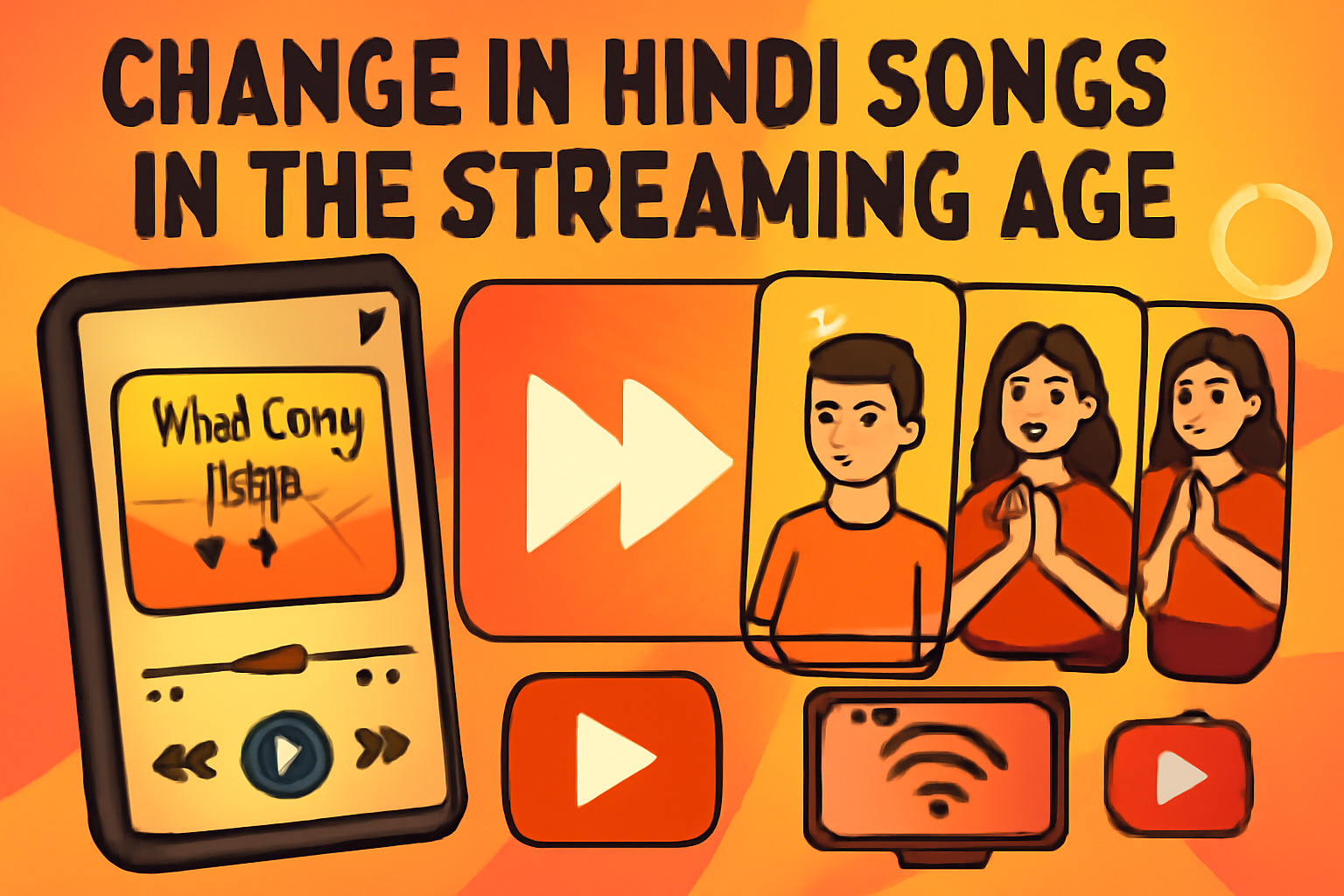
Hindi music has entered a whole new era, one ruled by streaming platforms and social media. Gone are the days of long albums and poetic lyrics. Today, songs are designed to go viral on Instagram Reels, grab attention in seconds, and fade away just as fast. In the age of Spotify, JioSaavn, and YouTube Music, what we listen to and how we listen has completely changed. And Hindi songs are evolving with it.
From Albums to Algorithms
Earlier, Bollywood soundtracks had a proper album format with a mix of romantic tracks, sad melodies, dance numbers, and slow burners. Now, the industry is driven by algorithms. Data decides what works. Songs are shorter, averaging around 2 minutes. They begin with catchy hooks, sometimes hitting the chorus within the first 10 seconds. The idea is simple: catch the listener before they skip.
How Reels Took Over Music
Instagram Reels and YouTube Shorts have become the new platforms for music discovery. Many tracks now get popular through viral reels, long before the full version even drops. Songs like Kesariya and Tum Tum became national sensations, not because of movie promotions, but because of how frequently they were used in reels. Now, if a song doesn’t fit a 15-second video, it risks being forgotten.
Marketing in the Streaming Age
Music marketing has changed. Where once songs were launched with television ads and radio shows, today the focus is all on digital buzz. Teasers are released on social media, influencers are paid to dance or lip-sync to the song, and hashtag trends are created to push engagement. This new way of promotion has turned songs into products meant for quick consumption rather than long-term connection.
Changing Sounds and Styles
Modern Hindi songs are heavily influenced by Punjabi beats, Western EDM, and trap music. Auto-tune and repetitive loops are common. Lyrically, songs have become simpler and sometimes meaningless as long as they’re catchy. Indie artists are now dominating the charts with non-film songs that feel more relatable than what Bollywood offers. Musicians like Prateek Kuhad, King, and Dhvani Bhanushali have built careers entirely outside the movie industry.
What Audiences Are Feeling
Many listeners appreciate the convenience of streaming the ability to make personal playlists, skip songs, or instantly share music. But there’s also a growing concern: today’s songs lack soul. They’re too similar, too fast, and often feel disposable. There’s nostalgia for an era when songs had meaning, poetry, and longevity. Remixes of classic tracks have only added to the disappointment, often stripping the originals of their charm.
Rise and Fall of Remixes
One of the most criticized trends in recent years has been Bollywood’s overuse of remixes. From Tip Tip Barsa Paani to Masakali 2.0, several iconic tracks have been remade with loud beats and flashy visuals but no emotional depth. While some remixes do well because of their familiarity, audiences are increasingly asking for originality and creativity.
What the Future Looks Like
Hindi music is heading toward a fast-paced, trend-focused future. Songs will likely get even shorter. More independent artists will dominate the charts. Regional language music and cross-genre collaborations will increase. And with tools like AI now entering the creative space, even the way music is made could change dramatically. But with all these changes, the challenge will remain: how to make songs that not only trend but last.
Parting Thoughts
Streaming and social media have reshaped how we consume Hindi music. While the change has opened doors for new talent and innovation, it has also raised questions about quality and staying power. In a world of scrolling and skipping, it’s easy to lose touch with music that truly moves us. But as long as there’s an audience that values real emotion and melody, there’s hope that Hindi songs will find their balance between going viral and becoming timeless.