

|
Getting your Trinity Audio player ready...
|
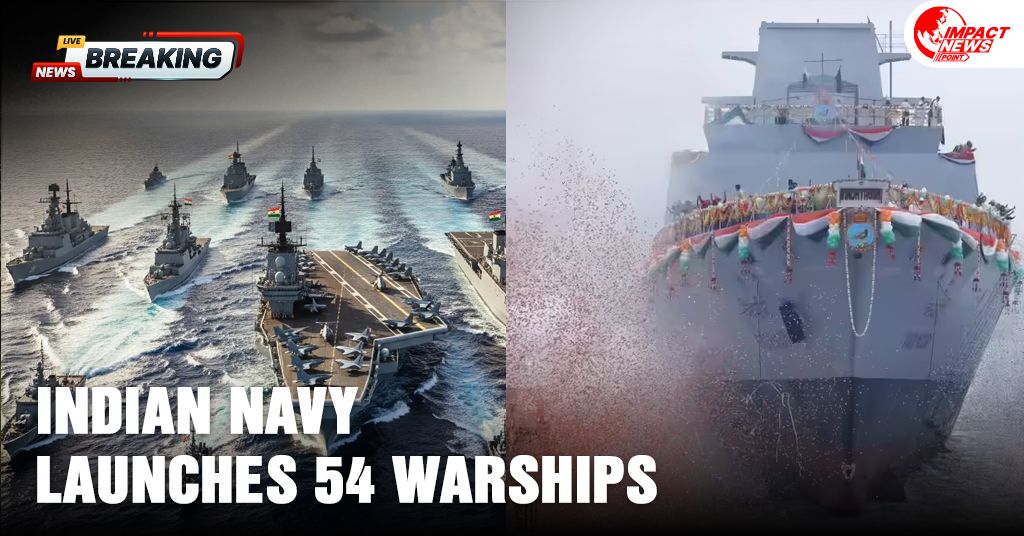
The Indian Navy has embarked on its biggest-ever shipbuilding program, with 54 warships currently under construction across domestic shipyards. This ambitious effort is a crucial part of India’s plan to strengthen its naval power while boosting self-reliance in defense manufacturing.
The Scale of the Shipbuilding Program
The 54 vessels are being built at various stages, from early development to close to completion. Officials have confirmed that up to 10 of these warships are expected to be commissioned by the end of 2025. The rest of the ships are planned to join the fleet by 2030, marking a steady expansion of India’s naval capabilities.
This massive construction program aligns with India’s goal of operating over 200 frontline ships and submarines by 2035, with estimates suggesting the total could rise to 230 vessels by 2037. Such growth will significantly enhance India’s capacity to safeguard maritime interests and maintain security across vital sea lanes in the Indian Ocean.
Focus on Indigenous Production
The shipbuilding drive is closely linked to the government’s Atmanirbhar Bharat (Self-Reliant India) mission, which emphasizes developing and manufacturing defense equipment within the country. This initiative not only strengthens national security but also creates widespread employment opportunities in shipyards and related industries.
Senior naval officials describe this transition as moving from a “Buyer’s Navy” to a “Builder’s Navy,” reflecting a major shift towards building ships with over 80 percent indigenous content. This reduces dependency on imports and increases defense autonomy.
Strategic Importance
The expansion of the Indian Navy comes amid increasing regional security challenges, especially from China and Pakistan. By modernizing its fleet with state-of-the-art warships built domestically, India aims to enhance its maritime strength and readiness.
The new ships will bolster the Navy’s ability to protect the country’s economic and strategic interests at sea, from preventing threats to securing trade routes. The shipbuilding effort also helps position India as a preferred security partner for regional cooperation.
Recent Developments and Future Outlook
July 2025 saw the induction of the INS Tamal, a stealth-role frigate built in Russia, which is also the last major warship India plans to import. Going forward, all new vessels will be constructed in India.
Several notable projects are underway, including anti-submarine warfare corvettes and next-generation missile vessels. With contracts valued at billions of dollars, the Navy’s shipbuilding pipeline represents not only a technological leap but a significant boost to India’s naval industrial base.
Parting Thoughts
The Indian Navy’s largest shipbuilding initiative marks a milestone in the nation’s defense and industrial capabilities. The focus on indigenous construction aligns with the broader national vision of self-reliance and enhanced maritime security. By 2030, the induction of these 54 new warships will reshape India’s naval power, supporting its ambitions to be a dominant force in the Indian Ocean region.