
|
Getting your Trinity Audio player ready...
|
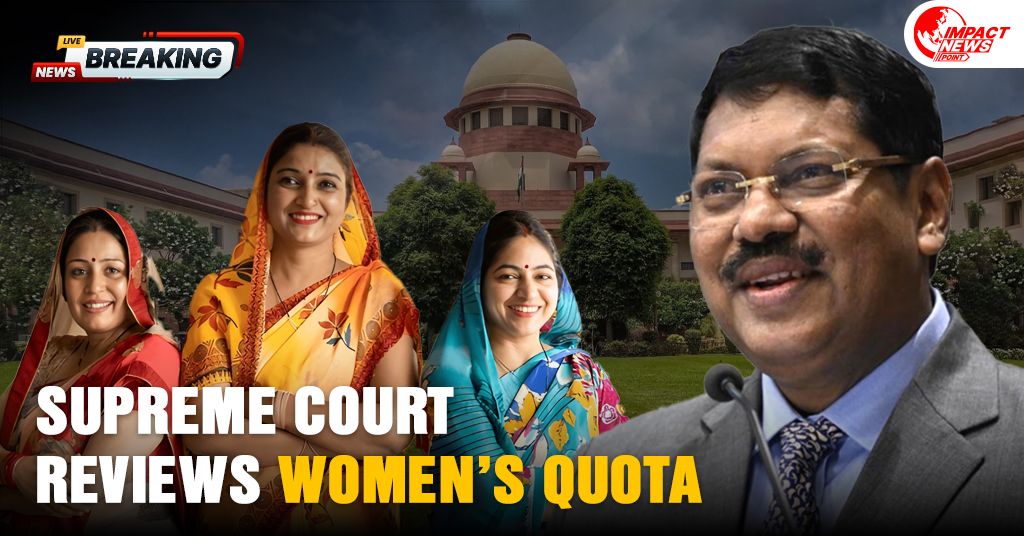
The Supreme Court of India is scheduled to examine key petitions concerning the enforcement timeline of the Women’s Reservation Act, a landmark legislation aimed at reserving 33 percent of seats in the Lok Sabha and state legislative assemblies for women. The hearing underscores growing demands from multiple quarters for faster implementation, sparking national debate on political representation and gender equality.
Background of the Act
The Women’s Reservation Act, officially enacted as the Constitution (One Hundred and Sixth Amendment) Act, 2023, mandates a reservation of one-third of legislative seats for women. This historic step seeks to close the glaring gender gap in political representation, where women currently hold less than 15 percent of Lok Sabha seats and even fewer in many state assemblies.
However, the Act’s enforcement is contingent upon complex procedural requirements, including a delimitation exercise that redraws the boundaries and distribution of constituencies based on the latest census data. This delimitation and publication of new census figures are critical precursors, currently scheduled to follow the Census of 2027 and subsequent delimitation, effectively delaying implementation possibly until 2029.
Legal and Political Challenges
Several petitions before the Supreme Court challenge this delayed schedule, arguing that the prolonged wait undermines the spirit and urgency of the legislation. Critics highlight that the postponement weakens women’s political participation and prolongs their underrepresentation in governance.
Apart from procedural hurdles, the Act faces political complexities such as debates over inclusion of sub-quotas for marginalized groups like Other Backward Classes (OBCs) within the women’s reservation. This has led to calls for reassessment of the reservation framework to ensure equitable distribution across social categories.
Calls for Accelerated Implementation
Advocates and several political leaders pressing for speedy enforcement emphasize the Act’s importance in empowering women and achieving gender parity in political institutions. They argue that accelerating the process would reflect India’s commitment to women’s empowerment and democratic inclusiveness.
Opposition parties and civil society groups have urged the government and judiciary to explore legal pathways that could expedite the start of reservations without waiting for the delimitation, citing similar amendments in local governance bodies as precedents.
Government’s Position
The government defends the timeline, stating that delimitation is essential to ensure fair and proportional representation based on updated population data, preventing distortion of political representation among states. It maintains that adhering to constitutional mandates for census and delimitation preserves both federal balance and democratic fairness.
Implications and Outlook
The Supreme Court’s upcoming verdict on the petitions could set a significant precedent for women’s political empowerment in India. A decision favoring expedited implementation could alter the political landscape, enhancing women’s representation during the next general elections. Conversely, upholding the current timeline would delay the impact, prolonging the current status of underrepresentation.
Regardless of the outcome, the scrutiny over the Women’s Reservation Act reflects India’s ongoing challenge to balance procedural rigor with the urgent need to advance gender equality in its democracy. This judicial review marks a critical juncture in India’s journey toward inclusivity, spotlighting the complex intersection of law, politics, and social justice embedded in women’s political representation efforts.