

|
Getting your Trinity Audio player ready...
|
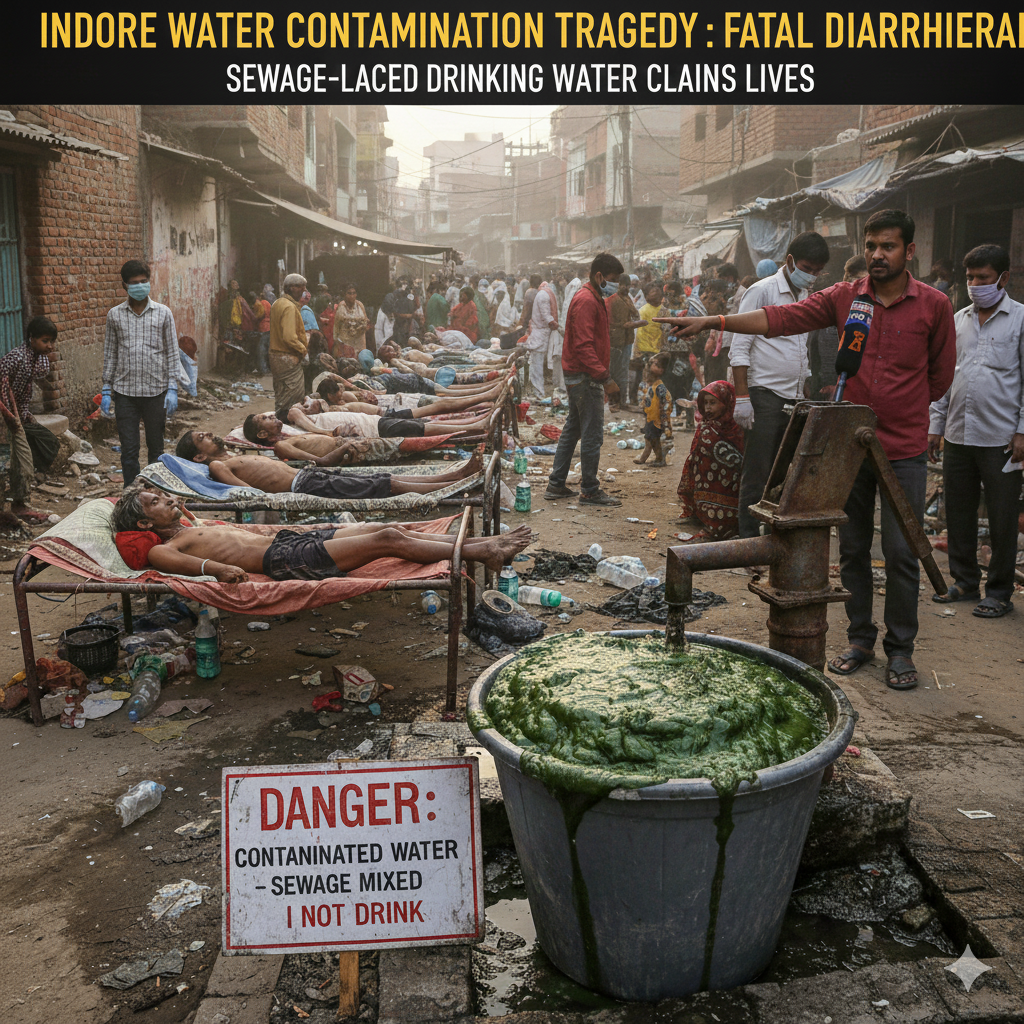
Indore, Madhya Pradesh The reputation of Indore as India’s cleanest city has been shaken after a major public health emergency unfolded due to sewage contamination in the municipal drinking water supply. The outbreak has claimed multiple lives and left hundreds of residents hospitalised, triggering widespread outrage and urgent questions about civic accountability.
The crisis surfaced in the Bhagirathpura area, where residents began reporting severe gastrointestinal symptoms, including acute diarrhoea, vomiting, fever and dehydration. Local hospitals were soon overwhelmed as patients poured in, forcing emergency admissions and round-the-clock treatment. Health officials estimate that more than a thousand people have been affected, with a significant number requiring intensive medical care.
Among the deceased were vulnerable individuals, including a young infant, intensifying public anger and grief. Families in the area said they had noticed foul-smelling and discoloured water coming from taps for days before the outbreak peaked. Despite repeated complaints, corrective action allegedly came too late.
Sewage Seepage into Drinking Water Lines
Preliminary investigations revealed that a key drinking water pipeline had been damaged near a public toilet structure, allowing untreated sewage to seep directly into the water supply. Laboratory tests later confirmed the presence of harmful bacteria commonly associated with human waste, pointing to a clear breach of safety in the city’s water distribution network.
Municipal authorities launched emergency containment measures, including shutting down the affected water lines, supplying tankers with clean water, and distributing purification tablets. Residents were advised to boil water before use until the system is fully sanitised and declared safe.
Government Action and Accountability Measures
Following the tragedy, the state government ordered the suspension of several municipal officials and initiated a high-level inquiry to determine responsibility for the lapse. Senior officials acknowledged infrastructural negligence and promised swift corrective steps, including pipeline replacement and stricter monitoring of sanitation projects.
The National Human Rights Commission has also taken cognisance of the incident, seeking a detailed report from the state authorities and urging accountability for the loss of lives. The commission highlighted that access to safe drinking water is a basic human right and any failure leading to fatalities is a serious violation.
Public Outrage and a Wake-Up Call for Urban India
The incident has sparked political backlash and protests, with opposition leaders questioning how such a catastrophe could occur in a city repeatedly ranked at the top for cleanliness. Urban planners and public health experts say the tragedy exposes a deeper crisis the disconnect between cosmetic sanitation rankings and the actual condition of underground infrastructure.
As Indore works to contain the outbreak and restore public trust, the disaster stands as a stark reminder that clean streets mean little without safe water. For affected families, the cost of negligence has already been paid in lives, and for the city, the challenge now is to ensure such a failure never happens again.