
|
Getting your Trinity Audio player ready...
|
Cupertino:
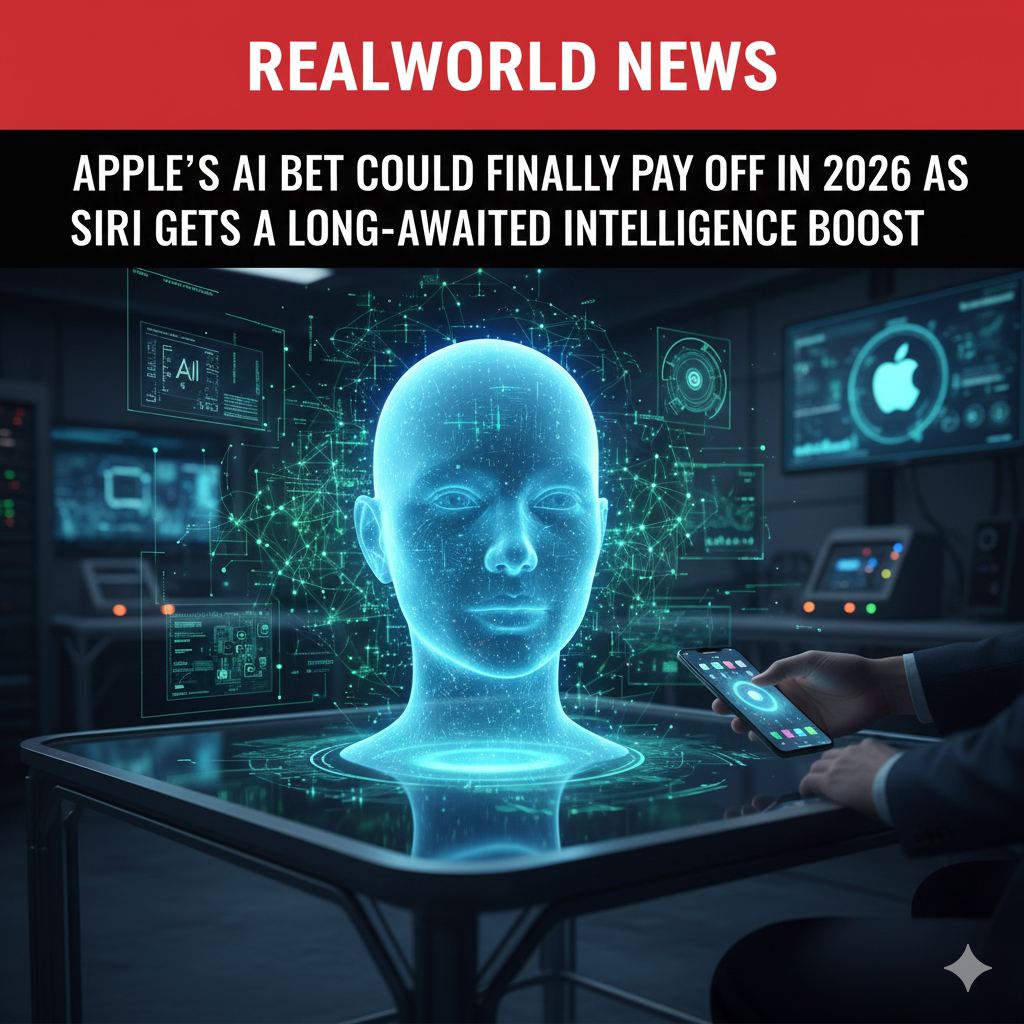
After years of taking a cautious route in the fast-moving artificial intelligence race, Apple may finally see its long-term AI strategy pay dividends in 2026. Industry observers believe the tech giant’s restrained approach once criticised as slow could turn into a strategic advantage as the AI hype cycle begins to mature.
Unlike rivals that invested aggressively in massive AI models and expensive infrastructure, Apple focused on tight ecosystem integration, on-device intelligence and user privacy. While this meant fewer flashy AI announcements, it also allowed the company to avoid ballooning costs and rushed rollouts.
Now, with plans for a major Siri overhaul in 2026, Apple appears ready to make its most meaningful AI move yet.
Why Apple Played the Long Game
Apple’s AI philosophy has always been different. Instead of chasing attention with experimental tools, the company concentrated on making intelligence practical, personal and deeply embedded into everyday devices.
Analysts say this strategy gives Apple flexibility at a time when many tech companies are facing pressure to justify heavy AI spending. As the market shifts from hype to real-world usefulness, Apple’s disciplined investments could look increasingly smart.
Siri’s Comeback Moment
The most anticipated piece of Apple’s AI roadmap is the next-generation Siri, expected to deliver more natural conversations, improved understanding of context and the ability to handle multi-step tasks.
For years, Siri lagged behind newer AI assistants, becoming a frequent punchline among users. The upcoming upgrade is being viewed as a make-or-break moment not just for Siri, but for Apple’s overall AI credibility.
If successful, the revamped assistant could dramatically change how users interact with iPhones, iPads, Macs and other Apple devices, turning Siri into a genuinely helpful digital companion rather than a basic voice tool.
Privacy and On-Device Intelligence Remain Central
One of Apple’s biggest differentiators in the AI space is its commitment to privacy-first design. Much of Apple’s AI processing is expected to remain on the device, reducing dependence on cloud servers and limiting data exposure.
This approach aligns with growing global concerns around data misuse and AI surveillance, potentially giving Apple an edge with privacy-conscious consumers.
Financial Strength Adds Strategic Advantage
Apple’s massive cash reserves also place it in a strong position. The company has the ability to make targeted acquisitions, partnerships or investments if AI opportunities evolve further in 2026 — without needing to rush or overextend itself.
Market watchers say this financial cushion allows Apple to stay patient, adapt quickly and invest only where returns are clear.
Why 2026 Could Be a Turning Point
As AI moves from experimentation to everyday utility, Apple’s ecosystem-driven model may start delivering visible results. Rather than competing on raw AI power, Apple is betting on seamless user experience, reliability and trust.
If the Siri upgrade delivers as expected, 2026 could mark the year Apple transitions from being seen as an AI laggard to a quiet leader focused on meaningful innovation.
For a company known for arriving late and then redefining categories this could be another classic Apple moment in the making.