

|
Getting your Trinity Audio player ready...
|
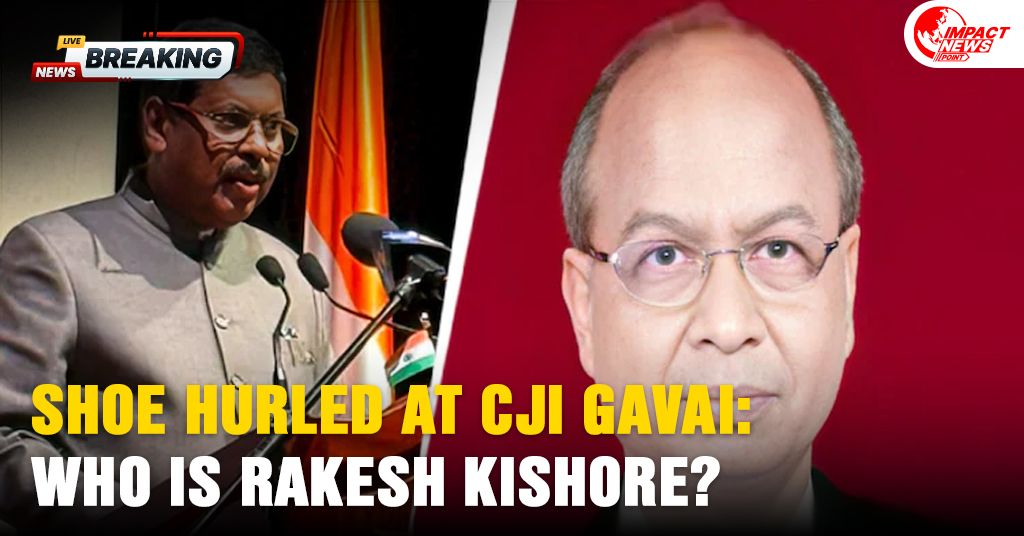
Supreme Court News: Shoe Thrown at CJI Gavai Sparks Controversy
On 6 October 2025, a hearing in Court No. 1 of the Supreme Court of India took a dramatic turn when senior advocate Rakesh Kishore attempted to throw a shoe at Chief Justice of India B.R. Gavai. Though the shoe fell short and caused no physical harm, the incident sent shockwaves through legal circles and evoked sharp reactions about courtroom decorum and judicial security.
The Incident Unfolded
The episode occurred around 11:35 a.m., in the midst of proceedings, when Kishore — having removed his footwear — aimed it toward CJI Gavai. Security personnel immediately intercepted the attack, preventing the shoe from reaching its target. The Chief Justice reportedly dismissed the act, stating, “These things do not affect me,” before proceeding with the hearing as usual.
As he was being escorted out of the courtroom, Kishore burst into a chant, declaring, “India will not tolerate the insult of Sanatan Dharma.” His words pointed to a deeper grievance that may have motivated his act, though the specifics remain under investigation.
Who Is Rakesh Kishore?
At 71 years old, Rakesh Kishore is a senior attorney practicing in Delhi. He is a long-time member of prominent bar associations, holding credentials from the Supreme Court Bar Association, the Shahdara Bar Association, and the Bar Council of Delhi. The Bar Council moved swiftly, issuing an interim suspension order that bars him from appearing, acting, pleading, or practising before any court, tribunal, or authority in the country. The council flagged his actions as “prima facie inconsistent with the dignity of the court,” citing violations under the Advocates Act, 1961 and Bar Council rules.
Legal & Institutional Fallout
- Within hours, the Bar Council of India (BCI) initiated the suspension based on prima facie evidence.
- The move signals zero tolerance for actions that challenge courtroom order — especially when directed at the highest judicial office.
- Investigations are likely to probe whether the act was spontaneous or part of a larger grievance or protest plan.
- The Supreme Court has not released an official statement beyond courtroom acknowledgment, but internal security and procedural reviews are expected.
ABOUT THE CASE
- Integrity of the Judiciary: The incident underscores that even the apex court is not immune to disruptive acts. Maintaining decorum and authority in courtrooms is foundational to public trust in the legal system.
- Security Protocols: This breach, however symbolic in impact, will raise questions about courtroom security checks, especially for advocates admitted to the bar who have regular access to court premises.
- Expression vs. Outrage: While legal professionals often air dissent in judgments, case law, or academic forums, an act of throwing a shoe in court crosses into direct confrontation. It reignites debate over acceptable forms of protest within judicial institutions.
- Precedent & Discipline: The BCI’s swift suspension suggests that such conduct could lead to harsher penalties going forward. This may deter similar acts and reaffirm boundaries for professional behavior.
What Next?
- Full BCI inquiry: A disciplinary panel will examine the facts and may recommend further sanctions, possibly disbarment.
- Court’s internal review: Supreme Court security and procedural norms will likely be scrutinized and strengthened.
- Public and legal debate: Discussions will arise about freedom of speech, legal ethics, and the limits of dissent inside courtrooms.
Kishore’s defense & motives: He will need to explain his motivations and whether his act was premeditated, symbolic, or reactionary.