
|
Getting your Trinity Audio player ready...
|
New Delhi, October 2025
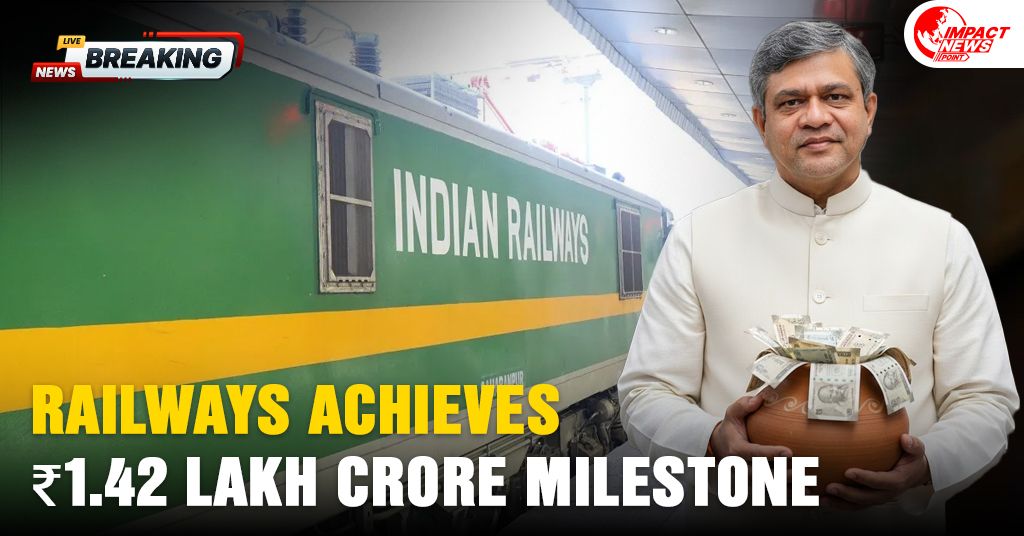
Indian Railways has achieved a remarkable milestone in infrastructure spending, recording a 56.5% utilisation of its capital expenditure (capex) budget by the end of September 2025. This marks the highest mid-year capex achievement ever recorded by the national transporter and signals strong execution momentum in the current financial year.
By the close of the first half of FY26, the Railways had already deployed ₹1.42 lakh crore out of the total annual capex allocation of ₹2.52 lakh crore. Such front-loaded expenditure reflects a strategic focus on accelerating infrastructure development, ensuring project delivery timelines, and boosting the economy through public investment.
Breakdown of Sectoral Spending
The record utilisation has been spread across key operational and developmental areas:
- Safety works: Railways has made significant progress in safety-related initiatives, including KAVACH (automatic train protection systems), track renewals, and construction of road overbridges and level crossings. Out of ₹39,456 crore allocated, around ₹22,286 crore has already been spent, a strong 56% utilisation.
- Capacity augmentation: This includes expansion through new lines, doubling, gauge conversion, electrification, and metropolitan transport projects. Nearly ₹49,000 crore has been spent out of the planned ₹1.09 lakh crore, reflecting about 45% utilisation.
- Rolling stock: Investment in locomotives, coaches, and wagons continues to be a major component of Railways’ expenditure. The sector has seen ₹25,948 crore spent so far about 46% of its ₹56,693 crore allocation.
- Passenger amenities and station redevelopment: Modernisation of stations, digital facilities, and passenger comfort upgrades have also progressed steadily. Around ₹5,863 crore has been disbursed from a budget of ₹12,004 crore, amounting to roughly 49% utilisation.
- Other categories: Smaller allocations covering research, computerisation, and inventory-related expenditure have seen around ₹2,000 crore spent, translating into nearly 60% utilisation.
Driving Forces Behind the Record
Officials attribute this exceptional performance to a more structured and time-bound project monitoring system, early fund releases, and improved coordination among executing agencies. The Railways’ approach of “plan, approve, and execute within the same financial year” has allowed faster absorption of funds and reduced bureaucratic delays.
This surge in infrastructure spending also aligns with the government’s broader vision of boosting capital formation and creating long-term assets that support industrial growth. Large-scale investments in rail capacity not only enhance connectivity but also stimulate demand in sectors like steel, cement, and electrical equipment generating a ripple effect across the economy.
Challenges and the Road Ahead
While the current momentum is impressive, maintaining it through the second half of the fiscal year will be crucial. Challenges such as land acquisition delays, environmental clearances, and capacity limitations among contractors could potentially slow progress. Moreover, sustaining quality control while executing multiple large-scale projects simultaneously will require continued vigilance. Despite these challenges, the Railways is confident of keeping up the pace and aims to achieve over 90% capex utilisation by the end of FY26. If this trajectory continues, the year could close with one of the highest annual expenditure achievements in Railways’ history.
Parting Thoughts
Indian Railways’ record-breaking capex utilisation by mid-fiscal underscores its transformation from a traditionally slow-moving entity to a performance-driven infrastructure powerhouse. With its aggressive push in safety, capacity building, and passenger amenities, the Railways is emerging as a key catalyst in India’s infrastructure growth story, one that not only strengthens national connectivity but also fuels the country’s broader economic ambitions.