
|
Getting your Trinity Audio player ready...
|
In a development that could reshape the decades-long conflict in central India, Mallojula Venugopal Rao, better known by his alias Bhupathi, one of India’s most senior Naxalite leaders, has surrendered before the Maharashtra Police in Gadchiroli, ending more than five decades of armed rebellion in the dense forest belts of central India.
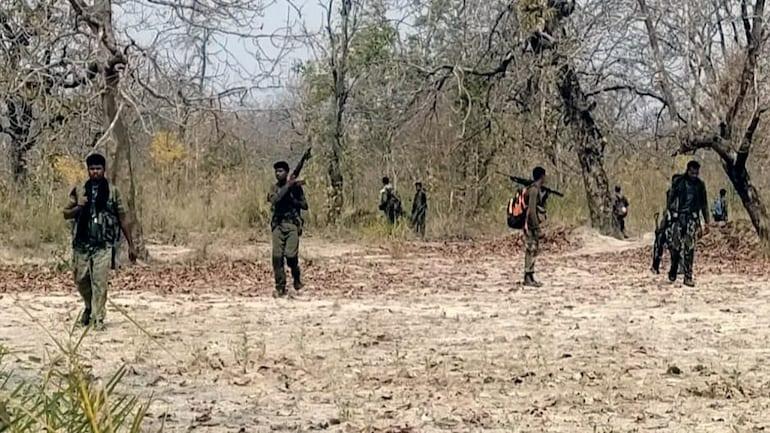
Bhupathi, once a feared commander of the People’s Liberation Guerrilla Army (PLGA) and a member of the CPI (Maoist) politburo, laid down arms along with 61 cadres, including several senior commanders and area-level leaders. The group handed over more than 50 weapons, including AK-47 rifles, INSAS guns, and grenade launchers, during the surrender ceremony.
A Historic Turning Point in Gadchiroli
The surrender was the result of months of confidential negotiations led by Maharashtra’s anti-Naxal task force and senior police officers. The cadres, many of whom operated across Maharashtra, Chhattisgarh, and Telangana, walked out of their jungle hideouts earlier this week and presented themselves at a designated location in Gadchiroli.
Officials called the event “a turning point in Maharashtra’s fight against Naxalism.” Gadchiroli, once considered one of the last bastions of Maoist presence, has now seen its strongest internal resistance collapse without bloodshed.
Police sources revealed that Bhupathi had been under immense pressure after repeated security operations and declining support from local tribal communities, who have grown weary of violence and displacement. The gradual weakening of Maoist logistics, coupled with targeted intelligence-based encounters in recent years, has left the insurgency fractured and leaderless in several zones.
Who Is Bhupathi? The Man Behind the Movement
Bhupathi, believed to be in his late 60s, was not just another rebel commander. He was part of the core political wing of the CPI (Maoist) and one of its most influential ideologues. Known as an “engineer of ambushes,” Bhupathi is said to have planned several high-profile attacks on security forces during the height of the Naxal movement.
Hailing from Andhra Pradesh, he was also deeply involved in building the organizational structure of Maoist operations in Abujhmad, a forest region once considered impenetrable by security forces. However, insiders say that over the past few years, Bhupathi’s influence had waned as divisions grew within the Maoist ranks and communication networks weakened under government surveillance.
Another factor behind his surrender, police believe, was personal loss his wife, Tarakka, also a Naxal member, had surrendered earlier this year, choosing to begin a new life under the state’s rehabilitation program.
A Signal of Change in the Red Corridor
This surrender comes as a symbolic and strategic victory for India’s internal security forces. For years, Gadchiroli has been among the most affected districts in the so-called “Red Corridor.” With Bhupathi’s exit, officials say, the Maoist movement in Maharashtra has lost its backbone.
Senior police officers said the mass surrender was possible because of trust-building efforts, community outreach, and consistent ground operations that cut off Maoist recruitment channels. Many of those who surrendered were reportedly tired, disillusioned, and eager for a peaceful life after spending years in the jungle under constant fear of gunfire.
“Today is not just a day of surrender it is a day of awakening,” said one senior officer. “For decades, these men and women lived in the dark, away from their families and a normal life. Today, they have chosen peace over violence.”
What Happens Next
The Maharashtra government is expected to place Bhupathi and his team under its surrender and rehabilitation policy, offering financial assistance, housing, and livelihood support in exchange for intelligence cooperation. Many of the cadres are also expected to provide key inputs about the remaining Maoist network operating in parts of Chhattisgarh and Telangana.
For the people of Gadchiroli, the surrender marks more than a victory for the police it is a moment of hope. Villagers who once lived between fear and silence now see the possibility of roads, schools, and safety returning to their lands.
The End of a Chapter, Might Be The Start of Healing
Bhupathi’s surrender, after nearly five decades of warfare and loss, represents a rare human story inside a conflict often told only through gunfire. It reflects fatigue, reflection, and the quiet human desire for redemption. For India’s longest-running insurgency, this may not be the final chapter but it is certainly the beginning of a new one, where dialogue replaces bullets and peace slowly takes root where fear once grew.