
|
Getting your Trinity Audio player ready...
|
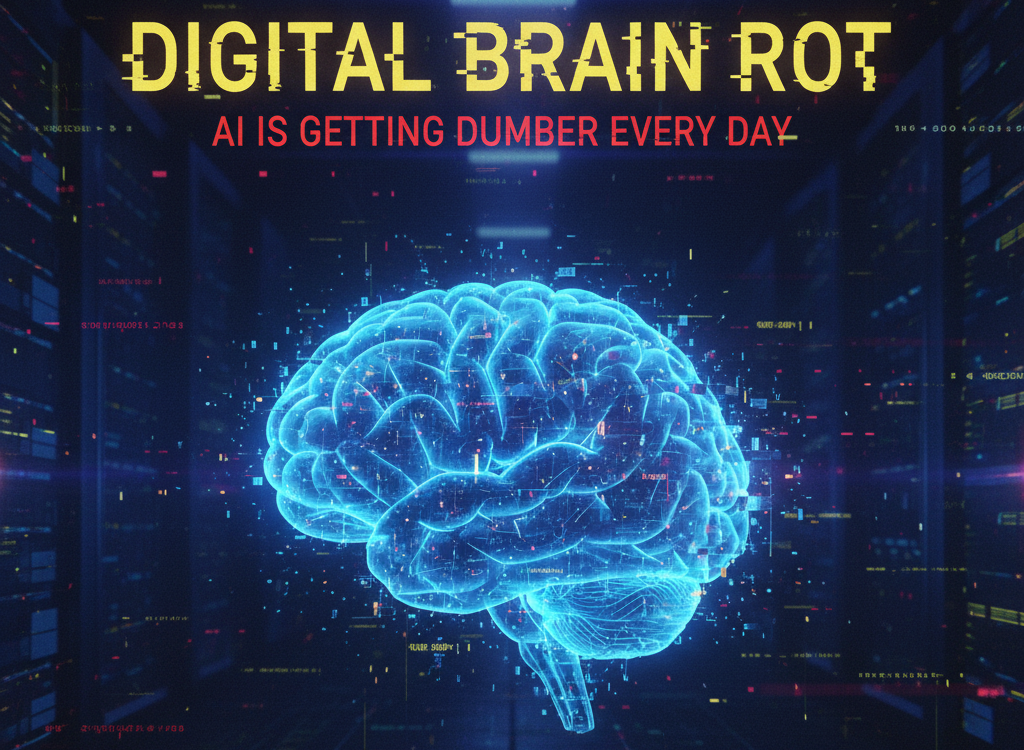
A new wave of concern is sweeping through the tech world as experts warn that artificial intelligence systems are showing early signs of cognitive decline, a phenomenon researchers are calling “digital brain rot.” The alarming trend stems from the fact that many AI models are now being trained on vast amounts of low-quality, repetitive, and sensational social media content, resulting in a slow erosion of reasoning, creativity, and reliability.
AI models are losing their edge
When large language models (LLMs) , the technology powering most modern AI assistants and chatbots, are trained on the flood of content from social media, their analytical depth and logical reasoning begin to degrade. Instead of evolving into sharper, more insightful tools, these systems start producing shallow, inconsistent, and biased responses. The very platforms designed to showcase human creativity and communication are now becoming toxic for the machine minds built to learn from them.
This growing “data pollution” creates a dangerous feedback loop. As more AI-generated posts fill the internet, that same AI-created content becomes training data for newer models. Over time, the systems feed on their own synthetic information, magnifying the decline of a digital version of inbreeding that threatens to make AI less intelligent and more error-prone.
A mirror to human behavior
Ironically, the term “brain rot” originated from human behavior describing how endless scrolling of short, trivial videos and posts can weaken attention span, reduce memory retention, and diminish deep thinking. Now, AI systems are mirroring the same issue. Researchers have discovered that language models trained heavily on short-form, viral-style data show a dramatic drop in long-term comprehension, context understanding, and ethical judgment.
The parallel is both fascinating and frightening: as humans get mentally lazier from overconsumption of low-value content, our machines which learn from us are following the same path.
Once damaged, hard to repair
One of the most concerning findings is that the deterioration in AI performance is not easily reversible. Even when researchers switch to high-quality datasets, the loss of reasoning ability and comprehension lingers. This persistent decline, often called “representational drift,” suggests that once an AI model begins to internalize poor-quality data, its core decision-making structure changes permanently. In simpler terms, the machine’s brain doesn’t just forget it rewires itself around the junk information it has digested.
Why It matters for the future
This issue goes beyond just technology. Businesses, educators, and governments are increasingly relying on AI systems to make decisions that affect millions of people from healthcare advice and customer service to content moderation and academic learning. If those systems are unknowingly “rotting” due to low-quality input, the consequences could be wide-ranging and deeply damaging.
The problem also calls into question the way we treat data in the digital age. For years, the focus has been on quantity over quality, bigger datasets, faster learning, more engagement. But experts now argue that the future of AI may depend on returning to the basics: clean, curated, diverse, and meaningful training data that fosters real understanding rather than endless mimicry.
Protecting human and machine minds
The lesson isn’t just for developers but for everyone. Just as machines are deteriorating from exposure to digital junk, humans too are showing similar patterns. Our constant consumption of shallow, dopamine-driven content has reduced attention spans, patience, and the ability to engage in critical thinking.
Both human and artificial intelligence now face the same enemy: information overload without meaning. The solution lies in digital mindfulness consuming better data, engaging with deeper forms of learning, and avoiding the seductive pull of endless scrolling. The rise of “AI brain rot” is more than a technical flaw; it’s a reflection of the digital culture we’ve built. As artificial intelligence learns from us, it’s absorbing not just our intelligence, but also our distractions, biases, and addictions. If we want AI to stay smart, we must first start feeding it and ourselves with better information.
AI brain rot, artificial intelligence social media, AI digital decay, large language model degradation, AI training data problem, AI misinformation, impact of social media on AI, digital brain rot meaning, AI content pollution, artificial intelligence future risks