
|
Getting your Trinity Audio player ready...
|
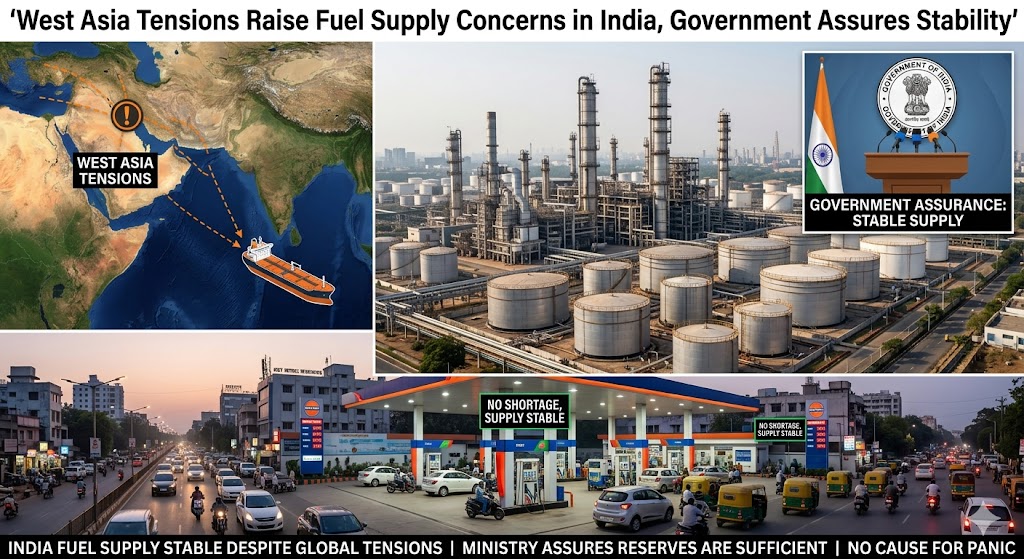
Rising geopolitical tensions in West Asia have triggered fresh concerns over fuel security in India, with questions emerging around the availability and pricing of petrol, diesel, and LPG. As a country that depends heavily on imported crude oil, India is closely monitoring the evolving situation. However, officials have clarified that there is no immediate threat to fuel supplies, and adequate reserves are in place to handle any short-term disruptions.
The concern stems from the fact that a significant portion of India’s crude oil imports originates from West Asian countries. Any instability in this region tends to impact global oil markets almost instantly. Over the past few days, early signs of price volatility have already begun to surface in international crude benchmarks. While these fluctuations may not immediately translate into sharp retail price hikes, they often act as early indicators of broader economic pressure.
According to government officials, India currently maintains sufficient fuel stocks, including strategic petroleum reserves that can be used during emergencies. These reserves are specifically designed to cushion the impact of global supply shocks. Oil marketing companies and supply chains are also being closely monitored to ensure there are no disruptions in distribution across the country. From a policy standpoint, this reflects a proactive approach rather than a reactive one.
Despite these reassurances, the underlying vulnerability remains. India imports nearly 85 percent of its crude oil requirements, which makes it highly sensitive to global developments. In situations like these, even if physical supply remains uninterrupted, pricing dynamics can shift rapidly. A rise in crude oil prices globally often leads to increased transportation costs, which eventually trickle down to everyday goods and services.
Another critical factor is the security of key shipping routes. Strategic chokepoints such as the Strait of Hormuz play a vital role in global oil transportation. Any disruption or perceived threat in these routes can lead to delays, increased insurance costs, and higher freight charges. These indirect factors can quietly push up the overall cost of fuel imports, even if supply volumes remain stable.
Currency fluctuations also play a significant role in shaping the final impact. Since crude oil is traded in US dollars, any weakening of the Indian rupee increases the cost of imports. This means that even moderate global price stability can still result in higher domestic costs if the currency depreciates. Such layered dynamics make fuel pricing a complex issue that goes beyond simple supply and demand.
Looking ahead, experts believe that the most immediate impact, if tensions persist, will be seen in gradual price adjustments rather than sudden shortages. Petrol and diesel prices may witness incremental increases, depending on how global crude prices behave in the coming weeks. LPG prices could also come under pressure, especially if subsidy frameworks are revisited or adjusted to balance fiscal concerns.
In terms of supply, there is currently no indication of any immediate shortage. However, localized disruptions or delays cannot be completely ruled out if logistical challenges arise. The government is expected to remain actively involved in managing the situation, whether through strategic reserves, alternative sourcing, or fiscal measures such as tax adjustments.
Historically, India has demonstrated resilience in handling such global energy shocks. During previous crises, including geopolitical conflicts and pandemic-related disruptions, the country managed to stabilize supplies through a combination of diversification, policy intervention, and market adjustments. This experience provides a level of confidence that similar strategies can be deployed again if required.
On the ground, the biggest risk often comes not from actual shortages but from public reaction. Panic buying and hoarding tendencies can create artificial demand spikes, leading to temporary imbalances in supply distribution. In past situations, such behavior has contributed more to localized shortages than any actual disruption in imports. Authorities are likely to emphasize calm and discourage unnecessary stockpiling.
For consumers, the impact is expected to be gradual but noticeable. Daily commuters may experience slight increases in fuel expenses, while households could see changes in LPG pricing over time. Businesses, particularly those dependent on transportation and logistics, may face rising operational costs. This, in turn, could influence the pricing of essential goods, contributing to broader inflationary trends.
At a deeper level, situations like these highlight the importance of long-term energy strategy. While immediate concerns revolve around supply and pricing, the larger conversation continues to focus on reducing import dependence and investing in alternative energy sources. These structural changes take time but are critical in reducing vulnerability to global disruptions.
For now, the situation remains under control, with no immediate cause for alarm. The government’s assurance of adequate reserves and active monitoring provides a degree of stability. However, the evolving nature of geopolitical tensions means that developments need to be tracked closely. Any escalation could alter the current outlook and introduce new challenges.
In practical terms, consumers are advised to remain informed and avoid reactionary behavior. Maintaining normal consumption patterns and staying updated through credible information channels is likely to be more effective than responding to speculation. As seen in previous instances, measured responses tend to prevent unnecessary disruption.
In conclusion, India is not currently facing a fuel crisis but is navigating a period of heightened risk due to global uncertainties. The coming weeks will be crucial in determining whether the situation stabilizes or intensifies. Until then, a combination of preparedness, policy vigilance, and public awareness will play a key role in maintaining balance.