
|
Getting your Trinity Audio player ready...
|
Ranchi, March 12, 2026
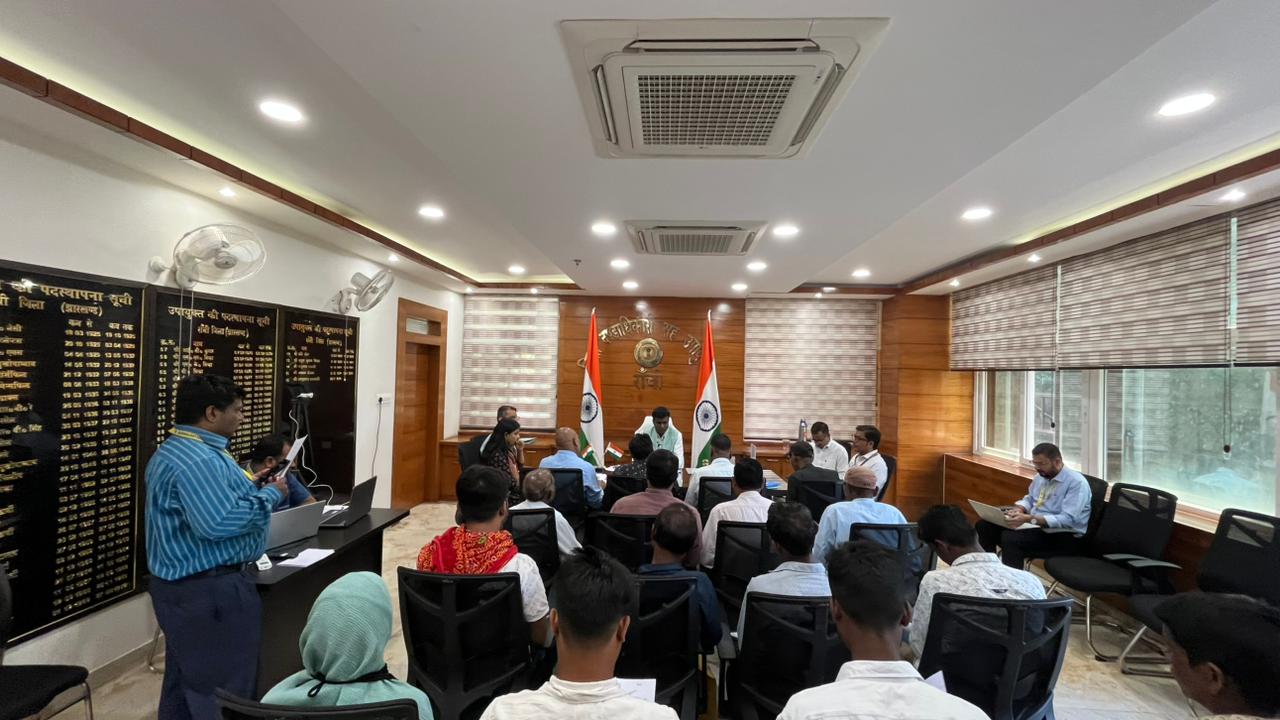
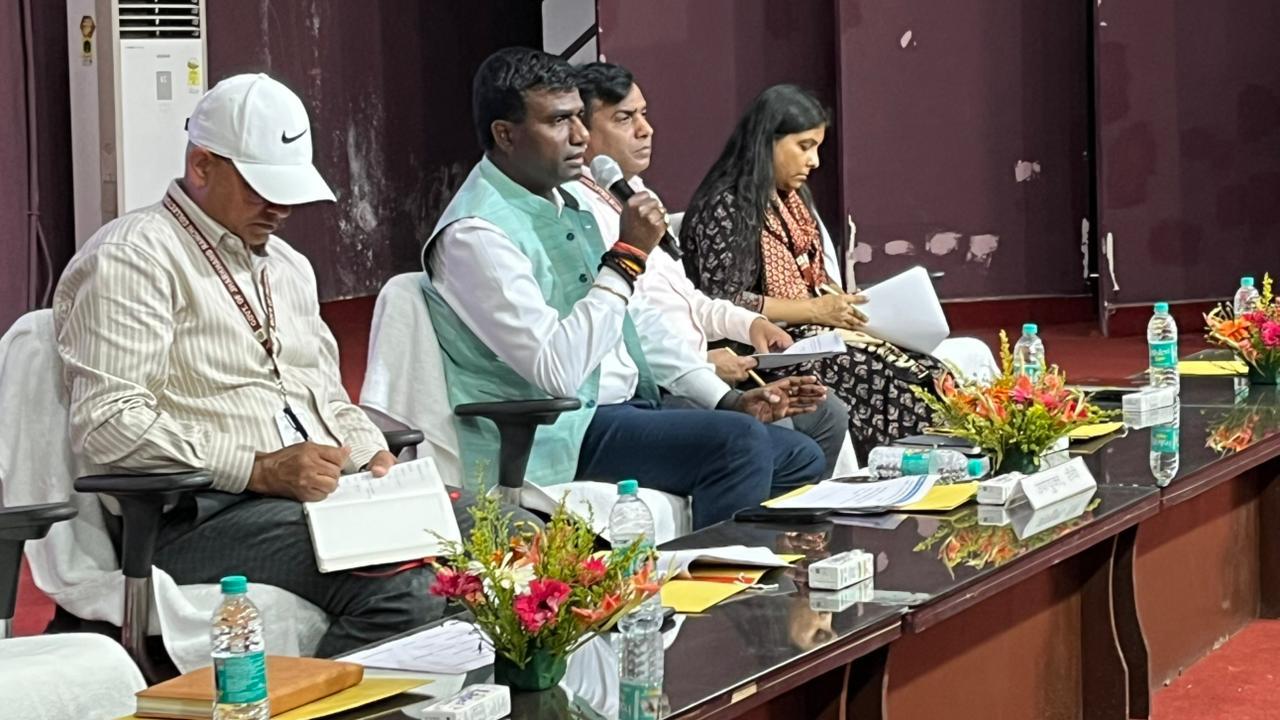
Jharkhand’s budget session, which is running from February 18 to March 19, 2026, has seen some of its most pointed debates around one department: Water Resources. From the very first days of the session, MLAs from across the House have pushed the government on broken handpumps, farmers still waiting for irrigation water, thousands of families displaced by dams who have not been properly resettled, and a hydroelectric project where a cost of Rs 4.88 crore reportedly ballooned to Rs 130 crore. The minister in charge of the department has had to answer every one of these questions, and the answers have been a mix of promises, targets, and in some cases, admissions that more needs to be done.
Here is what actually happened in the Assembly, session by session, and what the Water Resources Department has committed to on the public record.
The session starts: Dam-displaced families demand justice
On the very second day of the budget session, MLA Sabita Mahato from Ichhagarh stood up and raised a question that has been waiting for an answer for years. The Chandil Dam, built on the Subarnarekha river in Jharkhand’s Saraikela-Kharsawan district, displaced thousands of families. Mahato told the House that many of those families still have not been properly rehabilitated. Worse, she said, there had been no formal meeting on this issue in two years.
Water Resources Minister Hafizul Hasan responded that money has been given to displaced people and that payments have been made at 13 locations. Mahato immediately pushed back and told the House that only 116 villages have received money so far, and asked that the rest also be paid. The minister said that everyone will be paid according to the rules.
The exchange matters because it puts the displacement issue on the formal record inside the Assembly. Chandil Dam was completed decades ago. The fact that this conversation is still happening in 2026 tells its own story about how long dam-affected families in Jharkhand have been waiting.
Who gets the dam water? Farmers or companies?
This was the sharpest exchange of the early days of the session, and it came from Dumri MLA Jairam Mahato. He asked the minister a blunt question: dams are built on farmers’ land. But when the water is released, it goes to companies. Why, then, do the same farmers face so many obstacles when they ask for rehabilitation and compensation?
He also challenged the government’s basic claim. When told that dams were built for irrigation, Mahato asked the minister to name even one village where farmers’ fields are actually being irrigated by dam water.
The minister replied that more than 4 lakh acres of land is currently being irrigated using dam water. He also said the government is now shifting its focus toward building smaller ponds, which can serve local farmers more directly without the same displacement problems. He added that a new underground pipeline system is being developed so that water can be delivered directly to farmers’ fields.
The government also announced in the budget for 2026-27 that the target is to irrigate 4 lakh hectares of land by 2029-30. The Water Resources Department has been allocated Rs 2,714 crore in the current budget, up from Rs 2,257 crore the previous year. The Amanat Barrage revival project is specifically mentioned as a target to bring 12,856 hectares under irrigation.
Summer is coming: What about all the broken handpumps?
By the sixth day of the session, the conversation had moved to an even more immediate concern. Sarath MLA Uday Shankar Singh raised the issue of broken handpumps across Jharkhand, using a short-notice question to flag that summer is close and that if repairs are not done in time, villagers will have no drinking water.
Water Resources Minister Yogendra Prasad told the House that the department has already completed preparations to repair all broken handpumps. He said a toll-free number has been issued so that people can directly report faulty handpumps. Once a complaint is received, a team will be sent immediately to fix the pump.
Speaker Ravindranath Mahto added weight to this exchange by stating plainly from the chair that water is the most basic need during the summer months and that there can be no slowness or carelessness in the work of repairs. The Speaker told the House that repairs must be completed quickly so that people get relief.
This is significant. It is not just the opposition or MLAs pushing the government on this. The Speaker of the Assembly himself has put pressure on the department to act before the heat of April and May sets in.
The cost that went from Rs 4.88 crore to Rs 130 crore
The seventh day of the budget session brought one of the most dramatic moments in the entire debate around water-related issues. MLA Raj Sinha raised the issue of the Sikidiri Hydroelectric Project and asked a direct question: how did a project estimated at Rs 4.88 crore end up costing Rs 130 crore?
Sinha said that the government often complains about not having enough money or not getting enough support from the Centre. But in this case, payments were ordered at many times the original estimate, and he called it a case of serious financial negligence.
In-charge Minister Yogendra Mahato told the House that the CBI registered a case in this matter in 2016 and that the case is currently being heard in a CBI court in Ranchi. The investigation has identified the involvement of three BHEL officials and four JUVNL officials. Based on the report of a three-member committee chaired by the Finance Secretary, departmental action has been started against four officials of the then Jharkhand State Electricity Board. The minister said that anyone found guilty will face strict action.
The equipment supplier, BHEL, has filed a case in a Commercial Court seeking property attachment, and the next hearing is set for March 17, 2026. JUVNL has filed a review petition in the High Court after failing to get relief from both the High Court and Supreme Court.
This project has gone from an engineering dispute to a CBI matter, and it is now being tracked simultaneously in a CBI court, a Commercial Court, and the High Court. MLAs used the Assembly debate to put this entire chain of events on the public record.
What the budget says about water
The numbers behind the discussions are equally telling. Finance Minister Radhakrishna Kishore, while presenting the Rs 1,58,560 crore budget for 2026-27, earmarked Rs 2,714.71 crore for the Water Resources Department. This is an increase from the previous year’s Rs 2,257 crore. The Amanat Barrage revival is a flagship project under this allocation.
In addition, the Godda district’s Saidapur Weir Project has received a revised estimate of Rs 38.73 crore. The cabinet, while approving the budget session itself, also cleared a two-envelope tender system for Water Resources Department projects valued between Rs 50 lakh and Rs 2.50 crore, which is designed to bring more transparency to how contracts are given out.
What does this all add up to?
The Jharkhand Assembly’s budget session has pushed the Water Resources Department to answer for four separate sets of failures, each reflecting a different kind of problem. The Chandil Dam displaced families represent a decades-old promise that has not been kept. The irrigation access gap shows that dams built in the name of farmers are often benefiting industries more than the people whose land was taken. The broken handpumps issue is a near-term crisis that can directly harm lives once summer heat arrives. And the Sikidiri cost scandal points to financial controls that did not work when they needed to.
The minister has given answers in all four areas. Payments will continue. The target is 4 lakh hectares by 2029-30. Handpump repairs are ready to go. The guilty in the Sikidiri case will face action. Whether those answers translate into actual change on the ground is what will be measured in the next session, and in the villages, fields, and dam sites that the MLAs were asking about.
SOURCE LOG
Session dates February 18 to March 19, 17 working days, Assembly budget session fifth session of sixth Jharkhand Assembly: Localkhabar.com (cabinet approval of session dates), Statesman, DD News
Second day proceedings: Chandil Dam displaced families, MLA Sabita Mahato, 13 locations paid, 116 villages paid, rest to be paid; Jairam Mahato challenge – name one village irrigated by dam water; minister reply 4 lakh acres irrigated; small ponds plan; underground pipeline system; government target 4 lakh hectare irrigation by 2029-30: Azad Sipahi.
Sixth day proceedings: MLA Uday Shankar Singh broken handpumps short-notice question; Water Resources Minister Yogendra Prasad reply – preparations complete, toll-free number issued, teams ready; Speaker Ravindranath Mahato’s statement on water being most basic need, no slowness allowed: Johar Live
Seventh day proceedings: MLA Raj Sinha on Sikidiri Hydroelectric Project cost rise from Rs 4.88 crore to Rs 130 crore; in-charge Minister Yogendra Mahato response- CBI case 2016, Ranchi CBI court, BHEL three officials involved, JUVNL four officials involved, Finance Secretary committee, departmental action four former JSEB officials; BHEL Commercial Court case asset attachment, next hearing March 17; JUVNL review petition in High Court: Johar Live.
Water Resources Department budget 2026-27 Rs 2,714.71 crore; Amanat Barrage 12,856 hectare irrigation target; total budget Rs 1,58,560 crore; Godda Saidapur Weir Rs 38.73 crore revised estimate: Prabhat Khabar, “Jharkhand Budget 2026 Highlights,” prabhatkhabar.com | TV9 Hindi, “Jharkhand Budget 2026-27 key allocations,” tv9hindi.com