
|
Getting your Trinity Audio player ready...
|
By Impact News Point | Ranchi / Jamshedpur | March 2026
RANCHI On Sunday afternoon, December 29, 2024, five young men from Bhuiyandih in Jamshedpur set off on two motorcycles to visit Jonha Falls in Ranchi. They were travelling on National Highway 33 the 120-kilometre stretch of road that connects Jharkhand’s capital city to its largest industrial city, running through the Chandil-Gamharia forest range. Near the Kanchi River diversion in the Tamar police station area, a speeding truck rammed into both motorcycles. Sumit Mishra, 20, Pulkit Singh, 18, and Nikhil Kumar, 18, all died at the spot. Prince Kumar and Shubham Kumar, riding the second bike, sustained serious injuries and were rushed to Tamar Community Health Centre before being referred to RIMS in Ranchi. Prince Kumar was in critical condition when he arrived. The police seized the truck and opened an investigation. Residents blocked the highway in protest before being persuaded to disperse. The blockade lasted about an hour. Then traffic resumed on NH-33, as it always does.
The following day, December 30, a trailer hit two motorcycles near Podadih village in the same Tamar police station area of NH-33. Three more riders were knocked to the ground and then struck by the vehicle as it continued forward. All three died at the spot. Two others were injured and taken to Tamar hospital. These were separate incidents, 24 hours apart, within the same police station jurisdiction on the same highway. Three dead one day. Three more the next.
National Highway 33 the Ranchi-Tata road, as it is known to every daily commuter in Jharkhand is 120 kilometres long and connects the state’s capital to Jamshedpur, the steel city. It passes through Tamar, Silli, Chandil, and Gamharia before entering East Singhbhum district. It carries heavy goods vehicles from the industrial belt of Jamshedpur to Ranchi and back. It carries buses, motorcycles, schoolchildren, and pilgrims making their way to waterfalls and temples along the route. It has been carrying all of these people across a road surface that, for years, the people who use it describe with one word: neglected. “We are simply fed up with the governments for making false promises,” a resident of Pardih told Lagatar24 in a report that could have been written in any year of the past decade. “The NH-33 is an example of utter neglect.”
Between 2010 and 2013 alone, 245 people died on this highway. That figure, documented by DangerousRoads.org from government records, describes a four-year death toll averaging more than one fatality every week. The same documentation notes that NH-33 in Jharkhand holds a distinction that no highway should want: it is believed to be the only stretch of national highway in India where the number of fatal accidents exceeds the number of non-fatal accidents. Nationally, most road accidents result in injury rather than death. On NH-33, when something goes wrong, people tend to die. The fatality severity rate on this road is an outlier, and the reasons for it are documented as clearly as the death toll.
The four-laning project for NH-33 between Ranchi and Jamshedpur was supposed to change this. A wider road, a proper median separating opposing traffic flows, clearly marked lanes, and modern highway safety engineering would have addressed most of the risk factors that make the current road so dangerous. The project was awarded. Construction began. Then it stopped. The private concessionaire Madhucon Projects cited financial issues and halted work in the middle of 2018. The four-laning project, which had a deadline of 2020, was put further back by the COVID-19 pandemic. The stretch between Jamshedpur and Chandil 25 kilometres of the most accident-prone section became a patchwork of construction diversions, potholes, craters, and half-finished median work that is arguably more dangerous during construction than a finished two-lane road would have been. As of August 2021, when Lagatar24 reported in detail on the highway’s condition, commuters described the stretch between Pardih and Baliguma as “miserable,” with potholes and road damage directly inviting mishaps. The situation since then has seen partial improvement in some stretches as four-laning work has proceeded, but the highway has continued to claim lives throughout.
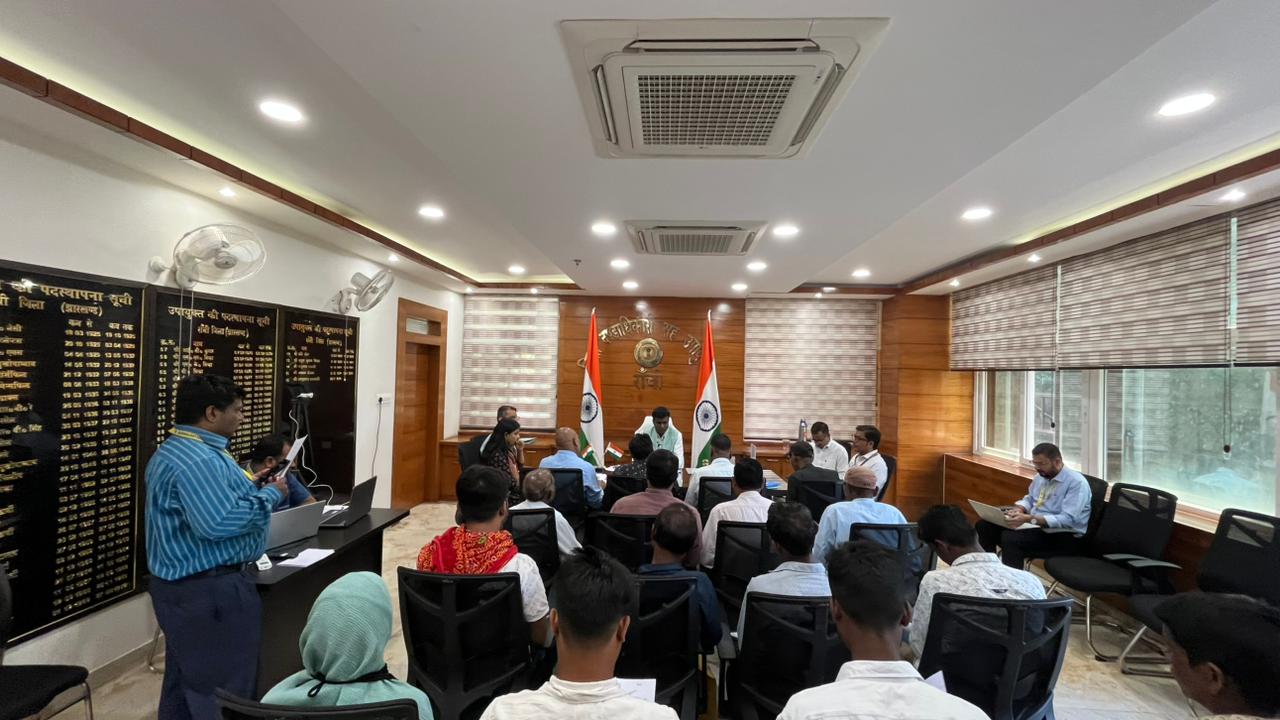
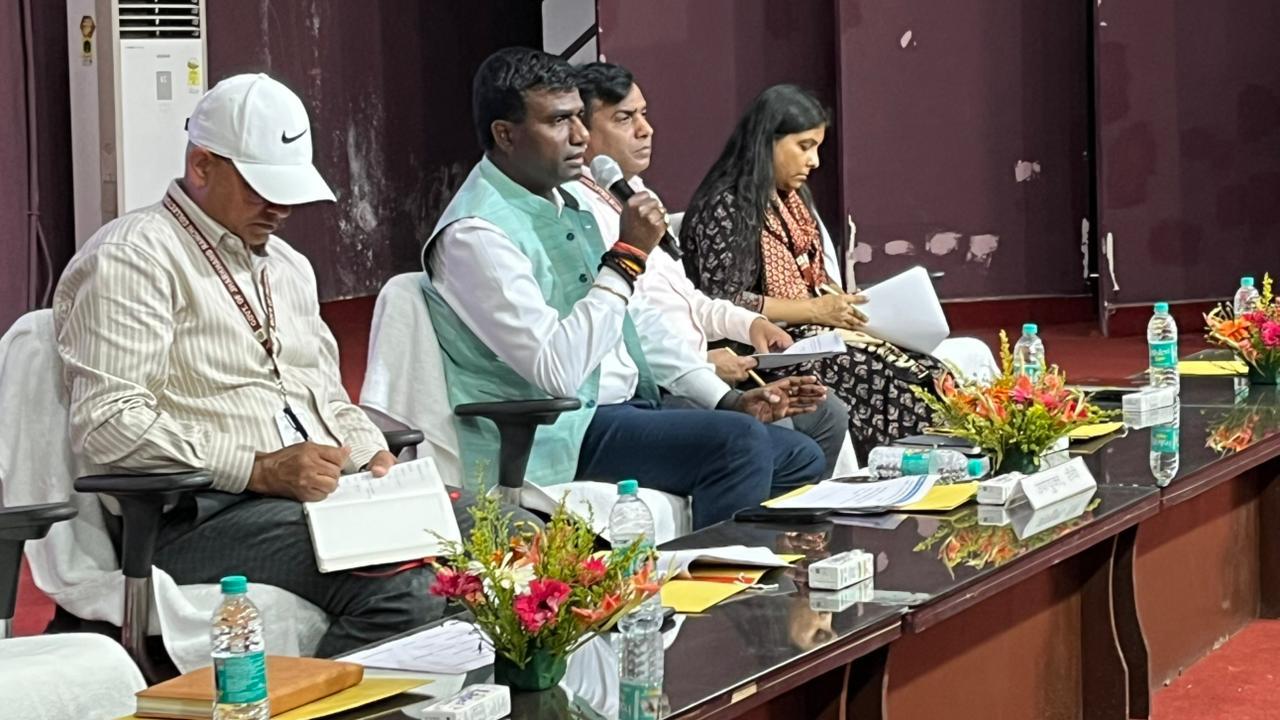
In December 2024, the Jamshedpur district administration called a traffic and road safety meeting chaired by District Magistrate and Deputy Commissioner Ananya Mittal, with Senior Superintendent of Police Kishore Kaushal, ADM Law and Order Aniket Sachan, and representatives from NHAI, the municipal bodies, the Education Department, and Traffic DSP. The meeting had been triggered by the numbers: November 2024 alone had recorded 25 road accidents on NH-33 within the East Singhbhum district jurisdiction, resulting in 15 fatalities and 12 serious injuries. In a single month. Three new black spots were formally identified at Pardih near City Inn Hotel, Dimna Chowk, and Barabanki Chowk. NHAI representatives were instructed to inspect all bridges on the national highway and submit a fitness report within a month. The administration mandated installation of helpline numbers, speed limit signage, and warning boards at critical locations including the newly identified black spots and at illegal median cuts points where vehicles cross the divider to make U-turns, which are among the most dangerous manoeuvres on any divided highway. Plans were finalised to reconstruct the narrow bridge ahead of Dimna Chowk to meet four-lane standards. A service road in Baharagora was cleared for construction, with a nine-month completion target. These were December 2024 directives. The December 2024 accident toll on NH-33 then continued.
A black spot under India’s national road safety framework has a precise definition: a 500-metre stretch of national highway that records either five or more fatal or grievous accidents, or ten deaths, within a three-year period. The identification of three new black spots in East Singhbhum in a single December 2024 administrative meeting indicates that the highway’s accident record had been meeting this threshold at multiple locations. Nationally, the Parliamentary Standing Committee on Transport, Tourism and Culture said in March 2025 that out of 13,795 black spots identified on national highways between 2016 and 2022, only 5,036 had been permanently rectified. That is a 36 percent completion rate for black spot elimination, across six years, on roads that are killing approximately 80 people per day on national highways alone. Minister Nitin Gadkari told Parliament in July 2025 that 8,542 black spots had undergone short-term remedial measures, while only 3,144 had received long-term solutions. Long-term rectification which involves improving road geometry, junction redesign, carriageway widening, and construction of underpasses is delayed by land acquisition, forest clearance, and utility shifting. The same categories of delay that have made the NH-33 four-laning project run years beyond its deadline.
Inside the Jharkhand Assembly budget session, in March 2025, Transport Minister Deepak Birua gave the state legislature a number that places the highway problem in its full context. Jharkhand recorded 19,551 road accidents between 2021 and 2024 across the four-year period covering the pandemic and its aftermath. Overspeeding was identified as the primary cause. Congress MLA Pradip Yadav, who had raised the question, told the House that since 2000, Jharkhand had recorded 82,200 road fatalities representing a significant share of the national toll of approximately 32 lakh deaths from road accidents across India in the same period. Yadav called the trend alarming. Minister Birua assured the House that enforcement of traffic rules, public awareness campaigns, and infrastructure upgrades were underway. The minister said the government was exploring introducing road safety education in the school syllabus to create awareness among students.
The school syllabus announcement matters in a state where 44 percent of road accident fatalities nationally are two-wheeler riders and 19 percent are pedestrians, the categories most exposed to the kind of crash dynamics that NH-33 produces. A speeding goods truck on an undivided road at night, a motorcycle in the opposite lane, no crash barrier, no street lighting: this is the geometry of the deaths near Tamar. Sumit Mishra was 20 years old. Pulkit Singh and Nikhil Kumar were 18. They were on their way to a waterfall. They were killed by a truck on a road that was supposed to have been four-laned and safety-engineered years before they drove onto it.
The failure to complete NH-33’s four-laning within its contracted timeline is not a story unique to this highway. The CAG’s compliance audit report on Jharkhand’s Road Construction Department, tabled in August 2024, found that 49 out of 80 test-checked road works across the state had time overruns ranging from two to 78 months. Eight projects ran over budget by Rs 37.29 crore because contracts were awarded before land was cleared. The pattern of late, over-budget, and incomplete road infrastructure is a documented statewide failure, not an anomaly specific to NH-33. But NH-33 is the most travelled, the most watched, and the most consistently deadly demonstration of what that failure costs in human terms.
The data from Jharkhand Police’s own road safety portal states that vulnerability to road accidents increases by 40 percent at night. Most fatal accidents on NH-33 from the 2010-2013 period through the December 2024 incidents near Tamar occur after dark. A truck driver who has been behind the wheel for twelve hours, overtaking on an undivided road at night, on a surface with visible potholes and invisible median gaps: that combination does not require supernatural explanation. Locals around NH-33 have a different story the highway is said to be haunted, and temples at both ends of the most dangerous section were built for travellers to pray at before attempting the route. The supernatural explanation is more comforting than the administrative one, because at least a haunting cannot be remedied by better contract enforcement, timely land acquisition, and budget allocation. The administrative explanation leaves no one anywhere to hide.
The question the Assembly debate and the December 2024 Jamshedpur meeting both failed to publicly answer is the direct one: when will the four-laning of NH-33 between Ranchi and Jamshedpur be complete? Not the service road in Baharagora. Not the bridge reconstruction at Dimna Chowk. The full four-laning of the 120-kilometre corridor that carries thousands of vehicles daily, connects Jharkhand’s two largest cities, and has been killing people at a rate that exceeds the national average for fatal severity since at least 2010. Every month that question goes unanswered is, by the numbers, approximately fifteen more deaths in East Singhbhum alone.
SOURCE LOG
Sumit Mishra (20) / Pulkit Singh (18) / Nikhil Kumar (18) killed NH-33 near Kanchi River Tamar December 29 2024 speeding truck hit two motorcycles; Prince Kumar and Shubham Kumar injured, referred RIMS Ranchi; Tamar police station in-charge Roshan Kumar Jha confirmed; residents blocked highway in protest, dispersed within hour: Daily Pioneer, “NH-33 mishap claims three lives, leaves two injured near Tamar,” December 31, 2024, dailypioneer.com
Three more killed Podadih village NH-33 Tamar police station area December 30 2024 trailer hit two motorcycles from behind; all three riders on first motorcycle killed; two injured on second motorcycle taken to Tamar hospital: Daily Pioneer, “Three people die in road accident,” December 30, 2024, dailypioneer.com
NH-33 Ranchi to Jamshedpur 120 km; Chandil-Gamharia forest range; 245 people died 2010-2013; only highway in India where fatal accidents exceed non-fatal accidents; temples built at both ends for travellers to pray; most accidents occur at night: DangerousRoads.org, “Tata Road / National Highway 33 Jharkhand,” dangerousroads.org/asia/india/4995-national-highway-33.html
Madhucon Projects halted NH-33 four-laning work mid-2018 citing financial issues; four-lane deadline 2020 missed; COVID pandemic added to delays; stretch Jamshedpur-Chandil 25 km most dangerous; potholes/craters/diversions; condition between Pardih and Baliguma described as miserable; residents “fed up with false promises”; Saryu Roy Jamshedpur East MLA and BJP leader Vikas Singh both led agitations for four-laning completion; resident of Pardih quoted directly; NH-33 described as “example of utter neglect”: Lagatar24, “Tata-Ranchi highway, a victim of utter neglect,” August 13, 2021, lagatar24.com
December 2024 Jamshedpur road safety meeting chaired by DC Ananya Mittal; SSP Kishore Kaushal; ADM Aniket Sachan; DTO Dhananjay; NHAI reps instructed inspect all bridges submit report one month; helpline numbers/speed limit signage/warning boards at black spots and illegal median cuts; Dimna Chowk bridge reconstruction to four-lane standards; service road Baharagora construction December 2024 nine-month completion; auto drivers uniforms ID cards; November 2024 25 road accidents, 15 fatalities, 12 serious injuries on NH-33 East Singhbhum; three new black spots: Pardih near City Inn Hotel, Dimna Chowk, Barabanki Chowk; strict enforcement helmetless riding/overspeeding/seat belt; CCTV and speed-recording systems on highways: The Avenue Mail, “Jamshedpur Administration identifies 3 blackspots after 25 deaths on NH33,” December 12, 2024, avenuemail.in
Jharkhand Assembly March 2025 Transport Minister Deepak Birua: 19,551 road accidents 2021-2024; overspeeding primary cause; road safety education school syllabus; enforcement/awareness/infrastructure upgrades; Congress MLA Pradip Yadav: 82,200 Jharkhand road fatalities since 2000; 32 lakh national deaths 2000-2025; trend “alarming”: India TV News, “Jharkhand records alarming spike in road accidents: Check data of last 4 years in state,” March 19, 2025, indiatvnews.com
Black spot definition 500m stretch 5+ fatal/grievous accidents or 10 deaths in 3 years; 13,795 black spots identified NHs 2016-2022; only 5,036 permanently rectified; Parliamentary Standing Committee March 2025 “significant governance failure”; 8,542 black spots short-term remedial measures; 3,144 long-term solutions; 3,322 found not requiring long-term work; long-term rectification delayed by land acquisition/forest clearance/utility shifting: Business Standard/PTI, “Over 26,000 dead in road accidents on NHs in first half of 2025: Gadkari,” July 23, 2025, business-standard.com | Vajiramandravi Current Affairs, “iRAD/e-DAR black spot data 2023-2024,” November 3, 2025, vajiramandravi.com
CAG August 2024 road construction 49 of 80 test-checked Jharkhand road works had time overruns 2-78 months; 8 projects encumbrance-free site not handed to contractor before contract award; Rs 37.29 crore cost overrun those 8 projects: Previously sourced and documented: CAG Report 2024 Jharkhand Road Construction Department, cag.gov.inNational road accident data 2024 Jharkhand one of 9 states/UTs recorded decline in both accidents and fatalities; 44% fatalities two-wheeler riders nationally; 19% pedestrians; 1.70 lakh deaths 4.73 lakh accidents nationally 2024 (provisional MoRTH); ~80 NH deaths per day January-June 2025; vulnerability 40% higher at night (Jharkhand Police portal): MoRTH 2024 provisional report cited in Legacy IAS, “India’s 2024 Road Accident Report,” legacyias.com | Jharkhand Police road safety portal, jhpolice.gov.in/road-safety/facts