
|
Getting your Trinity Audio player ready...
|
March 2026
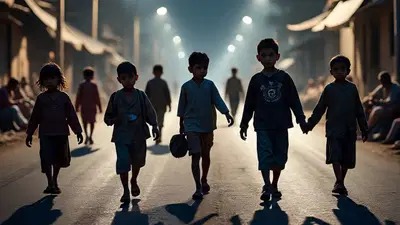
There is a version of Ranchi that people outside the city do not see. Not the capital city with new flyovers and shopping malls. The version where residents in areas like Hindpidhi, Harmu, and Bariatu think twice about stepping out after 8 pm. Where a phone snatching near a market is considered ordinary enough that most people do not even bother filing a complaint. Where the phrase “it happens here” has quietly become a substitute for expecting the system to respond.
That version of Ranchi is not a perception problem. It is a data problem. And the data, from 2023 through early 2026, tells a story that neither local administrators nor citizens can afford to keep dismissing as routine.
Ranchi has consistently ranked first in total crime cases across all districts in Jharkhand. According to Crime Records Bureau data from Jharkhand, in the first half of 2023 alone, Ranchi recorded 1,278 theft cases between January and June. In the same period, Bokaro recorded 397 theft cases, placing it third in the state behind Dhanbad. Rape cases in Ranchi in the same six-month window stood at 90, more than any other district in the state. Bokaro recorded 32 rape cases in the same period. These are not full-year numbers. These are six months.
To put this in a wider context, Jharkhand as a state holds one of the most troubling distinctions in the national crime data. According to NCRB’s Crime in India 2022 report, Jharkhand recorded the highest murder rate in the country at 4 murders per one lakh population. The national average in the same year was 2.1. That gap is not statistical noise. It is a structural signal about policing capacity, economic stress, and a state where both urban and rural crime are running above national benchmarks simultaneously. By 2023, Jharkhand also featured in national data for Left Wing Extremist crimes, accounting for a significant portion of 538 such incidents across Chhattisgarh and Jharkhand combined, according to NCRB 2023 figures.
The thing about crime data in India, and anyone who has spent serious time reporting on it knows this, is that the official numbers almost always undercount reality. NCRB data is built entirely on registered FIRs. It does not capture cases where a victim was told to settle the matter outside the police station. It does not capture the woman who did not report because she feared the process more than the crime. It does not capture the daily wage worker whose phone was snatched and who could not afford the time off to go to the station. In a city like Ranchi, where trust between communities and police has historically been thin in many areas, the registered figures are a floor, not a ceiling.
What the numbers from 2023 through 2025 show clearly is that crime in both Ranchi and Bokaro is not declining at the pace that urban growth would normally demand. Bokaro is a planned industrial city, built around the Bokaro Steel Plant, and it carries the infrastructure scars of a city that has not received proportionate investment since its founding decades. Unemployment among youth in the Bokaro district, like much of Jharkhand, remains significantly above the national average in a state where 39 percent of the population still lives below the poverty line according to NITI Aayog MPI data. Street crime, snatching, and robbery do not emerge from nowhere. They tend to concentrate in precisely the places where young men have no formal income, limited mobility, and easy access to dense public spaces. Bokaro’s markets and transit corridors fit that description in multiple pockets.
Ranchi presents a different but equally specific challenge. As the state capital has grown, particularly in the belt running from Kanke to Namkum and along the Ratu Road corridor, urbanisation has outpaced policing coverage. The Jharkhand Police headquarters is in Dhurwa, Ranchi, and the state has been investing in police station infrastructure over recent years. But the ratio of police personnel to population in Jharkhand remains below the national average, and in a city adding new residential colonies faster than new police chowkis, the coverage gap tends to grow before it shrinks.
Cybercrime is the layer of the story that does not show up in visible ways but is hitting residents of both cities hard. India’s cybercrime complaints grew from around 4.5 lakh in 2021 to over 22 lakh by 2024, a nearly 400 percent increase in four years. Indians lost over Rs 22,845 crore to cyber fraud in 2024 alone according to Ministry of Home Affairs data presented in Parliament. Jharkhand, notably, hosted a Joint Cyber Coordination Team workshop in Ranchi in 2023, organized by the Indian Cyber Crime Coordination Centre, reflecting the Centre’s acknowledgment that the region needs focused cybercrime attention. Jamtara, a small district in Jharkhand, has been so consistently linked to national phone fraud operations that it has its own Netflix series. The Jamtara model of operation, where entire networks of fake callers target people across India from small district centres, has been documented in law enforcement reports for years. It has not disappeared. It has evolved.
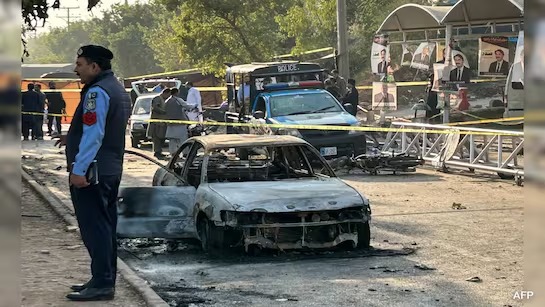
What 2025 and early 2026 have added to this picture is a more visible street-level urgency. The recent arrests in Ranchi of an animal smuggler, the ongoing LPG crisis creating crowds and opportunities for petty theft around gas agency queues, and the broader pattern of police actions visible through local reporting all point to a law and order environment that is stretched rather than controlled.
The question that residents of Ranchi and Bokaro are asking, and that the data now makes unavoidable, is not whether crime is rising. The numbers make that hard to argue against. The question is whether the administrative response is keeping pace with the growth of two cities that are changing faster than the systems meant to protect them.
A conviction rate problem compounds everything. NCRB data from 2023 shows that across India, the conviction rate for IPC crimes was 54 percent. For murders specifically, only 37.7 percent of trials resulted in a conviction. When the probability of being caught is uncertain and the probability of being convicted is below one in two, the deterrence calculus shifts. People on the margins of economic survival in dense urban settings are not running complex cost-benefit analyses. But at an aggregate level, a justice system that resolves less than half its cases sends a signal that the streets notice before the statistics do.
Residents of Ranchi and Bokaro are not asking for dramatic interventions. Most of the people who live in these cities love them. They want better street lighting in the pockets where crime concentrates at night. They want complaints to be registered without the filer being made to feel like a burden. They want to see cases reach their conclusion. These are not radical demands. They are the minimum standard of what a functioning city owes its people.
The data from 2023 to 2026 says that standard is not yet being met consistently in either city. That deserves to be said plainly.