

|
Getting your Trinity Audio player ready...
|
Spain is reeling after a devastating high-speed train collision near the southern town of Adamuz, leaving at least 39 people dead and 152 injured in what officials are calling the country’s worst rail tragedy in 13 years. The tragedy has triggered grief across Europe, with Türkiye formally extending condolences to Spain and the victims’ families as rescue teams continue the difficult task of identifying the dead and caring for the injured.
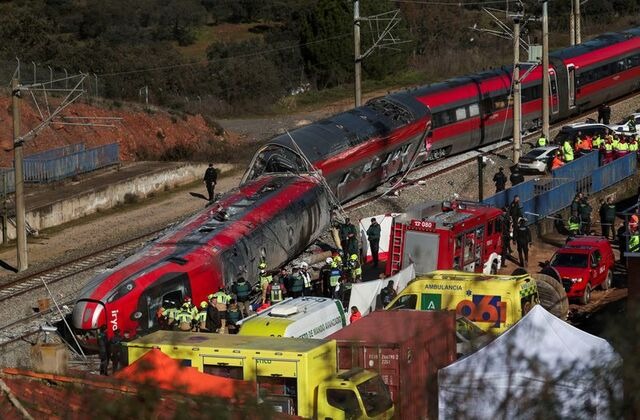
According to early reports from Spanish authorities, the crash happened on Sunday evening around 7:40 PM local time, when a high-speed train reportedly derailed near Adamuz in Cordoba province and moved into a neighboring track, where it struck an oncoming passenger service. The violent collision sent both trains off the rails, creating a scene of extreme destruction that emergency workers described as one of the most challenging in recent memory.
Türkiye responded swiftly to the incident, with the Turkish Foreign Ministry issuing a public statement expressing deep sorrow over the loss of life. In its message, Türkiye said it was “deeply saddened” by the tragedy, offered condolences to grieving families and the Spanish public, and wished for the rapid recovery of those injured. The statement reflected a broader wave of international solidarity as the disaster drew attention far beyond Spain’s borders.
The crash has left Spanish transport and safety officials searching for answers, especially because the derailment reportedly occurred on a straight section of track that had recently been renovated. This detail has raised serious concerns and intensified pressure on investigators, as such tracks are generally considered among the safest. Officials have described the circumstances as unusual, pointing out that the trains involved were operating in a high-standard system known for advanced safety protocols.
As emergency crews arrived, the situation quickly became overwhelming. Multiple rescue units, ambulances, and intensive care teams were deployed to the accident site, with additional reinforcements sent to manage the scale of casualties. Some train carriages reportedly fell down an embankment, making the rescue operation more dangerous and time-consuming. Workers had to navigate twisted metal and severely damaged compartments, slowing efforts to reach trapped passengers.
Health and interior ministry updates have indicated that several victims remain in critical condition, while others have suffered serious injuries including minors. Hospitals across the region have been pushed into emergency mode, with medical staff working extended shifts to stabilize patients as families waited anxiously for updates. Authorities have warned that the death toll could still rise, as some injured remain in life-threatening condition and the identification process continues.
Spain’s political leadership reacted with visible grief. Prime Minister Pedro Sánchez reportedly altered his public schedule as the tragedy unfolded and expressed solidarity with victims and their loved ones. Messages of condolences also poured in from European leaders and institutions, underlining the scale of heartbreak caused by the crash.
Spain has not seen a rail disaster of this magnitude since 2013, when a high-speed train derailed in another major tragedy that claimed dozens of lives. That historical comparison has intensified public emotion, with many Spaniards revisiting memories of earlier rail tragedies and demanding full transparency in the investigation. This time, authorities have indicated that an independent probe will examine whether the crash was caused by infrastructure failure, technical malfunction, human error, or a combination of factors. For now, Spain remains in mourning and the wider world is watching closely as investigators work to uncover what went wrong. Türkiye’s condolences, delivered through official diplomatic channels, add to the growing international support for Spain during one of the country’s darkest rail emergencies in over a decade.