

|
Getting your Trinity Audio player ready...
|
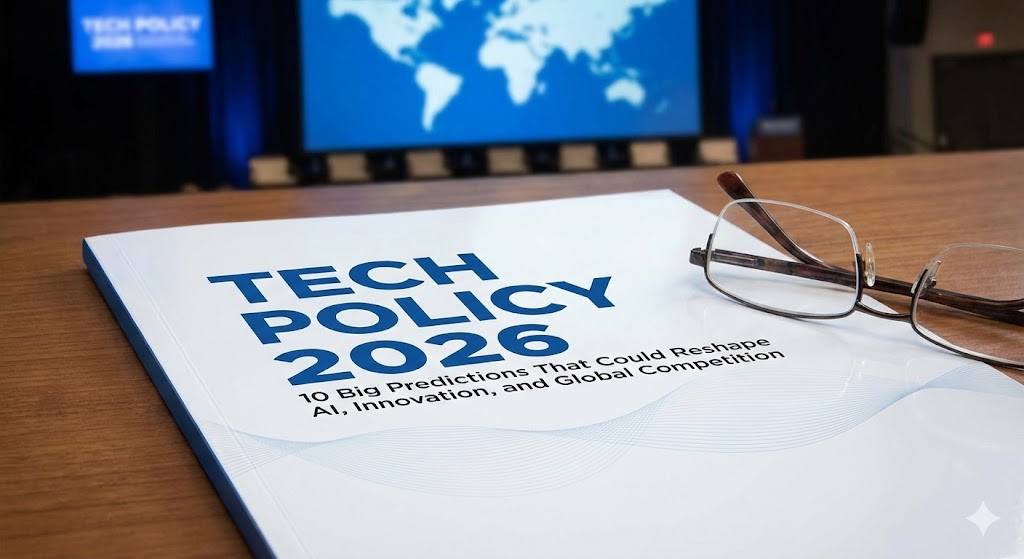
As 2026 unfolds, technology policy is moving from background debates to centre stage. Governments across the world are preparing to take decisive calls on artificial intelligence, digital markets, broadband access, and global tech competition. Policy experts believe the choices made this year could define how innovation grows or slows for the rest of the decade. Here is a closer look at the top 10 tech policy predictions and questions shaping 2026, explained in a way that makes clear why this year matters so much.
One of the biggest shifts expected in 2026 is a cooling of the aggressive push to break up large technology companies. After years of courtroom battles and regulatory pressure, policymakers are beginning to question whether dismantling tech giants actually improves competition. The focus is gradually shifting toward smarter, more targeted regulations that address specific problems without hurting innovation or consumer benefits.
Across Europe, however, strict technology rules are likely to continue. Regulators remain cautious about fast-moving innovation, especially in artificial intelligence and data-driven services. This approach may keep European consumers protected, but critics warn it could slow innovation and widen the gap between European tech firms and their global competitors, particularly those based in the United States.
In the United States, 2026 could offer a rare opportunity for meaningful bipartisan tech legislation. Despite political divisions, there is growing agreement on the need for a national data privacy framework, clearer artificial intelligence guidelines, and immigration reforms that attract global tech talent. If lawmakers act, these moves could significantly strengthen the country’s innovation ecosystem.
Another major focus this year is the long-standing digital divide. With years of investment finally starting to show results, broadband access is reaching more rural and underserved areas. Policymakers are now expected to shift attention toward affordability, quality of service, and digital skills—ensuring that access translates into real opportunity.
Wireless spectrum policy is also set to take centre stage. As demand for faster and more reliable connectivity grows, governments are under pressure to free up additional spectrum to support 5G expansion and prepare for future technologies. Decisions made in 2026 could determine who leads the next wave of wireless innovation.
Research funding for universities and public institutions is another area of concern. Experts warn that cutting research budgets could weaken national competitiveness. Instead, there is a strong push to increase funding for advanced research in artificial intelligence, semiconductors, biotechnology, and clean technology areas seen as critical for economic and strategic leadership.
Artificial intelligence itself is expected to move from experimentation to large-scale adoption. Governments and industries are increasingly aligned on the need to deploy AI responsibly but rapidly. Rather than slowing development through excessive regulation, 2026 may see policies designed to accelerate safe AI use across healthcare, manufacturing, education, and public services.
At the same time, anti-tech sentiment is growing louder. Public concerns around data privacy, job losses, and AI decision-making are influencing political debates. Policymakers face the challenge of addressing these fears without stalling progress, striking a balance between trust, transparency, and technological growth.
Global trade and technology competition will remain a defining issue. Tensions between major economies continue to shape supply chains, chip manufacturing strategies, and export controls. In 2026, governments are expected to focus more on alliances and cooperative frameworks to secure technological leadership without triggering damaging trade wars.
Finally, despite widespread fears, experts predict that 2026 will not be the year of mass job losses due to AI. While automation will change job roles, large-scale unemployment directly caused by artificial intelligence is unlikely. Instead, the workforce is expected to evolve, with new roles emerging alongside productivity gains.
Taken together, these predictions suggest that 2026 is not just another year for tech policy it is a turning point. The decisions made now will influence how societies harness technology, protect citizens, and compete globally. Whether governments choose speed or caution, innovation or restriction, will shape the digital future for years to come.