
|
Getting your Trinity Audio player ready...
|
By Impact News Point | Ranchi | March, 2026
RANCHI When the opposition stood up in the Jharkhand Assembly this week and said hospitals have buildings but no doctors, the Health Minister did not deny it. He announced eight new medical colleges instead. That exchange, played out over two days of budget session debate, captures exactly where Jharkhand’s healthcare system stands today full of ambition, facing stubborn structural problems, and watched closely by 40 million people who have been waiting a long time for the gap between policy and reality to close.
The numbers behind the crisis are not in dispute. The Comptroller and Auditor General of India, in a performance audit published in 2024, found that 61 percent of specialist and medical officer posts across Jharkhand’s public health system are vacant. Fifty-two percent of staff nurse posts have no one in them. Eighty percent of paramedic posts remain unfilled. These figures come from the government’s own auditors, not from the opposition. They describe a health system in which the buildings that were built, the schemes that were launched, and the budgets that were allocated are all operating at a fraction of their intended capacity because the people needed to run them are simply not there.
Jharkhand structures its public healthcare across three levels. Sub-centres and Primary Health Centres at the base provide routine care, immunisation, and basic maternal services. Community Health Centres and Sub-Divisional Hospitals in the middle act as referral units for more serious cases. District Hospitals and Medical College Hospitals at the top handle emergencies and specialist treatment. The logic is sound. A patient in a village in Garhwa or Latehar should be able to get basic care at a PHC, be referred to a CHC if they need more, and reach a District Hospital only for cases that genuinely require it. In practice, the chain fails repeatedly because the PHC has no doctor, the CHC has no gynaecologist, and the road between them is too broken to matter.
Jharkhand has a shortfall of 228 Primary Health Centres against required norms, the second-highest deficit of any state in India, according to a parliamentary committee report published by Down to Earth. In tribal areas, the shortfall is even sharper government norms require one PHC for every 20,000 people in plains and one for every 20,000 in tribal and hilly areas. In much of western and southern Jharkhand, those norms exist only on paper. A study on maternal health in Jharkhand published in PMC documented a 60 percent shortfall in the number of PHCs functioning against the required number, and a 91 percent shortfall in obstetricians and gynaecologists at Community Health Centres. In the study district of Simdega, not a single CHC had an obstetrician or gynaecologist. None of the CHCs, Block PHCs, or PHCs across the state was equipped with round-the-clock emergency services at the time of the study. Private nursing homes were found to be more capable of providing emergency obstetric care than government facilities.
The NHM 7th Common Review Mission, which inspected Sahibganj and Bokaro districts, found that most PHCs could not handle inpatient cases at all. They were referring patients upward not because the condition required specialist care, but because they lacked the staff to treat anything beyond basic outpatient visits. In Bokaro, a new District Hospital building had been constructed but not yet operationalised at the time of the review. The district was being served by Bokaro General Hospital and SDH Chas. Four out of sixteen PHCs in Bokaro were operating from rented buildings. Roughly sixty percent of Health Sub-Centres in the district were also in rented premises. No Maternal and Child Health wing had been created in Bokaro at the district hospital level. In Sahibganj, CHCs and PHCs were attracting higher caseloads for deliveries because infrastructure had improved there but the load was straining a system that was never designed to absorb it.
The ambulance problem is among the most visible gaps between scheme and reality. The Janani Express service exists to give every pregnant woman in rural Jharkhand access to free emergency transport. The 102 helpline number is printed on posters at every sub-centre. But in remote blocks of Garhwa and Latehar, the ambulances frequently do not come. Some vehicles are not operational because of unpaid diesel bills or absent drivers. The geometry of the problem is stark: a family in Latehar, in the dark, with a woman in labour, calling a number that nobody picks up. The consequences play out in mortality figures that Jharkhand has been trying to improve for two decades.
The state’s maternal mortality figures have improved significantly. The NHM Special Bulletin on Maternal Mortality for 2020-22 placed Jharkhand’s Maternal Mortality Ratio at 50 deaths per 100,000 live births, placing the state among the eight in India that have already met the Sustainable Development Goal target of below 70. That is real progress, achieved through the Janani Suraksha Yojana, the ASHA worker network, improved institutional delivery rates, and sustained investment in maternal health infrastructure. But the improvement is uneven. Tribal districts, the most distant blocks, and the areas where the ambulance system is least reliable continue to see outcomes that do not match the statewide average. The PMC paper on Jharkhand’s maternal health system noted that despite the headline improvement, human resource shortages at CHCs continue to undermine emergency obstetric care in exactly the places where it is most needed.
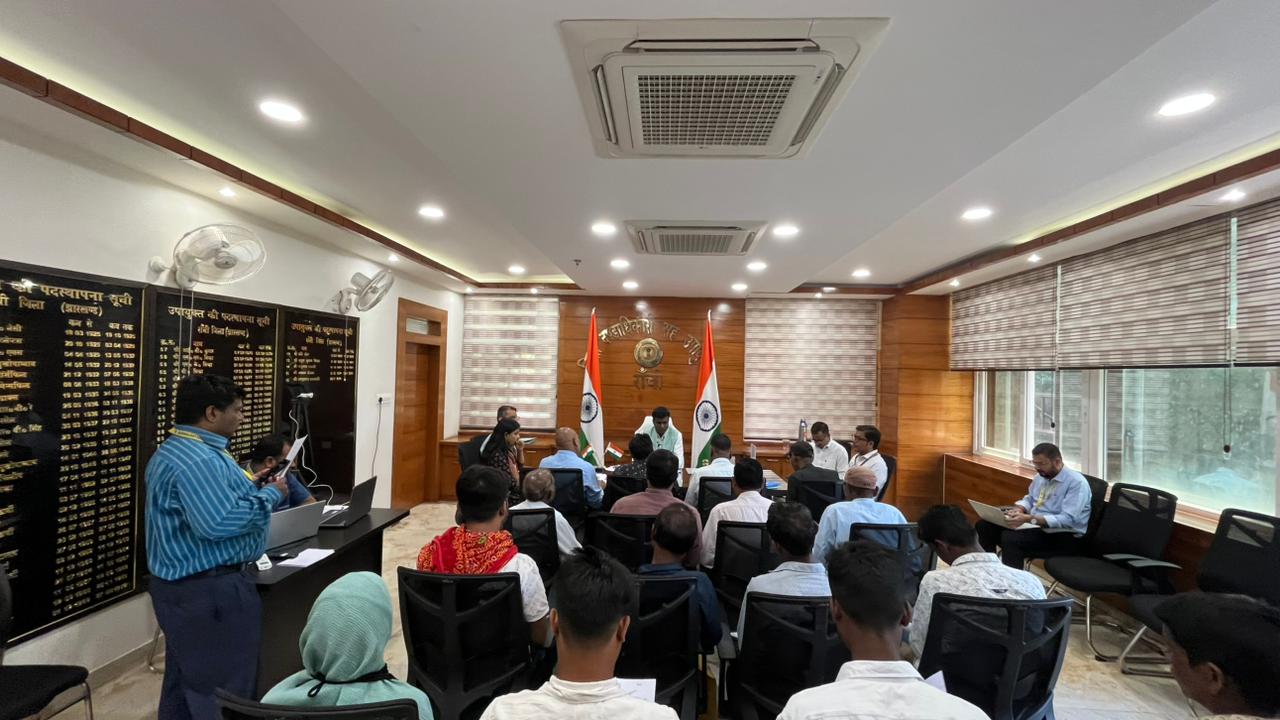
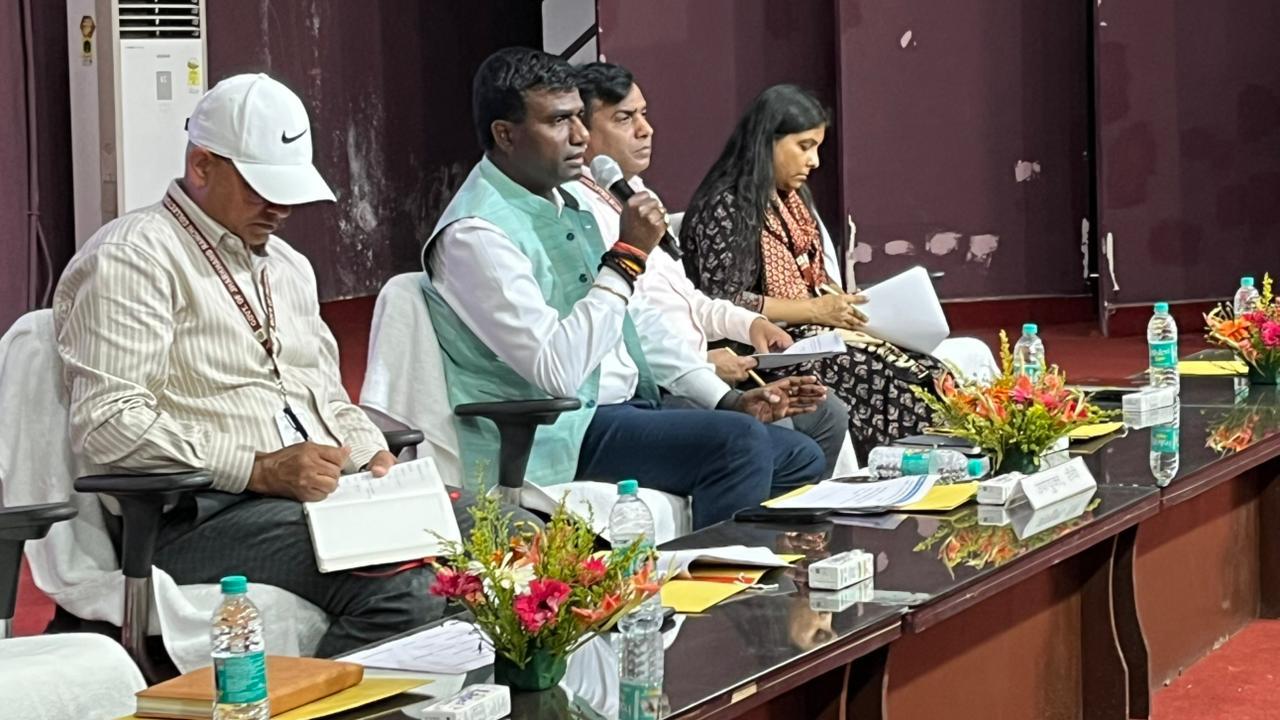
In the Assembly on March 11, Leader of Opposition Babulal Marandi described the state budget as a copy-paste document and said the government had been announcing the same schemes for consecutive years without meaningful progress. He said hospitals had new buildings but lacked doctors and nursing staff. He said vacant posts in key departments remained unfilled. Health Minister Dr. Irfan Ansari responded by outlining an ambitious roadmap. Jharkhand had only nine medical colleges in its first twenty-five years as a state, he said. The government is now working to establish eight new medical colleges within a single year. Foundation stones for colleges in Jamtara, Giridih, Dhanbad, and Khunti will be laid in the first phase. Colleges in Godda, Sahibganj, and Saraikela will follow in the second phase. A new medical university will come up at Brambe in Ranchi. The Rajendra Institute of Medical Sciences will be redeveloped at a cost of Rs 6,500 crore, expanding its bed capacity from 2,200 to 3,500. A new 950-bed super-specialty block and an OPD building designed to handle 5,000 patients daily will also be built. Twelve super-specialty hospitals, 1,258 new health sub-centres, 48 trauma centres along national highways, and 25 tribal health cottages are also on the announced list. Three hundred advanced life support ambulances and 300 bike ambulances for hilly areas are planned. Free ultrasound for all pregnant women in government hospitals was announced. A large-scale recruitment of ANM and GNM health workers, the minister said, will begin soon.
The announcement drew a pointed response, not from the opposition but from the session itself. Jharkhand’s Finance Minister Radhakrishna Kishore, who had been speaking in the same Assembly, was hospitalised in Ranchi during the budget session. When his condition did not improve, the state government arranged for him to travel to Delhi for treatment. The Statesman, reporting on the session, noted the obvious irony: the Assembly was debating a Rs 7,470 crore health budget while a cabinet minister had to leave Jharkhand to access care that the health system was unable to provide. The Health Minister dismissed the comparison and said the government would transform healthcare to the point where private hospitals would become unnecessary. Whether that transformation arrives in time is the question that matters to the people the healthcare system is built to serve.
The Union Health Ministry has separately given in-principle approval to several Jharkhand proposals, including an Ayurvedic Medical College and Hospital, Japanese technology-based diagnostic laboratories in all medical colleges and Ranchi Sadar Hospital, and Wellness Health Centres across all districts under a 60-40 Centre-State funding model. Discussions on increasing MBBS and PG medical seats at major colleges are also underway, pending expert inspections. The AIIMS Deoghar campus, already functional in Jharkhand, represents the most recent large central investment in the state’s tertiary healthcare infrastructure.
The structural challenge that no single announcement has yet addressed is the one the CAG identified: posts that are empty. A medical college in Jamtara will, in five years, produce doctors who might choose to stay in Jamtara. That is genuinely valuable in the long run. But the CHC in Latehar needs a gynaecologist today. The Health Sub-Centres that are running out of rented single rooms with no toilets need to be in government buildings today. The ambulances that fail to respond at night need diesel accounts that are paid up today. The gap between what Jharkhand has announced and what it can deliver by next month is the gap in which people are still being harmed.
Jharkhand is not without capacity to act. It is the eighth-largest state economy in India by GDP. Its health budget this year is Rs 7,470 crore. The NHM allocation from the Centre is flowing. The ASHA and Sahiya worker networks are among the strongest community health infrastructure the state has. The Abua Swasthya Suraksha Yojana offers free treatment up to Rs 15 lakh per family per year to eligible residents. The state government has shown, over the past decade, that maternal mortality can be brought down through sustained, systematic effort. None of that cancels the CAG finding that six in ten specialist posts are empty. Both things are true simultaneously. The question for the Assembly’s next session, and the one after that, is whether the recruitment of ANM and GNM workers that the Health Minister promised will be followed by equally urgent action on medical officer and specialist vacancies in the districts that need them most.
SOURCE LOG
CAG 2024 Performance Audit 61% specialist/medical officer vacancies, 52% staff nurse vacancies, 80% paramedic vacancies; three-tier healthcare structure PHC/CHC/District Hospital: PMC Systems thinking in action: Lessons from Jharkhand’s journey to reducing maternal mortality, Dialogues Health, accepted December 10, 2025. pmc.ncbi.nlm.nih.gov
91% shortfall obstetricians/gynaecologists at CHCs, 74% shortfall nurse-midwives at PHCs and CHCs, 60% PHC shortfall against required number, no round-the-clock emergency services at any CHC/Block PHC/PHC, private hospitals more capable of emergency obstetric care than government facilities, verbal autopsy case of woman who died en route after delayed PHC referral: PMC Identifying Factors Associated with Maternal Deaths in Jharkhand, India: A Verbal Autopsy Study. pmc.ncbi.nlm.nih.gov/articles/PMC3702348
NHM 7th Common Review Mission Jharkhand Bokaro no District Hospital, new building not operationalised, 4/16 PHCs rented buildings, 60% HSCs rented, no MCH wing Bokaro, Sahibganj CHC delivery load high, majority PHCs cannot handle IPD, OPD per capita 0.3 Sahibganj 0.2 Bokaro: NHM 7th Common Review Mission Report Jharkhand. nhm.gov.in
Jharkhand 228 PHC shortfall second highest in India, tribal area PHC/CHC shortfall, 22.4% nursing staff posts vacant and 27.6% doctor posts at PHCs in tribal areas: Down to Earth, Health infrastructure weakest in tribal areas: Report, January 7, 2019. downtoearth.org.in
Assembly March 11 2026 Babulal Marandi “copy-paste budget” criticism, vacant posts, empty hospitals despite new buildings; Health Minister Irfan Ansari 8 new medical colleges, Jamtara/Giridih/Dhanbad/Khunti Phase 1, Godda/Sahibganj/Saraikela Phase 2, free ultrasound pregnant women, new ANM/GNM recruitment, Abua medicine stores rural areas, new high-tech ambulances with location tracking, call centre Dumka/Jamtara: The Jharkhand Story, Jharkhand assembly: Opp flags empty hospitals, govt promises new medical colleges, RIMS-2, March 11, 2026. thejharkhandstory.co.in | PTI/NewsDrum, March 11, 2026. newsdrum.in
Rs 7,470 crore health budget approved, RIMS Rs 6,500 crore redevelopment 2,200 to 3,500 beds, 950-bed super specialty block, 5,000-patient OPD building, 1,258 new health sub-centres, 48 trauma centres, 25 tribal health cottages, 300 ALS ambulances, 300 bike ambulances, Rs 10 diagnostic tests, robotic surgery RIMS, Medico City Kanke, Finance Minister Kishore hospitalised Ranchi then sent to Delhi irony noted in Assembly session: The Statesman, Jharkhand’s Healthcare Paradox: Rs 74.70 Billion approved, Minister sent to Delhi for treatment. thestatesman.com | The Daily Jagran, Jharkhand Approves Rs 7,470 Crore Health Budget, March 2025. thedailyjagran.com
Union Health Ministry in-principle approvals Ayurvedic Medical College, Japanese-tech diagnostic labs all medical colleges and Ranchi Sadar Hospital, Wellness Health Centres 60:40 Centre-State funding, Abua Health Scheme support, MBBS/PG seat increase discussions; CM Hemant Soren target 25-30 medical colleges in 5 years: Medical Dialogues, Centre clears Ayurvedic medical college hospital in Jharkhand, January 23, 2026. medicaldialogues.in
MMR 50 per 100,000 live births Jharkhand (SRS 2020-22), one of 8 states meeting SDG MMR target below 70: NHM Special Bulletin on Maternal Mortality in India 2020-22. nhm.gov.in